Homemade buttermilk English muffins were never on my “easy weekend breakfast” list. For the longest time, homemade buttermilk English muffins felt like one of those things that sounded cozy and impressive but secretly stressful—especially when yeast was involved. Still, one quiet morning, with a half-empty carton of buttermilk in the fridge and a cup of coffee that deserved better than store-bought bread, I decided to try.
My first batch of homemade buttermilk English muffins was… flat. Not terrible, just a little sad. But I’m stubborn in the kitchen (in a good way). I kept testing, tweaking, and learning—usually in cozy socks, usually with flour everywhere—until one morning I split a muffin open with a fork and just froze. Real nooks. Proper crannies. The kind of homemade buttermilk English muffins where butter disappears instantly. That was the moment I knew this recipe was worth keeping—and sharing.
Table of Contents
Table of Contents
Why Make Homemade Buttermilk English Muffins?
Homemade buttermilk English muffins are one of those recipes that instantly make breakfast feel special. They’re warm, slightly tangy, and full of those buttery nooks and crannies that store-bought versions never quite get right. Once you make them from scratch, the difference is obvious—softer inside, crisp on the outside, and freshly made in your own kitchen.
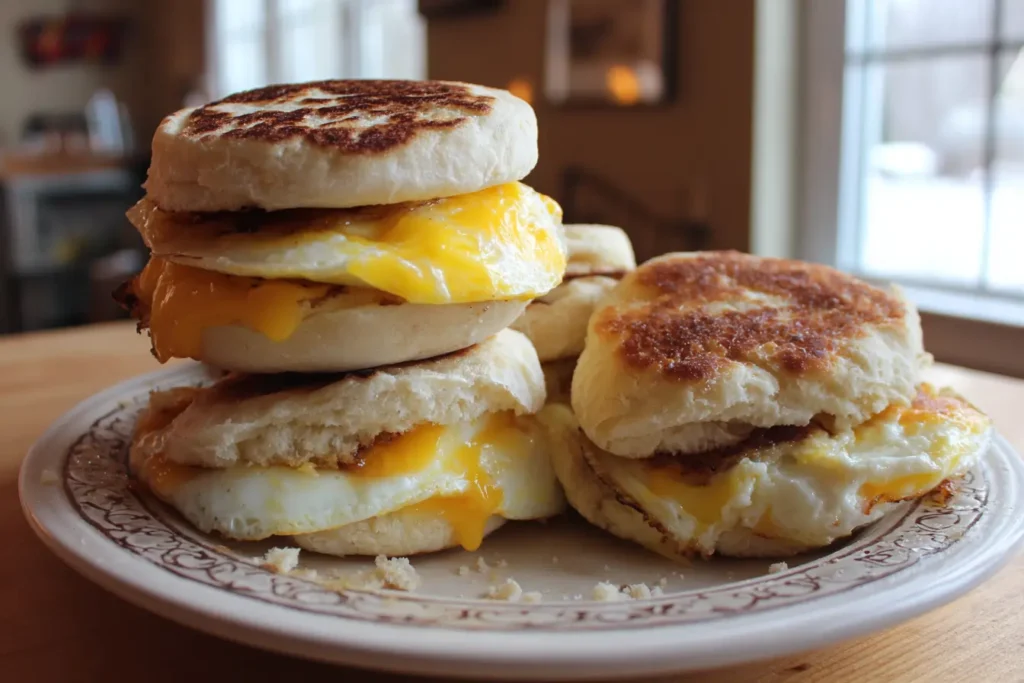
I especially love using these homemade buttermilk English muffins as the base for breakfast sandwiches or serving them alongside cozy brunch recipes like my Mediterranean Breakfast Sandwich when we’re taking the morning slow.
Store-Bought vs Homemade
| Store-Bought | Homemade | |
|---|---|---|
| Texture | Tight, bread-like | Light with nooks & crannies |
| Flavor | Mild | Slightly tangy, richer |
| Freshness | Packaged | Warm & fresh |
Why Buttermilk Makes a Difference
Buttermilk adds a gentle tang and helps keep the muffins soft and tender. It also makes the dough more forgiving, which is great if you’re newer to working with yeast.
Is This Recipe Right for You?
This recipe is perfect if you want:
- Stovetop English muffins (no oven required)
- A reliable homemade breakfast staple
- Bakery-style texture without complicated steps
If you’re looking for an instant, no-rise bread, this won’t be it—but if you’re willing to give the dough a little time, the results are worth it.
The Real Secret to Nooks & Crannies (Not Magic)
The truth is, those beautiful nooks and crannies in homemade buttermilk English muffins don’t come from a secret ingredient or fancy technique. They come from a few very specific choices that work together—mostly how wet the dough is and how gently you treat it.
If you’ve ever made muffins that tasted fine but looked more like regular bread inside, this is the section that fixes that.
Hydration: The #1 Thing Most Recipes Skip
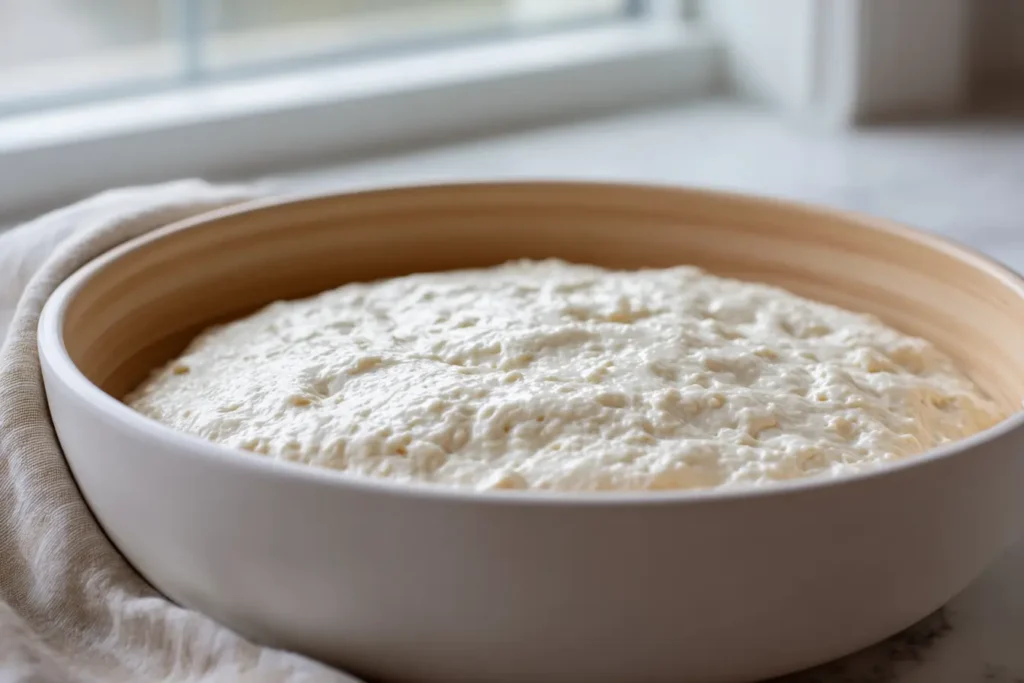
English muffin dough should be slightly sticky. Not dry. Not stiff. A little clingy is exactly what you want. That extra moisture turns into steam as the muffins cook on the skillet, creating air pockets inside—aka, the nooks and crannies.
What higher hydration does:
- Creates an open, airy interior
- Prevents dense, bread-like muffins
- Helps the dough rise more evenly
If the dough feels too dry to stick at all, it’s usually the reason muffins turn out flat.
Gentle Handling vs Overworking Dough
This dough doesn’t want to be punched down or rolled thin. Pressing too hard squeezes out the air you worked so patiently to build.
Instead:
- Pat the dough gently
- Avoid rolling pins
- Handle it as little as possible
Think soft hands, not kneading therapy.
Why Fork-Splitting Matters
Once your muffins are cooked, resist the urge to grab a knife. Fork-splitting pulls the muffin apart instead of slicing cleanly through it, which keeps the interior rough and uneven.
That rough texture is what lets butter, jam, or honey melt right in—exactly what homemade buttermilk English muffins are famous for.
Quick takeaway
If you remember just three things:
- Keep the dough slightly sticky
- Handle it gently
- Always split with a fork
You’re already on your way to perfect nooks and crannies.
Print
Homemade Buttermilk English Muffins
- Total Time: 45 minutes
- Yield: 10 English muffins 1x
- Diet: Vegetarian
Description
These homemade buttermilk English muffins are soft, lightly tangy, and cooked on the stovetop for classic nooks and crannies. Beginner-friendly, cozy, and perfect for breakfast sandwiches or a simple butter-and-jam moment.
Ingredients
-
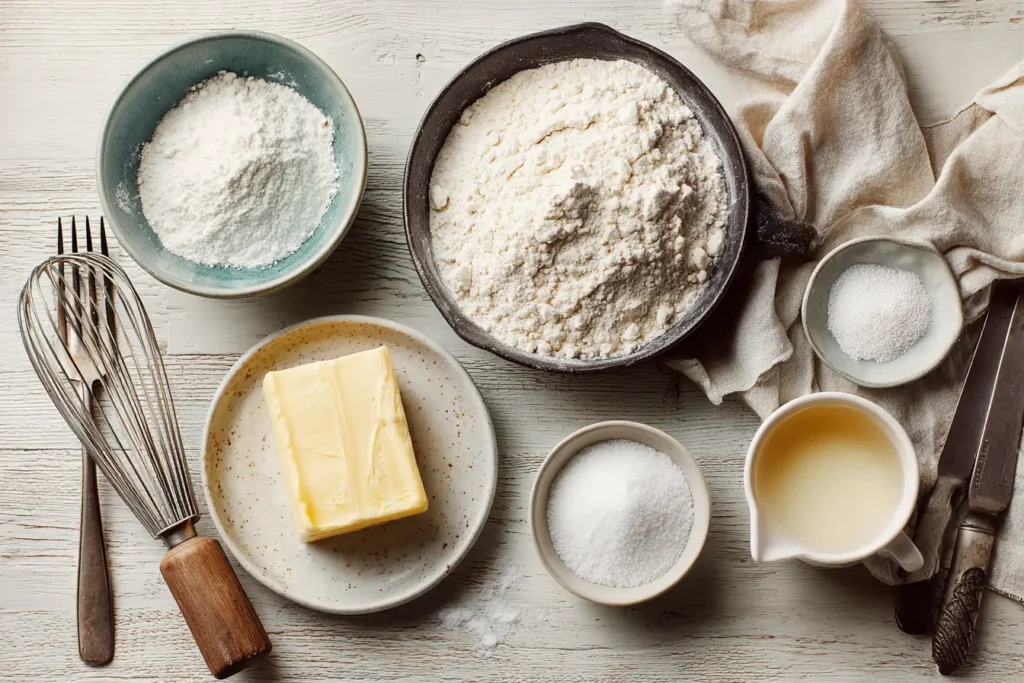
3 cups all-purpose flour
-
2¼ teaspoons instant yeast (1 packet)
-
1 tablespoon granulated sugar
-
1 teaspoon salt
-
1 cup buttermilk, lukewarm
-
2 tablespoons unsalted butter, melted
-
Cornmeal or flour, for dusting
Instructions
-
In a large bowl, whisk together the flour, yeast, sugar, and salt.
-
Add the lukewarm buttermilk and melted butter. Stir until a soft, slightly sticky dough forms.
-
Cover the bowl and let the dough rise in a warm place for 60–90 minutes, until puffy and relaxed.
-
Turn the dough out onto a lightly floured surface and gently pat it into a thick slab (do not roll).
-
Cut or shape into rounds, handling the dough as gently as possible. Lightly dust with cornmeal or flour.
-
Heat a skillet or griddle over low to medium-low heat.
-
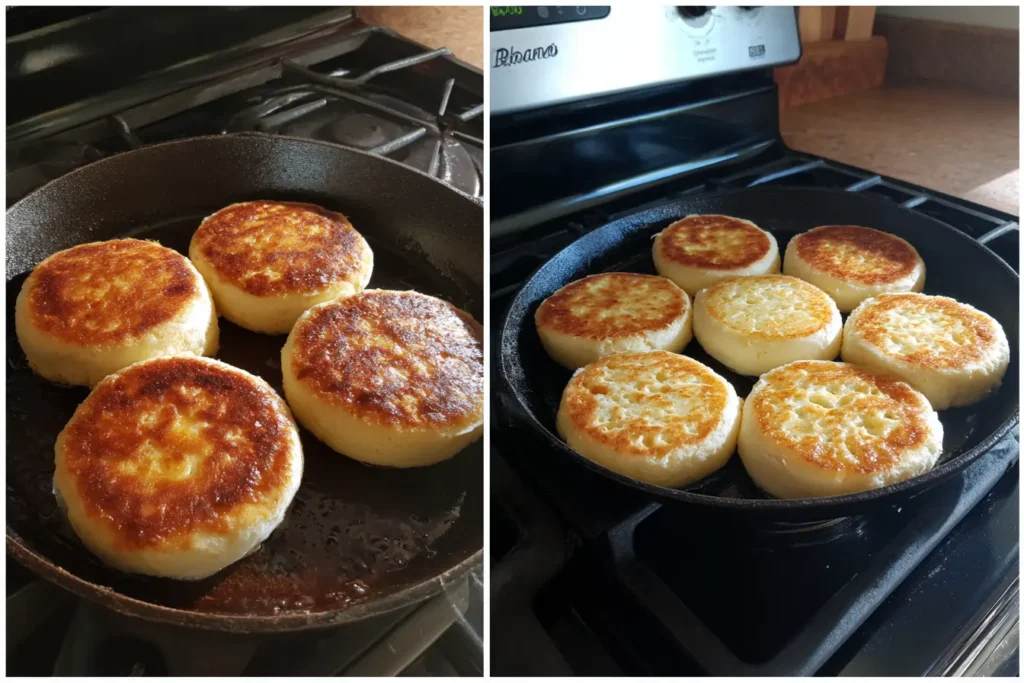
Cook the muffins for 6–8 minutes per side, until golden and cooked through.
-
If muffins brown too quickly but feel doughy inside, transfer to a 350°F (175°C) oven for 5–7 minutes to finish cooking.
-
Cool slightly, then split with a fork and serve.
Notes
-
The dough should feel soft and slightly sticky—avoid adding too much flour.
-
Low, steady heat is key to cooking the muffins through without burning.
-
Always split English muffins with a fork (not a knife) to preserve nooks and crannies.
- Prep Time: 15 minutes
- Cook Time: 20 minutes
- Category: Breakfast
- Method: Stovetop
- Cuisine: American
Nutrition
- Serving Size: 1 muffin
- Calories: 170 kcal
- Sugar: 3 g
- Sodium: 230 mg
- Fat: 5 g
- Saturated Fat: 3 g
- Unsaturated Fat: 2 g
- Trans Fat: 0 g
- Carbohydrates: 30 g
- Fiber: 2 g
- Protein: 6 g
- Cholesterol: 12 mg
Ingredients Explained (So You Don’t Mess It Up)
Homemade buttermilk English muffins don’t need a long ingredient list, but each ingredient matters. This is one of those recipes where understanding why something is there makes everything feel easier—and a lot less stressful if you’re newer to yeast doughs.
Why Buttermilk Creates a Tender Crumb
Buttermilk adds a gentle tang and helps keep the muffins soft. Its natural acidity relaxes the dough just enough to create a tender interior without making things complicated. It’s one of the reasons homemade buttermilk English muffins turn out cozy and bakery-style instead of dry or tough.
Flour Choices: All-Purpose vs Bread Flour
You can use either, but they give slightly different results.
| Flour | Result |
|---|---|
| All-purpose | Softer, lighter muffins |
| Bread flour | Slightly chewier texture |
If you’re unsure, go with all-purpose flour—it’s more forgiving and perfect for beginners.
Yeast, Sugar, and Salt — What Each One Does
- Yeast: Makes the muffins rise and creates those airy pockets
- Sugar: Feeds the yeast and adds a subtle balance
- Salt: Brings out flavor and keeps the dough from tasting flat
Nothing fancy here—just the basics working together.
Can You Substitute Milk for Buttermilk?
Yes, but expect a small change in flavor and texture. Regular milk will work, but the muffins won’t be quite as tender or tangy. If you want a quick fix, add a splash of lemon juice or vinegar to milk and let it sit for a few minutes before using.
Quick ingredient check
If your ingredients are:
- Fresh
- Properly measured
- At room temperature
You’re already setting yourself up for success.
Step-by-Step: How to Make Buttermilk English Muffins
This process is simple, but a little patience goes a long way. Homemade buttermilk English muffins don’t need fancy tools—just gentle handling and steady heat.
Mixing the Dough
The dough should be soft and slightly sticky, not dry or stiff. It won’t look perfectly smooth, and that’s exactly right. If it feels very dry, add a small splash of buttermilk; if it’s overly wet, dust lightly with flour.
First Rise
Let the dough rise until it looks puffy and relaxed, not tightly stretched. When you gently press it, the dough should slowly spring back. This usually takes about 1 to 1½ hours, depending on your kitchen.
Shaping the Muffins
Turn the dough out gently and pat it into a thick layer. Avoid rolling or pressing hard—you want to keep the air inside. Shape or cut the muffins with a light touch.
Cooking on the Stovetop
Cook the muffins over low to medium-low heat. They should brown slowly so the centers cook through. Flip once the bottoms are golden, then finish cooking on the second side.
Oven Finish (If Needed)
If the muffins are thick or browning too quickly, a short oven finish helps cook the centers without drying them out. This is optional and only needed if the inside still feels doughy.
Quick recap
- Soft, slightly sticky dough
- Gentle shaping
- Low, steady heat
That’s the foundation of successful homemade buttermilk English muffins.
Best Pan for Homemade Buttermilk English Muffins
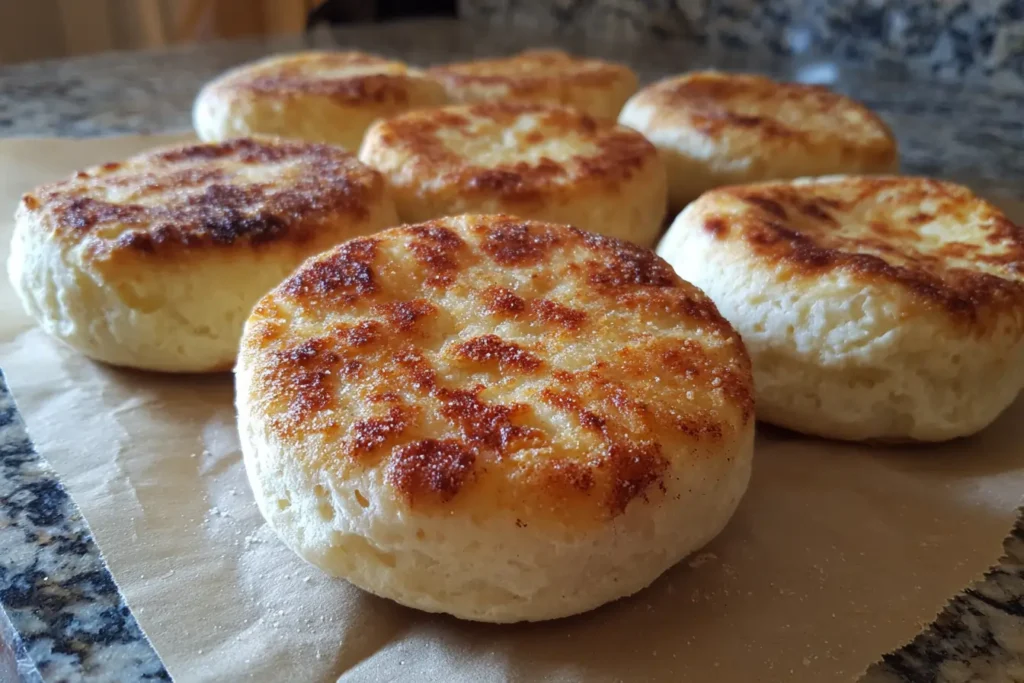
For homemade buttermilk English muffins, the pan matters—but heat control matters more. The goal is slow, even cooking so the muffins cook through without burning.
| Pan | Result |
|---|---|
| Cast iron | Even heat, best browning |
| Non-stick | Softer exterior, very beginner-friendly |
| Griddle | Easy for cooking multiple muffins |
Cast iron is great if you have it, but a simple non-stick skillet works perfectly well for homemade buttermilk English muffins as long as the heat stays low.
Heat Matters More Than the Pan
No matter what you use, keep the heat low and steady. High heat will burn the outside before the center cooks, which is the most common mistake with homemade buttermilk English muffins.
No Cast Iron? No Problem.
If you don’t have cast iron, use a non-stick pan or griddle. With patience and gentle heat, you’ll still get soft, golden homemade buttermilk English muffins.
Variations You Can Trust
Once you’ve made these homemade buttermilk English muffins once, a few simple variations let you adapt them to your schedule or preferences—without changing what makes them work.
Overnight Buttermilk English Muffin Dough
If you want more flexibility, you can let the dough rise slowly in the fridge overnight. This gives homemade buttermilk English muffins a slightly deeper flavor and makes shaping easier the next day.
Why use the overnight option:
- Better flavor development
- Less morning prep
- Same soft, airy texture
Just bring the dough back to room temperature before cooking.
Homemade Buttermilk English Muffins Without Rings
No rings? No problem. You don’t need them for good results.
Simply:
- Keep the dough thick
- Shape gently
- Avoid pressing down
Homemade buttermilk English muffins hold their shape well as long as the dough isn’t overworked.
Milk vs Buttermilk (Quick Comparison)
| Liquid | Result |
|---|---|
| Buttermilk | Softer crumb, slight tang |
| Milk | Milder flavor, slightly firmer |
Milk works in a pinch, but buttermilk gives homemade buttermilk English muffins their signature texture and flavor.
Nutrition Information & Serving Notes
These homemade buttermilk English muffins are meant to be enjoyed—not overanalyzed—but it’s still helpful to know roughly how they fit into your day, especially if you’re building a balanced breakfast.
Approximate Nutrition (Per 1 English Muffin)
| Nutrient | Estimated Amount |
|---|---|
| Calories | ~160–180 kcal |
| Carbohydrates | ~28–32 g |
| Protein | ~5–6 g |
| Fat | ~4–5 g |
| Fiber | ~1–2 g |
| Sugar | ~2–3 g |
Values are estimates and will vary based on portion size and ingredients used.
How to Enjoy Homemade Buttermilk English Muffins
Homemade buttermilk English muffins work beautifully as part of a balanced breakfast or brunch. Pair them with:
- Eggs for protein
- Avocado or nut butter for healthy fats
- Fruit or yogurt on the side
Because they’re made from scratch, these homemade buttermilk English muffins feel more satisfying than store-bought versions—and one usually goes a long way.
Nutrition Notes & Simple Adjustments
- Use all-purpose flour for a softer texture
- Swap part of the flour for whole wheat if you want more fiber
- Keep portions generous but realistic (they’re filling)
FAQs: Homemade Buttermilk English Muffins
Why are my homemade buttermilk English muffins dense?
Dense muffins usually mean the dough was too dry, under-proofed, or cooked over heat that was too high. Homemade buttermilk English muffins need slightly sticky dough, enough rise time, and low, steady heat to stay light inside.
What makes homemade buttermilk English muffins have nooks and crannies?
Nooks and crannies come from higher hydration, gentle handling, and slow stovetop cooking. Fork-splitting instead of slicing also helps keep the interior rough and open.
Can I make homemade buttermilk English muffins without rings?
Yes. Rings are optional. As long as the dough is kept thick and shaped gently, homemade buttermilk English muffins hold their shape well without any special tools.
Why are English muffins cooked on a griddle or skillet?
English muffins are cooked on a skillet so they can brown slowly while the inside cooks through. This method helps homemade buttermilk English muffins develop their signature texture without drying out.
Can I substitute buttermilk for milk in this recipe?
You can use milk if needed, but homemade buttermilk English muffins made with real buttermilk will be softer and slightly tangier. For a quick substitute, add lemon juice or vinegar to milk and let it sit briefly.
Final Thoughts
If you’ve made it this far, you’re more than ready to make homemade buttermilk English muffins with confidence. Don’t overthink it—soft dough, gentle hands, low heat. That’s the rhythm. Even if your first batch isn’t picture-perfect, it’ll still be warm, homemade, and a thousand times better than anything in a plastic bag.
If you try these homemade buttermilk English muffins, I’d love to know how they turn out. Tell me if you got those dreamy nooks and crannies—and whether you’re team butter, jam, or breakfast sandwich. 💛
for more recipes follow me in Facebook, Pinterest and medium.