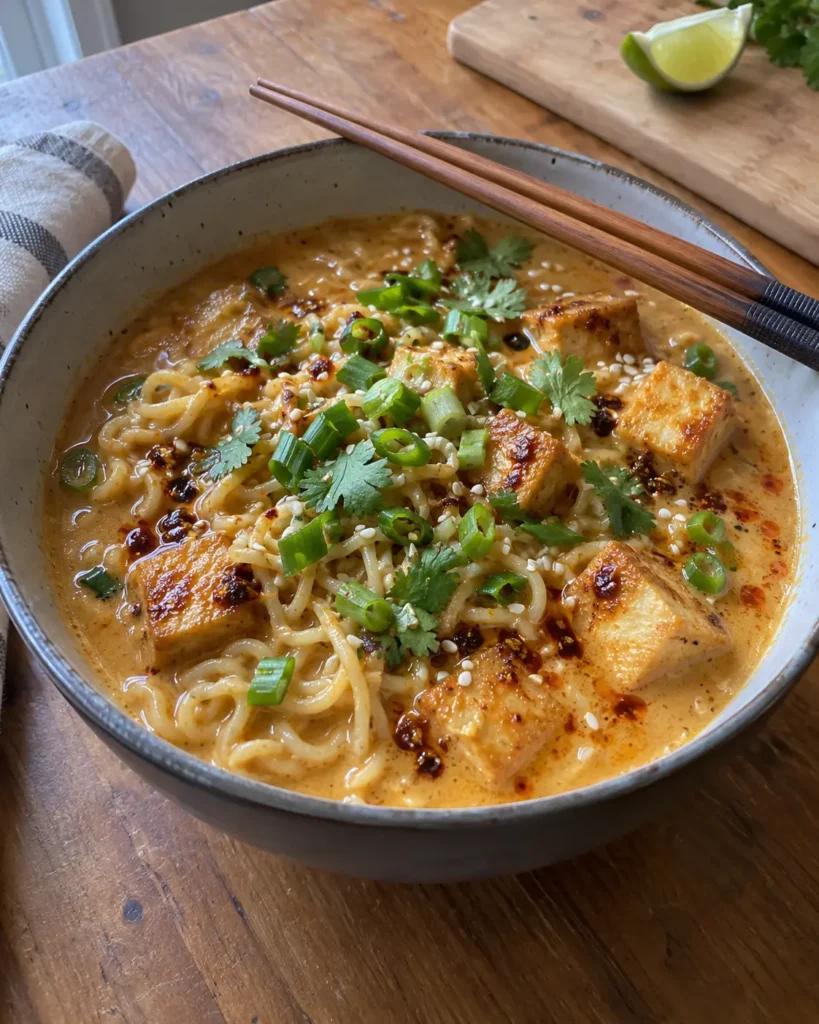
Miso peanut ramen bowls combine rich fermented miso, creamy peanut butter, and coconut milk into a broth so savory and layered that it tastes like it simmered all afternoon. In reality, this entire bowl comes together in about 35 minutes on the stovetop — no specialty equipment, no hard-to-find ingredients, and no fussy techniques.
The balance is what makes these bowls special: salty miso, nutty peanut butter, gentle sweetness from brown sugar, and a warm nudge of red curry paste. Top your miso peanut ramen bowls with any protein you like, pile on fresh garnishes, and dinner feels like a small event. Save or print this recipe for your next cozy weeknight.
Quick These Miso Peanut Ramen Bowls Snapshot
| Detail | Information |
|---|---|
| Prep time | 10 minutes |
| Cook time | 25 minutes |
| Total time | 35 minutes |
| Servings | 4 |
| Serving size | Approximately 1.5 cups (one generous bowl) |
| Difficulty | Easy |
| Cooking method | Stovetop |
| Flavor | Savory, nutty, mildly spiced, umami-rich |
| Texture | Creamy broth with chewy noodles and crispy toppings |
| Best for | Weeknight dinners, cozy meals, meal prep |
Table of Contents
Why You’ll Love These Miso Peanut Ramen Bowls
- Ready in 35 minutes. The broth builds quickly in one pan while noodles boil separately.
- Deeply flavorful without a long ingredient list. Miso, peanut butter, coconut milk, and curry paste handle the heavy lifting.
- Endlessly customizable. Use tofu, chicken, shrimp, or a soft-boiled egg — the broth pairs with almost any protein.
- Family-friendly. Reduce or skip the red curry paste for younger eaters, or add chili crisp for more heat.
- Affordable and pantry-friendly. Most of the flavor base comes from staples you likely own.
Ingredients and Why They Matter
Each ingredient in miso peanut ramen bowls plays a deliberate role in building flavor, body, or texture. Here is a guide to the key ingredients and what to use if you need a swap.
| Main Ingredient | Purpose | Nutrition Contribution | Best Substitution |
|---|---|---|---|
| White miso paste | Deep umami and salty backbone | Protein, sodium, probiotics | Red miso — stronger, saltier; use half the amount |
| Creamy peanut butter | Richness and nutty body | Fat, protein, niacin | Almond butter or sunflower seed butter |
| Full-fat coconut milk | Silky, creamy broth texture | Saturated fat, calories | Lite coconut milk (thinner broth) |
| Red curry paste | Warm aromatic spice | Minimal calories | Sriracha or sambal oelek (different heat profile) |
| Low-sodium broth | Liquid base that dilutes concentrated flavors | Sodium | Water with bouillon paste |
| Ramen noodles (8 oz) | Chewy, satisfying carbohydrate base | Carbohydrates, iron | Rice noodles or udon (different texture) |
| Soy sauce | Deepens salty, savory notes | Sodium | Tamari for gluten-free, or coconut aminos |
| Sesame oil | Fragrant, toasty aroma | Fat | Neutral oil (loses aromatic quality) |
How to Make Miso Peanut Ramen Bowls
Follow these six steps for a rich, well-balanced bowl every time.
- Prepare the aromatics and protein. Mince three garlic cloves and grate one tablespoon of fresh ginger. Press tofu and cut into cubes, or slice chicken into thin strips.
- Cook the protein. Heat one tablespoon of sesame oil in a large, deep skillet over medium-high heat. Cook tofu 5–7 minutes, turning occasionally, until golden and crisp on the edges. For chicken, cook 5–6 minutes per side until the internal temperature reaches 165 °F, the minimum safe temperature recommended by the USDA. Transfer to a plate.
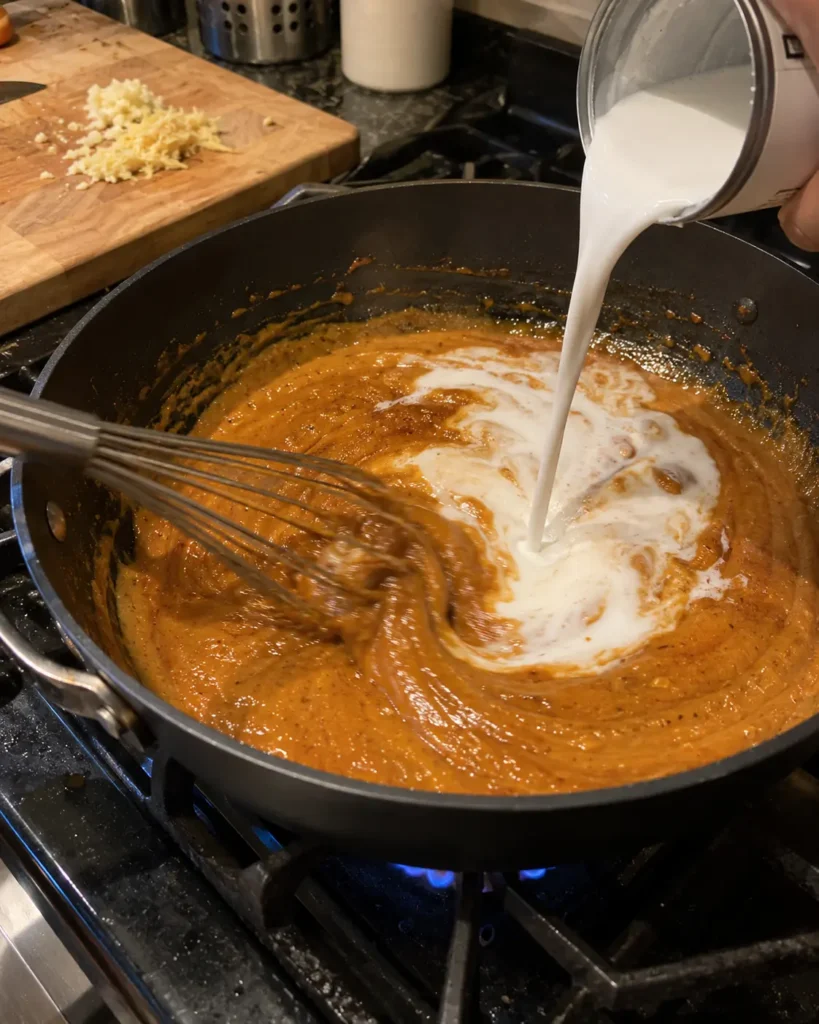
- Build the broth base. In the same skillet over medium heat, sauté garlic and ginger about 60 seconds until fragrant. Stir in the red curry paste for 30 seconds. Add miso paste, peanut butter, soy sauce, and brown sugar. Whisk into a thick, smooth paste.
- Add the liquids. Pour in the coconut milk and broth. Whisk until incorporated and bring to a gentle simmer. Cook 8–10 minutes, stirring occasionally, until the broth coats the back of a spoon.
- Cook the noodles separately. Boil ramen noodles in a separate pot according to package directions, usually 3–4 minutes. Drain and divide among four bowls.
- Assemble your miso peanut ramen bowls. Ladle the hot broth over the noodles. Top with cooked protein, green onions, cilantro, sesame seeds, and a spoonful of chili crisp.
Tips, Mistakes, and Substitutions
Tips for the best miso peanut ramen bowls:
- Whisk miso and peanut butter into a paste before adding any liquid. This prevents lumps and distributes flavor evenly.
- Cook noodles in a separate pot. Boiling them directly in the broth releases starch and turns the liquid gummy.
- Use full-fat coconut milk for the creamiest result. Lite coconut milk works but produces a thinner broth.
- Keep the broth at a gentle simmer rather than a hard boil. High heat dulls miso’s complex flavor.
Common mistakes to avoid:
- Skipping the aromatics. Garlic and ginger prevent the broth from tasting flat.
- Overcooking the noodles. Slightly undercook them, since they continue absorbing liquid in the bowl.
- Adding all the soy sauce at once. Start with one tablespoon and increase after tasting.
Substitution notes: Swap peanut butter for almond butter or sunflower seed butter for a peanut-free version — the broth tastes milder but the texture stays similar. Replace ramen with udon for a chewier noodle, or with rice noodles for a gluten-free option. Coconut aminos can replace soy sauce for those avoiding soy.
Serving Ideas and Variations
Miso peanut ramen bowls work as a flexible canvas that welcomes different proteins, vegetables, and garnishes every time.
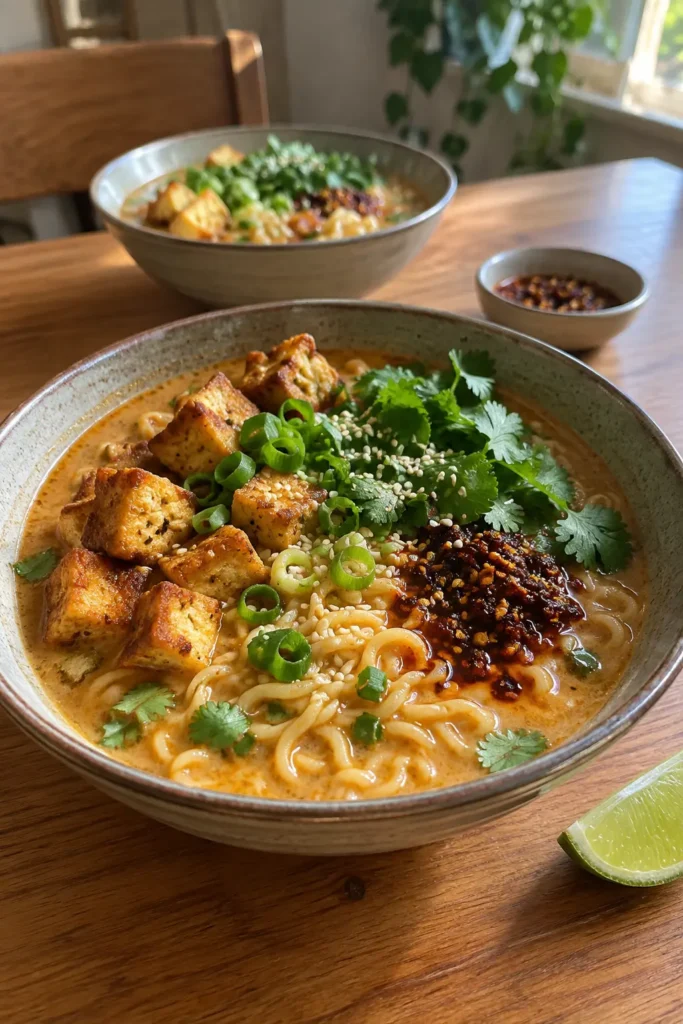
Protein options: Crispy tofu, seared chicken thighs, sautéed shrimp, or a jammy soft-boiled egg. For a quicker meal, shred rotisserie chicken directly into the hot broth.
Vegetable add-ins: Baby bok choy, shiitake mushrooms, steamed broccoli, shredded carrots, or bean sprouts. Add sturdy vegetables to the simmering broth a few minutes before serving and stir leafy greens in at the end.
Garnish ideas: Green onions, cilantro, toasted sesame seeds, chili crisp, or a lime wedge.
Flavor twist: Customize your miso peanut ramen bowls with a tablespoon of tahini for extra richness, or a teaspoon of fish sauce for deeper umami.
If you enjoy Asian-inspired noodle dishes, try the Coconut Lime Shrimp Pad Thai for another quick, flavorful weeknight option. For a warming soup night, the Subgum Wonton Soup is a family favorite worth bookmarking.
Storage, Freezing, and Reheating – Miso Peanut Ramen Bowls
Leftover miso peanut ramen bowls store best when you keep the components apart.
Refrigerator: Store broth and noodles in separate airtight containers. The broth keeps 3–4 days. Noodles stored in broth absorb liquid and become soft, so separating them preserves texture. According to USDA food safety guidelines, cooked leftovers should be refrigerated within two hours.
Freezer: The broth freezes well for up to two months. Leave an inch of headspace for expansion. Do not freeze cooked ramen noodles — they turn mushy when thawed. Cook fresh noodles when you reheat.
Reheating: Warm the broth in a saucepan over medium-low heat with a splash of water. The peanut butter and coconut milk thicken as they cool, so extra liquid restores the original consistency. Boil fresh noodles and ladle reheated broth on top.
Nutrition and Dietary Notes
Nutrition values are estimates based on the listed ingredients, yield, and assumed serving size. Values vary according to brands, substitutions, and portion size.
Each serving of miso peanut ramen bowls assumes one-quarter of the full recipe — approximately 1.5 cups including noodles, broth, and tofu.
| Nutrient | Estimated Amount per Serving | Main Source |
|---|---|---|
| Calories | 480–520 kcal | Coconut milk, peanut butter, noodles |
| Protein | 16–19 g | Tofu, peanut butter, miso |
| Carbohydrates | 42–48 g | Ramen noodles, brown sugar |
| Fiber | 3–4 g | Peanut butter, tofu, vegetables |
| Total sugars | 6–8 g | Brown sugar, coconut milk |
| Added sugars | ~3 g | Brown sugar |
| Total fat | 28–32 g | Coconut milk, peanut butter, sesame oil |
| Saturated fat | 14–17 g | Coconut milk |
| Sodium | 750–900 mg | Miso, soy sauce, broth |
| Iron | 3–4 mg | Tofu, ramen noodles |
The largest source of fat is the full-fat coconut milk, which creates the broth’s creamy body. Peanut butter adds fat and protein along with niacin. Most sodium comes from miso paste and soy sauce — fermented ingredients that deliver strong flavor in small amounts. The USDA FoodData Central database is a useful reference for checking specific ingredient values.
These miso peanut ramen bowls function primarily as a complete dinner. To boost protein, add an extra egg or increase tofu to a full block. To reduce sodium, use low-sodium soy sauce and lower the miso to one tablespoon — the broth tastes milder but remains flavorful. To increase fiber, stir in spinach or bok choy during the last minute of simmering.
Allergens: This recipe contains peanuts, soy (miso and soy sauce), wheat (ramen noodles), and sesame. Use tamari and rice noodles for a gluten-free version, or sunflower seed butter for a peanut-free version.
Frequently Asked Questions – Miso Peanut Ramen Bowls
Can I make miso peanut ramen bowls ahead of time?
Yes. Prepare the broth up to three days ahead and refrigerate it. Cook fresh noodles when ready to serve, since they soften when stored in broth.
What type of miso paste works best?
White (shiro) miso is the mildest and works best here. Red miso is stronger — start with half the amount and taste before adding more.
Is this recipe spicy?
The red curry paste adds gentle warmth rather than sharp heat. Reduce it to half a tablespoon for a milder bowl, or add chili crisp at the table for more kick.
Can I use a different nut butter?
Almond butter and cashew butter both work. The flavor is slightly less nutty, but the broth texture stays similar. Sunflower seed butter is the closest nut-free match.
What noodles can I use instead of ramen?
Udon gives a thicker, chewier bite. Rice noodles make the dish gluten-free but produce a softer texture. Soba noodles work too, though their buckwheat flavor adds an earthy note.
How do I add vegetables to miso peanut ramen bowls?
Bok choy, mushrooms, broccoli, carrots, and bean sprouts are all excellent. Add firm vegetables to the simmering broth a few minutes before serving and stir leafy greens in at the end.
Final Thoughts – Miso Peanut Ramen Bowls
A satisfying bowl of ramen should feel like a warm reset at the end of a long day. Miso peanut ramen bowls deliver that feeling in 35 minutes with pantry-friendly ingredients and plenty of room to make the recipe your own. Once you try this broth, it has a way of becoming a regular weeknight request.
Print
Miso Peanut Ramen Bowls
- Total Time: 35 minutes
- Yield: 4 servings 1x
- Diet: Vegetarian
Description
A creamy, savory ramen bowl featuring a broth made from white miso, peanut butter, coconut milk, and red curry paste, served over chewy ramen noodles with your choice of protein and fresh toppings.
Ingredients
Broth:
2 tablespoons white miso paste
2 tablespoons creamy peanut butter
1 tablespoon red curry paste
1 can (14 oz) full-fat coconut milk
3 cups low-sodium chicken or vegetable broth
2 tablespoons soy sauce
1 tablespoon brown sugar
3 cloves garlic, minced
1 tablespoon fresh ginger, grated
1 tablespoon sesame oil
Noodles:
8 oz dried ramen noodles
Protein (choose one):
14 oz extra-firm tofu, pressed and cubed
OR 1 lb boneless chicken thighs, sliced thin
Toppings:
2 green onions, sliced
Fresh cilantro
Sesame seeds
Chili crisp
Lime wedges (optional)
Instructions
1. Mince the garlic and grate the ginger. Press tofu and cut into cubes, or slice chicken into thin strips.
2. Heat sesame oil in a large deep skillet over medium-high heat. Cook tofu 5–7 minutes, turning occasionally, until golden and crisp. For chicken, cook 5–6 minutes per side until the internal temperature reaches 165 °F. Transfer to a plate.
3. In the same skillet over medium heat, sauté garlic and ginger 60 seconds until fragrant. Stir in the red curry paste for 30 seconds. Add miso paste, peanut butter, soy sauce, and brown sugar. Whisk into a thick paste.
4. Pour in coconut milk and broth. Whisk until incorporated. Bring to a gentle simmer and cook 8–10 minutes until the broth coats the back of a spoon.
5. Boil ramen noodles separately according to package directions (about 3–4 minutes). Drain and divide among four bowls.
6. Ladle hot broth over the noodles. Top with cooked protein, green onions, cilantro, sesame seeds, and chili crisp.
Notes
Whisk miso and peanut butter into a paste before adding liquids to prevent lumps.
Always cook noodles separately to avoid a starchy, gummy broth.
Taste before serving and adjust with more soy sauce or a squeeze of lime.
Storage: Broth and noodles stored separately in airtight containers, refrigerator, 3–4 days.
Freezing: Broth only, up to 2 months. Do not freeze cooked noodles.
Reheating: Warm broth in a saucepan over medium-low heat with a splash of water. Cook fresh noodles separately.
- Prep Time: 10 minutes
- Cook Time: 25 minutes
- Category: Dinner
- Method: Stovetop
- Cuisine: Asian-Inspired
Nutrition
- Serving Size: Approximately 1.5 cups (one generous bowl)
- Calories: 500 kcal
- Sugar: 7g
- Sodium: 825mg
- Fat: 30g
- Saturated Fat: 16g
- Unsaturated Fat: 12g
- Trans Fat: 0g
- Carbohydrates: 45g
- Fiber: 3.5g
- Protein: 18g
- Cholesterol: 0mg