
I still remember the first time I tried to make this Greek rice recipe in my tiny kitchen, with lemon juice on the counter, olive oil on my hands, and way too much confidence for someone cooking rice without measuring 😅. I wanted a Greek rice that felt cozy but bright — fluffy, lemony, and full of that Mediterranean flavor I love so much.
Of course, my first attempt was… let’s call it a learning moment. The rice was soft, but the flavor wasn’t quite there. So I tried again (because giving up on a good Greek rice recipe is simply not an option in my kitchen). A few tweaks, a little more lemon at the right moment, and suddenly the rice turned light, fragrant, and perfectly fluffy.
Now this Greek rice is one of those recipes I make almost without thinking — music playing, apron slightly crooked, kitchen warm — and every time, it feels like a small Mediterranean hug on a plate 💛.
Table of Contents
Table of Contents
What Is Greek Rice, Exactly?
What Makes Greek Rice Different From Regular Rice
Greek rice isn’t just rice with lemon. The key difference is the absorption method — the rice cooks in broth, olive oil, and lemon until all that flavor is absorbed, not drained away.
The result is rice that’s:
- Fluffy and separate
- Bright and lemony
- Savory without being heavy
It’s the same simple, flavor-first approach you see in Mediterranean-style dishes like this Mediterranean Breakfast Sandwich, where a few good ingredients do all the work.
Is Greek Rice the Same as Rice Pilaf or Orzo?
They’re related, but not the same. Here’s the quick version:
| Dish | Main Difference |
|---|---|
| Greek Rice | Rice with broth, olive oil, and lemon |
| Rice Pilaf | Rice cooked in broth, usually without lemon |
| Orzo | Pasta, not rice |
Greek cooking uses all three, but Greek rice is the go-to when you want a light, lemony side.
How Greek Rice Is Traditionally Served
Greek rice is usually served as a side dish, paired with grilled meats, fish, or vegetables. It works especially well with richer plates, like Creamed Spinach With Feta Cheese, because the lemon keeps everything balanced and fresh.
Why This Greek Rice Recipe Works
This Greek rice recipe works because it follows the same simple technique used in authentic Greek cooking. Instead of boiling and draining the rice, this Greek rice is cooked using the absorption method, so every grain soaks up broth, olive oil, and lemon flavor.
That’s what gives this Greek rice recipe its signature texture:
- Fluffy, separate grains
- Bright but balanced lemon flavor
- Rich, savory taste without heaviness
The Absorption Method (No Draining Needed)
In a proper Greek rice recipe, the rice cooks until the liquid is fully absorbed. This keeps the rice flavorful and prevents the bland taste you get when water is drained away. It’s the main reason Greek lemon rice tastes so much better than plain rice.
When to Add Lemon (So It’s Never Bitter)
Timing matters in any Greek lemon rice recipe. Lemon juice added too early can taste sharp, so in this Greek rice recipe it’s added near the end for freshness, while lemon zest provides aroma without bitterness.
Olive Oil Timing Makes the Difference
Olive oil is essential in authentic Greek rice. A small amount at the start builds flavor, and a final drizzle at the end gives this Greek rice recipe that rich, restaurant-style finish.
Print
Greek Rice Recipe
- Total Time: 25 minutes
- Yield: 4 servings 1x
- Diet: Vegetarian
Description
This Greek Rice Recipe is light, fluffy, and full of bright lemon flavor. Made with simple ingredients like rice, broth, olive oil, and fresh lemon, this Greek-style rice is the perfect side dish for chicken, fish, or Mediterranean meals. Easy to make on the stovetop and ready in under 30 minutes.
Ingredients
-
1 cup long-grain white rice or basmati rice
-
2 cups chicken broth or vegetable broth
-
2 tablespoons olive oil
-
1 clove garlic, minced
-
1 lemon (zest + juice)
-
½ teaspoon salt (adjust to taste)
-
¼ teaspoon black pepper
-
2 tablespoons fresh parsley or dill, chopped (optional)
Instructions
-
Rinse the rice under cold water until the water runs mostly clear. Drain well.
-
Heat olive oil in a medium saucepan over medium heat. Add garlic and cook for 30 seconds until fragrant.
-
Add the rice and stir to coat in the oil. Toast for 1–2 minutes.
-
Pour in the broth, salt, and pepper. Stir once, then bring to a gentle simmer.
-
Cover and cook on low heat for 15–18 minutes, or until the liquid is absorbed.
-
Remove from heat and let the rice rest, covered, for 5 minutes.
-
Fluff with a fork. Stir in lemon zest, lemon juice, and fresh herbs if using. Serve warm.
Notes
-
Use basmati rice for the fluffiest texture.
-
Add lemon juice after cooking to avoid bitterness.
-
For a vegan version, use vegetable broth.
-
Adjust lemon juice to taste for mild or bold Greek lemon rice.
- Prep Time: 5 minutes
- Cook Time: 20 minutes
- Category: Lunch
- Method: Stovetop
- Cuisine: Greek, Mediterranean
Nutrition
- Serving Size: 1 cup
- Calories: 240 kcal
- Sugar: 1 g
- Sodium: 420 mg
- Fat: 7 g
- Saturated Fat: 1 g
- Unsaturated Fat: 5 g
- Trans Fat: 0 g
- Carbohydrates: 42 g
- Fiber: 1.5 g
- Protein: 5 g
- Cholesterol: 0 mg
Ingredients for Greek Rice (With Smart Swaps)
This Greek rice recipe uses simple ingredients, but each one plays an important role in building flavor. You don’t need anything fancy — just good basics used the right way.
Core Ingredients You Need
- Rice – long-grain or basmati works best for fluffy Greek rice
- Broth – chicken or vegetable broth adds depth
- Lemon – juice for brightness, zest for aroma
- Olive oil – essential for authentic Greek flavor
- Garlic – subtle but important
- Salt – brings everything together
This combination is what gives a classic Greek lemon rice its clean, Mediterranean taste.
Broth vs Water (Big Flavor Difference)
In a traditional Greek rice recipe, broth is strongly recommended. Cooking the rice in broth instead of water makes the flavor richer and more savory.
- Best choice: Chicken or vegetable broth
- Water works if: You add enough salt and olive oil
- Flavor tip: Warm the broth before adding it to the rice
Using broth is one of the easiest ways to make your Greek rice recipe taste restaurant-worthy.
Herb Options: Fresh vs Dried
Herbs aren’t required, but they add a beautiful finishing touch to Greek rice.
- Fresh parsley: clean and classic
- Fresh dill: slightly tangy, very Greek
- Dried herbs: use less, but they still work
Add herbs at the end so your Greek rice stays bright and fresh, not dull.
Best Rice for Greek Rice (Comparison Table)
Choosing the right rice makes a huge difference in this Greek rice recipe. The goal is fluffy grains that stay separate while soaking up lemon, olive oil, and broth.
Basmati vs Long-Grain vs Jasmine
| Rice Type | Texture Result | Flavor Absorption | Best For Greek Rice? |
|---|---|---|---|
| Basmati | Very fluffy, separate grains | Excellent | Best choice |
| Long-grain white | Fluffy, classic | Very good | Great option |
| Jasmine | Softer, slightly sticky | Good | Works, but less traditional |
For most cooks, basmati rice gives the lightest, fluffiest result in a Greek lemon rice recipe. Long-grain white rice is also reliable and easy to find.
What Rice Greek Restaurants Usually Use
Most Greek restaurants use long-grain white rice or basmati, cooked with broth and finished with lemon. They avoid short-grain rice because it releases too much starch and turns creamy instead of fluffy.
Rice Types to Avoid (And Why)
For this Greek rice recipe, skip:
- Short-grain rice (too sticky)
- Arborio or risotto rice (creamy texture)
- Sushi rice (clumps easily)
These types fight against the light, fluffy texture Greek rice is known for.
How to Make Greek Rice (Step-by-Step)
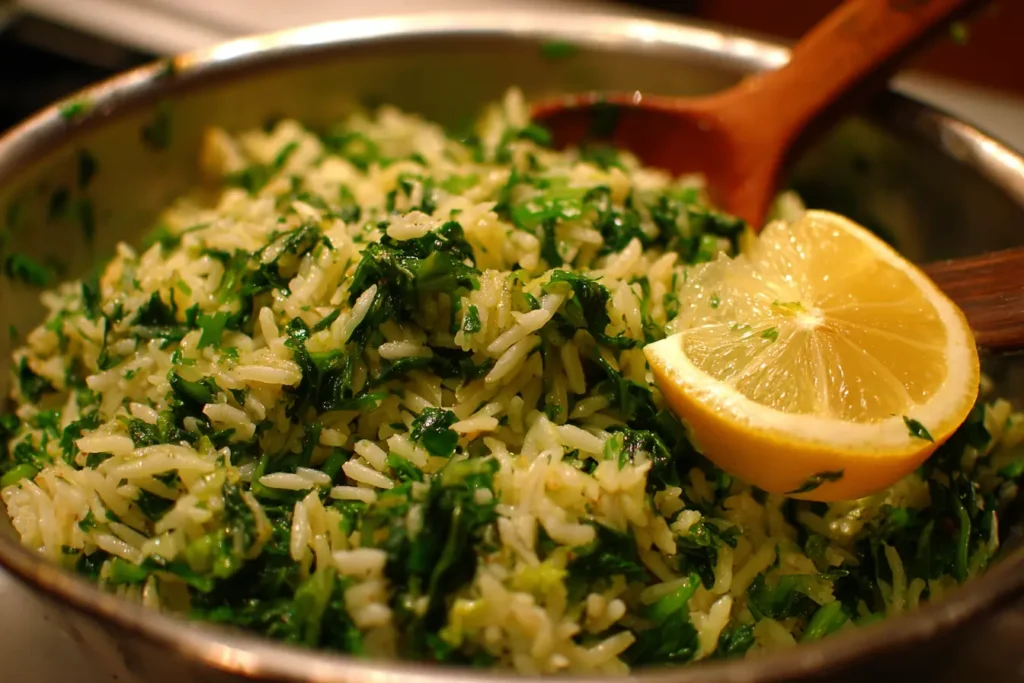
This Greek rice recipe is easy, but following the steps in order is what gives you fluffy, lemony Greek rice instead of mushy rice.
Step 1: Rinse and Toast the Rice
Rinse the rice under cold water to remove excess starch. This helps keep the Greek rice fluffy. Heat olive oil in a pan, add the rice, and toast briefly to coat each grain and build flavor for this Greek rice recipe.
Step 2: Add Broth and Simmer
Pour in warm broth, give one quick stir, then stop stirring. Cover and let the rice simmer gently until the liquid is absorbed. This absorption method is what gives Greek lemon rice its rich flavor.
Step 3: Rest, Fluff, and Finish
Remove from heat and let the rice rest, covered, for a few minutes. Fluff with a fork, then finish this Greek rice recipe with lemon juice, lemon zest, and a light drizzle of olive oil.
Lemon Flavor Control Guide (Mild → Bold)
One of the best things about this Greek rice recipe is how easy it is to adjust the lemon flavor. Whether you like it subtle or bright and bold, this guide helps you get Greek lemon rice exactly how you love it.
Mild Lemon Greek Rice (Kid-Friendly)
- Use lemon zest only
- Skip lemon juice or add just a few drops
- Flavor is gentle, warm, and not sharp
This version keeps the Greek rice soft and comforting, perfect if you prefer lemon in the background.
Classic Greek Lemon Rice (Balanced)
- Lemon zest + 1–2 tablespoons lemon juice
- Added after cooking
- Bright but smooth flavor
This is the most traditional Greek rice recipe style — fresh, lemony, and balanced.
Bold & Bright Restaurant-Style Lemon Rice
- Extra lemon zest
- More lemon juice added at the end
- Finished with a small olive oil drizzle
This version gives you that bold, restaurant-style Greek lemon rice that really stands out next to grilled meats or fish.
Greek Rice Variations You’ll Actually Use
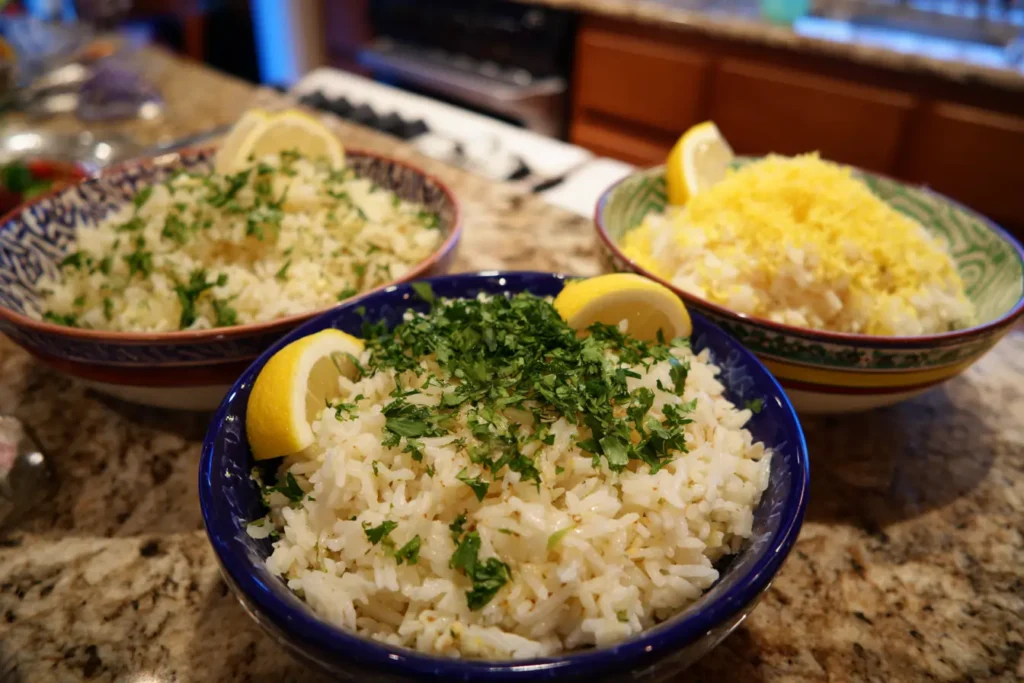
This Greek rice recipe is easy to adapt without losing its fluffy texture or bright flavor.
- Greek Rice Without Lemon
Skip the lemon juice and zest, add a little extra olive oil, and finish with fresh herbs for a mild, savory Greek rice. - Baked Greek Rice Pilaf
Toast the rice first, then bake it with broth until absorbed. This version works well when you want a hands-off Greek rice recipe. - Vegan Greek Rice
Use vegetable broth and finish with olive oil and herbs. The flavor stays rich and balanced. - Greek Rice With Spinach or Herbs
Stir in fresh spinach or extra parsley and dill at the end for color and freshness.
What to Serve With Greek Rice
This Greek rice recipe is designed to be a flexible side dish that works with many meals. The lemony flavor pairs especially well with savory mains and Mediterranean-style plates.

Chicken Pairings
Greek rice is perfect with chicken dishes that have bold or creamy flavors. Try serving it alongside:
- Apple and Brie Stuffed Chicken Breast – the lemony rice balances the richness beautifully
- Simple roasted or grilled chicken
Lamb or Beef Pairings
Greek rice works well with hearty meats because it keeps the plate light and fresh.
- Roasted lamb or beef dishes
- Savory casseroles or skillet meals
Fish & Seafood Pairings
The lemon in this Greek rice recipe makes it a natural match for seafood.
- Citrusy Salmon Packets
- Pan-seared or baked fish
Vegetarian Mediterranean Plates
For a meatless option, Greek rice fits easily into vegetarian meals:
- Creamed Spinach With Feta Cheese
- Roasted vegetables or simple salads
Greek Rice Nutrition Information
This Greek rice recipe is made with simple, wholesome ingredients that fit naturally into a balanced, Mediterranean-style meal. The nutrition will vary slightly based on how much olive oil and broth you use, but this gives you a reliable estimate.
Nutrition Breakdown (Per Serving)
| Nutrient | Approximate Amount |
|---|---|
| Serving Size | 1 cup cooked |
| Calories | 220–260 kcal |
| Carbohydrates | 40–45 g |
| Protein | 4–6 g |
| Fat | 6–9 g |
| Fiber | 1–2 g |
| Sodium | Varies (based on broth) |
(Values are estimates and may change depending on ingredients.)
Is Greek Rice a Healthy Choice?
This Greek rice recipe includes olive oil, lemon, and broth — ingredients commonly associated with Mediterranean-style eating. Extra-virgin olive oil is widely recognized as a healthy fat when used in moderation, and lemon adds flavor without extra calories, as highlighted in Mediterranean diet guidelines shared by Healthline.
For food safety and storage guidance related to cooked rice, recommendations from the USDA are considered the standard reference.
When paired with vegetables, fish, or lean protein, Greek rice works well as part of a satisfying and balanced meal.
Greek Rice Recipe FAQ’s
What makes Greek rice different from regular rice?
Greek rice is cooked using the absorption method, so the rice absorbs broth, olive oil, and lemon instead of being drained. This is why a Greek rice recipe tastes more flavorful and stays fluffy instead of bland.
What rice do Greeks usually use for Greek rice?
Most Greek home cooks and restaurants use long-grain white rice or basmati. These types stay light and separate, which is ideal for a classic Greek lemon rice texture.
Can I make Greek rice without lemon?
Yes. You can skip the lemon juice and zest and add a little extra olive oil and herbs instead. The result is still a flavorful Greek rice recipe, just without the citrus brightness.
Is Greek rice the same as rice pilaf?
Not exactly. While both use the absorption method, Greek rice is typically finished with lemon and olive oil, while pilaf usually does not include lemon.
Can Greek rice be baked instead of cooked on the stove?
Yes. A baked version works well if you want a more hands-off Greek rice recipe. Toast the rice first, then bake it covered with broth until the liquid is absorbed.
Final Thoughts From My Kitchen
This Greek rice recipe is one of those simple dishes that quietly makes every meal better. Fluffy rice, bright lemon, good olive oil — nothing complicated, just thoughtful cooking that works every time.
If you try it once, you’ll start making this Greek rice on autopilot, the kind of recipe that feels familiar and comforting but never boring. Save it, make it your own, and enjoy that little Mediterranean moment right from your kitchen 💛.
for more recipes follow me in Facebook, Pinterest and medium.