Apple cider pancakes bring the warm, spiced flavor of fall right to your breakfast table. Made with real apple cider, buttermilk, cinnamon, and a touch of nutmeg, these tender pancakes taste like the best parts of autumn stacked on a plate. The batter comes together in about ten minutes, and each pancake cooks up golden with a faintly crisp edge and a soft, fluffy center.
Whether you are feeding a weekend crowd or prepping breakfast for busy mornings ahead, this recipe is forgiving and adaptable. Save or print it now so you have it ready the next time a chilly morning calls for something special.
Quick Recipe Snapshot
| Detail | Information |
|---|---|
| Prep time | 10 minutes |
| Cook time | 20 minutes |
| Total time | 30 minutes |
| Servings | 4 (12 pancakes) |
| Serving size | 3 pancakes |
| Difficulty | Easy |
| Cooking method | Stovetop griddle or skillet |
| Flavor | Warm cinnamon-apple with tangy buttermilk |
| Texture | Fluffy and tender with lightly crisp edges |
| Best for | Fall breakfast, weekend brunch, meal prep |
Table of Contents
Why You’ll Love This Apple Cider Pancakes Recipe
- Real apple cider flavor. The cider replaces part of the liquid, giving every bite a subtle, naturally sweet apple taste that plain milk cannot achieve.
- Warm fall spices throughout. Cinnamon and nutmeg are mixed into the batter, not just sprinkled on top, so the flavor is consistent from the first forkful to the last.
- Fluffy, tender crumb. The combination of buttermilk, baking powder, and baking soda creates a lift that keeps these pancakes light without being cakey.
- Weekday-friendly prep. Ten minutes of hands-on work and simple pantry staples mean you do not need a special occasion to make them.
- Freezer-ready. Extras stack and freeze beautifully, making busy-morning breakfasts almost effortless.
Ingredients and Why They Matter
The ingredient list is short, but each item plays a role in the final texture and flavor of these apple cider pancakes. Understanding why an ingredient is there helps you make confident substitutions when you need to.
| Main Ingredient | Purpose | Nutrition Contribution | Best Substitution |
|---|---|---|---|
| All-purpose flour (2 cups) | Structure and body | Carbohydrates, small amount of protein | 1:1 gluten-free blend (expect slightly denser texture) |
| Apple cider (1 cup) | Apple flavor and moisture | Natural sugars, trace potassium | Unsweetened apple juice (slightly sweeter result) |
| Buttermilk (¾ cup) | Tang and tenderness | Protein, calcium | ¾ cup milk plus 2 tsp lemon juice, rested 5 minutes |
| Brown sugar (3 tablespoons) | Gentle sweetness, slight caramel note | Added sugars | Coconut sugar or maple syrup (reduce liquid by 1 tablespoon if using syrup) |
| Eggs (2 large) | Binding, lift, richness | Protein, B vitamins | 2 flax eggs for a vegan option (texture will be slightly denser) |
| Unsalted butter, melted (3 tablespoons) | Flavor and moisture | Fat, saturated fat | Neutral oil such as avocado or canola (less rich flavor) |
| Cinnamon (1½ teaspoons) | Warm spice flavor | Trace manganese | Pumpkin pie spice blend |
| Baking powder and baking soda | Lift and spread | Sodium | Do not substitute; both are needed for proper rise |
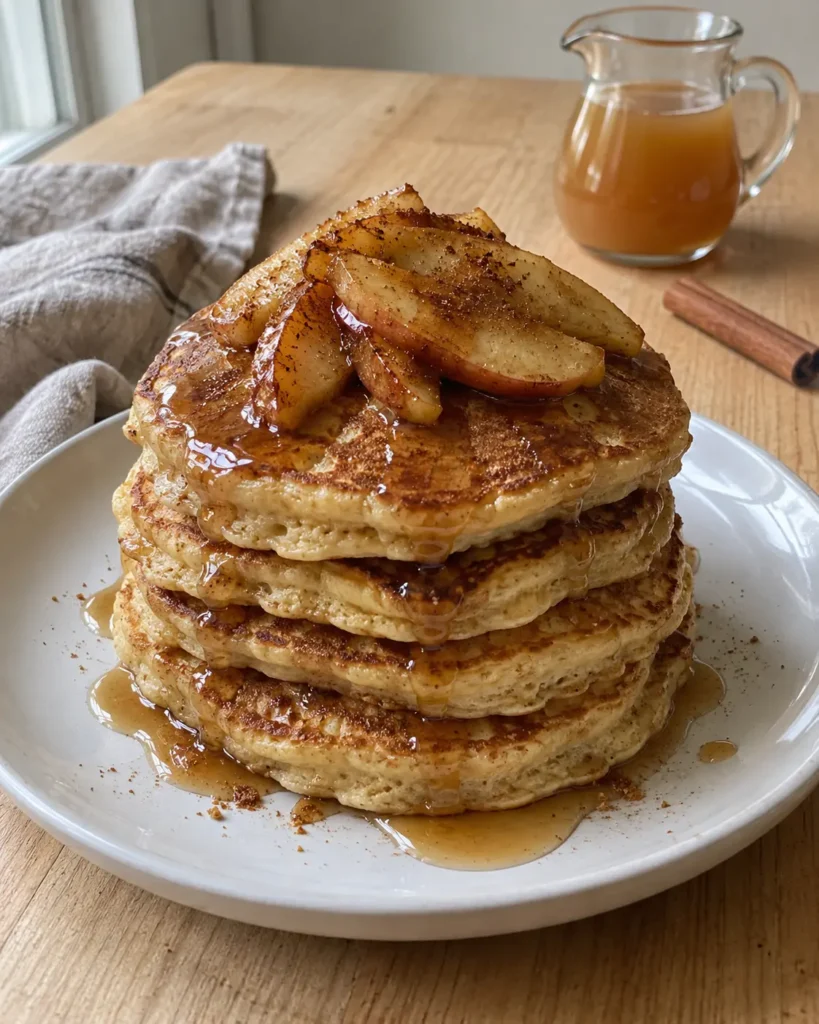
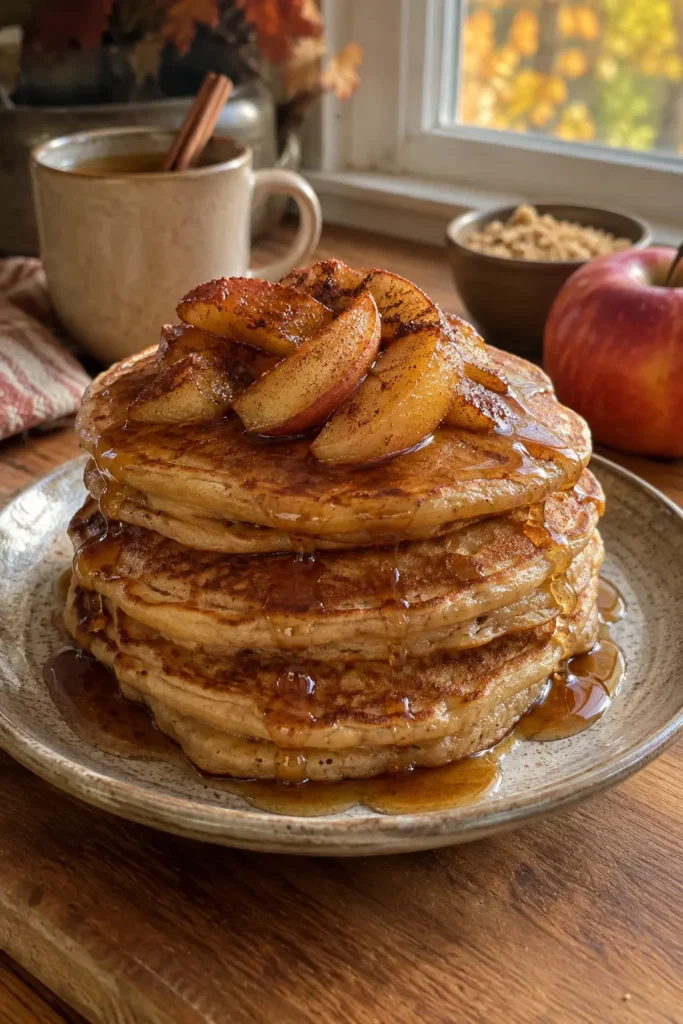
IMAGE 1 Position: After the introduction, before the Quick Recipe Snapshot Purpose: Finished hero image Alt text: Stack of fluffy apple cider pancakes topped with caramelized apples and maple syrup
How to Make Apple Cider Pancakes
Follow these steps for tall, evenly cooked pancakes every time.
- Whisk the dry ingredients. In a large bowl, combine 2 cups all-purpose flour, 3 tablespoons brown sugar, 1½ teaspoons cinnamon, ¼ teaspoon nutmeg, 2 teaspoons baking powder, ½ teaspoon baking soda, and ½ teaspoon salt. Stir until evenly blended.
- Combine the wet ingredients. In a separate bowl, whisk together 1 cup apple cider, ¾ cup buttermilk, 2 beaten eggs, 3 tablespoons melted butter (cooled slightly), and 1 teaspoon vanilla extract.
- Mix gently. Pour the wet mixture into the dry mixture and fold with a spatula until just combined. The batter should still look lumpy. Overmixing activates the gluten in the flour and produces tough, chewy pancakes instead of fluffy ones. As King Arthur Baking explains, a few streaks of dry flour are preferable to a smooth batter.
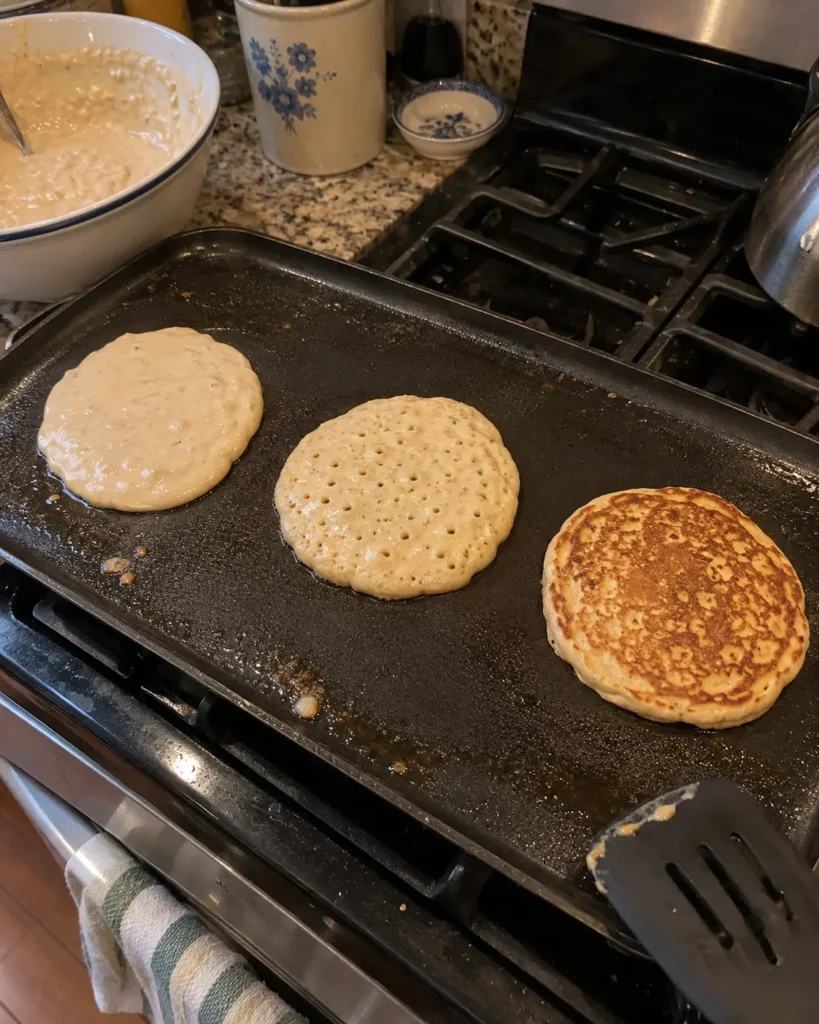
- Preheat your cooking surface. Heat a griddle or large nonstick skillet over medium heat (about 325–350 °F on an electric griddle). Lightly grease with butter or cooking spray. To test the heat, flick a few drops of water onto the surface — they should sizzle and evaporate within two seconds.
- Cook the pancakes. Pour about ¼ cup of batter per pancake. Cook until bubbles form across the surface and the edges look set, roughly 2–3 minutes. Flip once and cook the second side for 1–2 minutes until golden brown. Avoid pressing down with the spatula, which pushes out the air you worked to create.
- Keep warm while finishing. Place cooked pancakes on a wire rack set inside a rimmed baking sheet in a 200 °F oven. This keeps them warm without steaming the bottoms soft.
Tips, Mistakes, and Substitutions
Tips for the best results:
- Let the batter rest for two to three minutes after mixing. This gives the leavening a head start and produces slightly taller pancakes.
- Use room-temperature buttermilk and cider. Cold liquid can solidify the melted butter into small lumps.
- Measure flour by spooning it into the measuring cup and leveling with a knife. Scooping directly from the bag compacts the flour and can add an extra two tablespoons per cup.
Common mistakes to avoid:
- Overmixing the batter. A few lumps are normal. Smooth batter means overdeveloped gluten and flat, dense pancakes.
- Cooking on high heat. Medium heat gives the inside time to cook through before the outside burns. If your pancakes are dark outside and raw inside, lower the flame.
- Flipping too early. Wait until the bubbles on the surface pop and leave small holes. Flipping before this point often means a raw center.
- Skipping the preheat. A cold pan causes the batter to spread too thin before it sets, giving you flat, pale results.
Substitution notes:
For dairy-free apple cider pancakes, replace buttermilk with oat milk mixed with one teaspoon of apple cider vinegar and use coconut oil instead of butter. The pancakes will be slightly less tangy but still tender. If you love fruity breakfast ideas, try the sheet pan pancake method for a hands-off approach that feeds a crowd.
Serving Ideas and Variations – Apple Cider Pancakes
Apple cider pancakes pair naturally with toppings that complement their warm spice profile.
Serving suggestions: Drizzle with pure maple syrup, dollop with whipped cream, or spoon caramelized apples on top. A side of crispy bacon or breakfast sausage rounds out the plate with savory contrast. For a homemade apple topping, the slow cooker Cracker Barrel fried apples make an ideal match.
Variations to try:
- Apple cider pancakes with diced apples. Fold ¾ cup of peeled, finely diced apple into the batter before cooking for visible fruit in every bite.
- Streusel-topped. Sprinkle a quick oat-brown sugar crumble onto each pancake right after pouring the batter, before flipping.
- Whole-wheat version. Replace one cup of all-purpose flour with whole-wheat pastry flour for extra fiber. The texture will be slightly heartier.
- Apple cider pancake bites. Pour batter into a mini muffin tin and bake at 350 °F for 12–14 minutes for a portable, kid-friendly option.
If you enjoy apple-flavored drinks alongside your breakfast, a batch of slow cooker apple cider is a wonderful pairing.
Storage, Freezing, and Reheating
Refrigerator storage: Let the pancakes cool completely, then stack them with small squares of parchment paper between each one. Store in an airtight container in the refrigerator for up to four days.
Freezing: Arrange cooled pancakes in a single layer on a parchment-lined baking sheet and freeze for one to two hours. Transfer frozen pancakes to a resealable freezer bag, pressing out excess air. They keep well for up to two months. According to the USDA’s food safety guidelines, cooked foods should be frozen promptly and reheated to an internal temperature of 165 °F.
Reheating: Toast frozen pancakes directly in a toaster or toaster oven at 350 °F for three to four minutes. For the microwave, heat on high for 30–45 seconds per pancake, covering with a damp paper towel to prevent drying.
Nutrition and Dietary Notes – Apple Cider Pancakes
Nutrition values are estimates based on the listed ingredients, yield, and assumed serving size. Values vary according to brands, substitutions, and portion size.
Estimated serving size: 3 pancakes (without topping or syrup)
| Nutrient | Estimated Amount per Serving | Main Source |
|---|---|---|
| Calories | 420 kcal | Flour, butter, sugar |
| Protein | 11 g | Eggs, flour, buttermilk |
| Carbohydrates | 64 g | Flour, apple cider, brown sugar |
| Fiber | 2 g | Flour |
| Total sugars | 18 g | Apple cider, brown sugar |
| Added sugars | 9 g | Brown sugar |
| Total fat | 13 g | Butter, eggs |
| Saturated fat | 7 g | Butter |
| Sodium | 620 mg | Salt, baking powder, baking soda |
| Calcium | 190 mg | Buttermilk, flour |
Most of the carbohydrates come from all-purpose flour and apple cider. The protein is shared between the eggs, buttermilk, and flour. Butter contributes the majority of the saturated fat, while the sodium comes primarily from salt and the leavening agents. The USDA FoodData Central database provides per-ingredient reference values used in these estimates.
This recipe functions primarily as a breakfast or brunch dish. Three pancakes make a satisfying meal on their own, especially with a source of protein on the side.
Practical adjustments:
- Boost protein: Serve with a side of Greek yogurt or eggs to add roughly 10–15 grams of protein.
- Reduce sodium: Cut the salt to ¼ teaspoon. The cinnamon and apple cider provide enough flavor to compensate.
- Add fiber: Use one cup of whole-wheat pastry flour in place of one cup of all-purpose flour. This adds approximately 3 grams of fiber per serving with a slightly nuttier flavor.
Allergens: This recipe contains wheat, milk, and eggs. The brown sugar and vanilla extract are typically allergen-free, but always check labels for facility cross-contamination warnings.
Frequently Asked Questions – Apple Cider Pancakes
What kind of apple cider works best for apple cider pancakes?
Use fresh, unfiltered apple cider from the refrigerated section for the deepest apple flavor. Shelf-stable apple juice will work but produces a milder, sweeter taste. Avoid hard cider, which contains alcohol and changes the chemistry of the batter.
Can I make the batter the night before?
It is best to mix the batter fresh. The baking powder and baking soda begin reacting as soon as they contact the wet ingredients, and overnight rest weakens that lift. You can, however, combine the dry ingredients the night before and mix in the wet ingredients in the morning to save a few minutes.
Why are my apple cider pancakes flat?
Flat pancakes usually come from overmixing, expired leavening, or a griddle that is too hot or not hot enough. Check the date on your baking powder and baking soda, stir the batter gently, and test the griddle with a drop of water before starting.
Can I make these apple cider pancakes gluten-free?
Yes. Replace the all-purpose flour with a 1:1 gluten-free flour blend that contains xanthan gum. The texture may be slightly denser, and the edges will crisp a bit more. The apple cider and spice flavors remain the same.
Are apple cider pancakes good for meal prep?
Absolutely. They reheat well from frozen and taste nearly as good as fresh. Stack them with parchment between each pancake, freeze flat, and reheat in a toaster for the best texture.
How many calories does maple syrup add?
Two tablespoons of pure maple syrup adds roughly 100 calories and 24 grams of sugar. If you prefer a lighter option, a thin drizzle of warm apple cider reduced by half on the stove makes a naturally sweet, lower-sugar syrup.
Final Thoughts – Apple Cider Pancakes
Apple cider pancakes are one of those recipes that feel special without being complicated. A handful of pantry ingredients, a hot griddle, and about thirty minutes are all it takes to fill your kitchen with the smell of cinnamon and warm apples. Make a double batch, tuck the extras in the freezer, and you have fall breakfasts covered for weeks.
Print
Apple Cider Pancakes
- Total Time: 30 minutes
- Yield: 12 pancakes 1x
- Diet: Vegetarian
Description
Fluffy, warmly spiced pancakes made with real apple cider, buttermilk, cinnamon, and nutmeg. A cozy fall breakfast ready in 30 minutes.
Ingredients
2 cups all-purpose flour
3 tablespoons brown sugar
1½ teaspoons ground cinnamon
¼ teaspoon ground nutmeg
2 teaspoons baking powder
½ teaspoon baking soda
½ teaspoon salt
1 cup apple cider
¾ cup buttermilk
2 large eggs, beaten
3 tablespoons unsalted butter, melted and cooled slightly
1 teaspoon vanilla extract
Instructions
1. Whisk flour, brown sugar, cinnamon, nutmeg, baking powder, baking soda, and salt together in a large bowl.
2. In a separate bowl, whisk together apple cider, buttermilk, eggs, melted butter, and vanilla extract.
3. Pour the wet mixture into the dry mixture and fold gently with a spatula until just combined. Batter should be lumpy.
4. Heat a griddle or large nonstick skillet over medium heat (325–350 °F). Lightly grease with butter or cooking spray.
5. Pour ¼ cup batter per pancake. Cook until bubbles form on the surface and edges appear set, about 2–3 minutes.
6. Flip and cook the second side for 1–2 minutes until golden brown.
7. Keep finished pancakes warm on a wire rack in a 200 °F oven while cooking the rest.
Notes
Do not overmix the batter. A few lumps are fine and produce fluffier pancakes.
Use room-temperature buttermilk and cider to prevent the melted butter from clumping.
For the best apple flavor, use fresh unfiltered apple cider from the refrigerated section.
Storage: Airtight container in the refrigerator for up to 4 days. Place parchment between stacked pancakes.
Freezing: Freeze in a single layer on a baking sheet, then transfer to a freezer bag. Keeps for up to 2 months.
Reheating: Toaster or toaster oven at 350 °F for 3–4 minutes, or microwave 30–45 seconds per pancake.
- Prep Time: 10 minutes
- Cook Time: 20 minutes
- Category: Breakfast
- Method: Stovetop
- Cuisine: American
Nutrition
- Serving Size: 3 pancakes
- Calories: 420 kcal
- Sugar: 18g
- Sodium: 620mg
- Fat: 13g
- Saturated Fat: 7g
- Unsaturated Fat: 6g
- Trans Fat: 0g
- Carbohydrates: 64g
- Fiber: 2g
- Protein: 11g
- Cholesterol: 100mg