The first time I made eggless chocolate frosting, it was late at night, my kitchen was quiet, and I was absolutely not in the mood for drama. I wanted chocolate frosting that felt safe, cozy, and indulgent—without raw eggs, complicated steps, or a sink full of dishes.
I remember standing there with a spoon in one hand, cocoa on my fingers, tasting and thinking, “Why does frosting act like it has feelings?” But somewhere between the mixing and the not-so-secret spoon licking, I realized something magical: eggless chocolate frosting isn’t a compromise at all.
It’s rich, smooth, forgiving, and honestly… kind of perfect. Once you understand how it works, it becomes one of those kitchen recipes you come back to again and again—usually with a smile, and sometimes straight from the bowl.
Table of Contents
Table of Contents
What Is Eggless Chocolate Frosting?
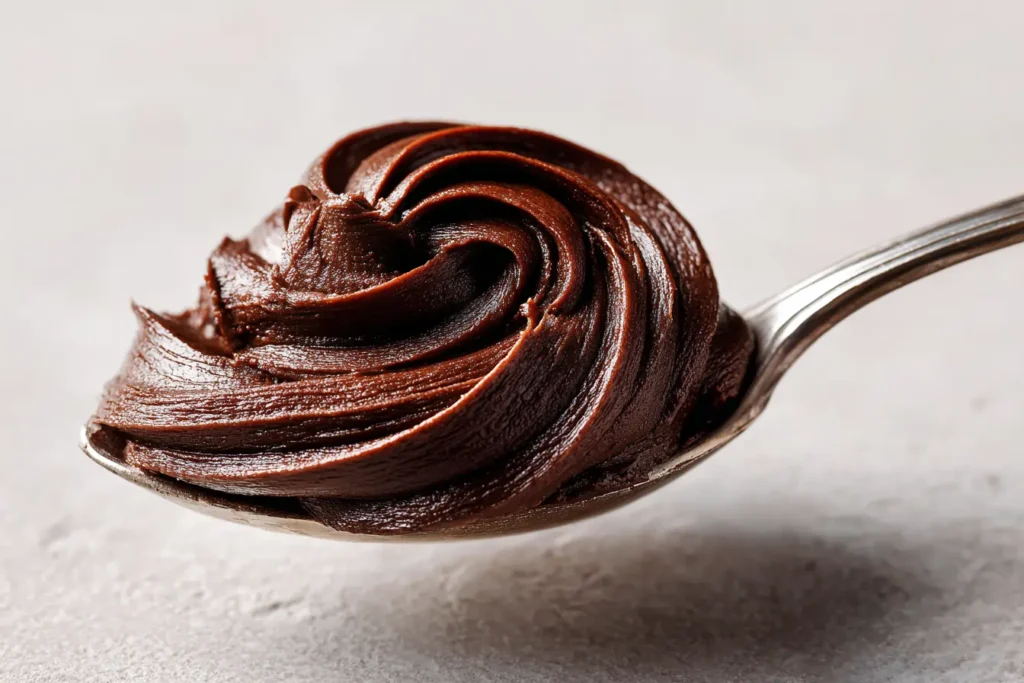
Eggless chocolate frosting is a smooth, rich chocolate frosting made without any eggs—no raw egg whites, no yolks, and no food-safety worries while you taste straight from the bowl. It’s perfect when you want something simple, reliable, and deeply chocolatey for cakes or cupcakes.
I often use this frosting on egg-free desserts like my eggless tiramisu, or as an easy pairing for classic chocolate cakes when I want the frosting to behave without drama.
At its core, eggless chocolate frosting relies on a simple balance:
- Fat (butter or a dairy-free alternative) for creaminess
- Powdered sugar for structure
- Cocoa powder or melted chocolate for flavor
Why people choose eggless chocolate frosting
Bakers reach for eggless frosting because it’s:
- Safe to eat (no raw eggs)
- Allergy-friendly
- Easier and more forgiving
- Just as rich and satisfying as traditional frostings
Does eggless chocolate frosting taste different?
Not really—in fact, many people prefer it. When mixed correctly, it tastes clean, chocolate-forward, and fluffy, with a texture very similar to classic buttercream.
Why Some Frostings Use Eggs (And Why You Don’t Need Them)
Eggs are sometimes used in frosting because they help create structure and smoothness. In certain classic buttercreams, egg whites add lightness, while egg yolks can make frosting feel richer and silkier. They act as a kind of natural stabilizer, helping the frosting hold together.
That said, eggs are not essential for great chocolate frosting. Eggless versions rely on a different but equally effective approach: the right balance of fat, sugar, and chocolate, combined with proper mixing. When these elements work together, you still get a frosting that’s creamy, stable, and easy to spread.
What eggs normally do in frosting
In traditional recipes, eggs can:
- Add volume and lightness
- Create a smoother texture
- Help emulsify fat and liquid
How eggless frosting gets structure instead
Eggless chocolate frosting builds structure by:
- Using powdered sugar to thicken and stabilize
- Beating soft butter or alternatives to trap air
- Letting chocolate or cocoa provide body and flavor
When eggless frosting is the better choice
Eggless frosting often wins when you want:
- A simpler, faster recipe
- No raw egg concerns
- A frosting that’s easy to control for cakes or cupcakes
- A more forgiving texture for everyday baking
The Best Types of Eggless Chocolate Frosting
Eggless chocolate frosting comes in a few main styles, and choosing the right one makes everything easier from the start. Each type has a different texture and best use, so you’re not fighting the frosting later.
Classic Eggless Chocolate Buttercream
This is the most popular and versatile option. It’s fluffy, creamy, and easy to spread or pipe, making it ideal for everyday cakes and cupcakes.
Eggless Chocolate Ganache
Ganache is richer and glossier, made from chocolate and cream. It’s smooth and elegant, best for simple cakes or drips where you want a deep chocolate flavor.
Quick Cocoa-Powder Frosting
This version is all about speed. It comes together fast using cocoa powder and works well for sheet cakes or quick desserts when time is short.
Quick Comparison
| Frosting Type | Texture | Best Use | Time |
|---|---|---|---|
| Buttercream | Fluffy & creamy | Cakes, cupcakes | 10–15 min |
| Ganache | Smooth & glossy | Drips, simple cakes | 5–10 min |
| Cocoa-based | Soft & spreadable | Quick bakes | 5 min |
Eggless Chocolate Frosting
- Total Time: 10 minutes
- Yield: 2½ cups frosting (enough for 12 cupcakes or 1 layer cake) 1x
- Diet: Vegetarian
Description
This Eggless Chocolate Frosting is smooth, rich, and incredibly easy to make. It’s perfect for cakes, cupcakes, and spoon-licking moments—no raw eggs, no stress, just pure chocolate comfort. Fluffy, chocolate-forward, and completely beginner-friendly.
Ingredients
-
1 cup (225 g) unsalted butter, softened
-
2½ cups (300 g) powdered sugar
-
½ cup (50 g) unsweetened cocoa powder
-
3–4 tablespoons milk or plant-based milk
-
1 teaspoon vanilla extract
-
Pinch of salt
Instructions
-
Add the softened butter to a mixing bowl and beat until pale and creamy.
-
Gradually add the powdered sugar and cocoa powder, mixing on low speed until combined.
-
Add the vanilla extract and 3 tablespoons of milk. Beat until smooth and fluffy.
-
If needed, add the remaining milk one teaspoon at a time until the frosting reaches your desired consistency.
-
Taste and add a pinch of salt to balance the chocolate flavor. Use immediately or adjust texture as needed.
Notes
-
Butter should be soft, not melted, for the best texture.
-
For piping, keep the frosting slightly thicker by reducing the milk.
-
Use dairy-free butter and plant-based milk for a vegan version.
-
Cocoa powder gives a lighter texture; melted chocolate makes it richer.
- Prep Time: 10 minutes
- Cook Time: 0 minutes
- Category: Dessert
- Method: Mixing
- Cuisine: American
Nutrition
- Serving Size: 2 tablespoons
- Calories: 140 kcal
- Sugar: 14 g
- Sodium: 30 mg
- Fat: 8 g
- Saturated Fat: 5 g
- Unsaturated Fat: 3 g
- Trans Fat: 0 g
- Carbohydrates: 16 g
- Fiber: 1 g
- Protein: 1 g
- Cholesterol: 20 mg
Eggless Chocolate Frosting Ingredients (And Why They Matter)
Eggless chocolate frosting is simple, but every ingredient has a job. When you understand why each one matters, you’re far less likely to end up with frosting that’s too stiff, too sweet, or just “off.”
Cocoa powder vs melted chocolate
- Cocoa powder gives a lighter texture and faster results
- Melted chocolate adds richness and a deeper chocolate flavor
Both work well—it just depends on the style of frosting you want.
Butter vs dairy-free alternatives
Butter creates a creamy, fluffy base and helps trap air when beaten. Dairy-free butters work too, but they’re usually softer, so texture control becomes extra important.
Milk, cream, or plant-based liquids
Liquid adjusts consistency:
- A splash of milk keeps frosting light
- Cream makes it richer
- Plant-based milk works well for vegan versions
Always add liquid slowly—you can add more, but you can’t take it out.
Why powdered sugar is essential
Powdered sugar doesn’t just sweeten—it thickens and stabilizes the frosting. Granulated sugar won’t dissolve properly and can make the frosting grainy.
How to Make Eggless Chocolate Frosting (Step-by-Step)
Making eggless chocolate frosting is more about method than difficulty. Once the basics are right, everything else falls into place.
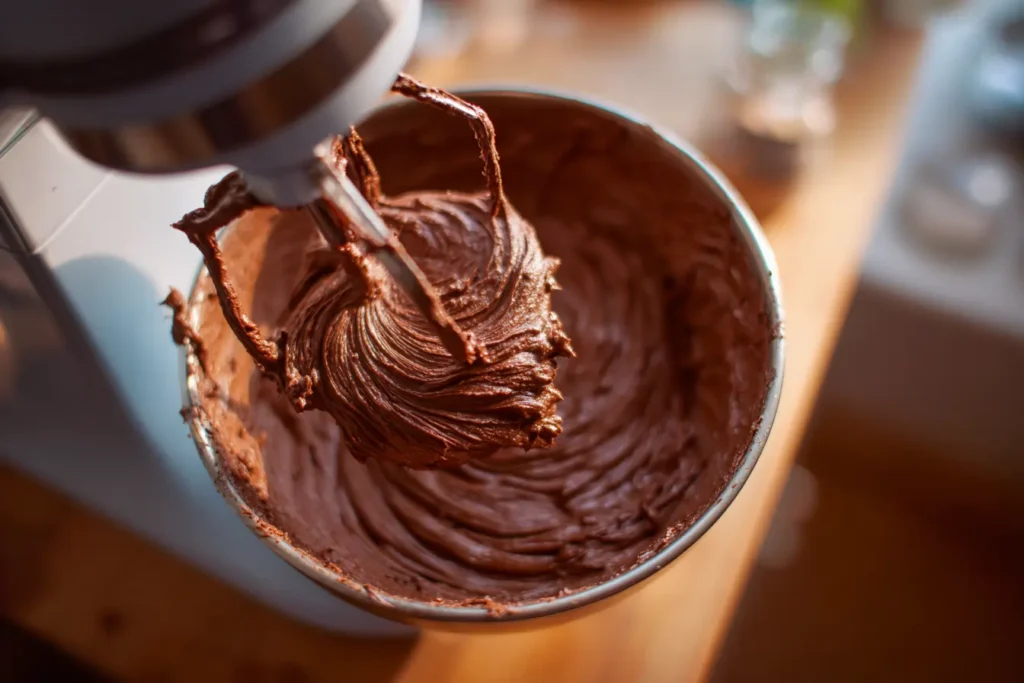
Prep tips (temperature, tools, timing)
- Make sure your butter is soft, not melted. You should be able to press it with your finger easily.
- Use a hand mixer or stand mixer for the smoothest texture.
- Measure ingredients accurately—small changes matter in frosting.
Mixing method (order and speed matter)
Start by beating the butter until it looks pale and creamy. This step builds the base texture.
Next, add powdered sugar gradually, mixing on low speed so it doesn’t fly everywhere. Once combined, increase the speed slightly to make it fluffy.
Add cocoa powder or melted chocolate, followed by a small splash of liquid. Mix just until smooth—overmixing can make frosting dense instead of light.
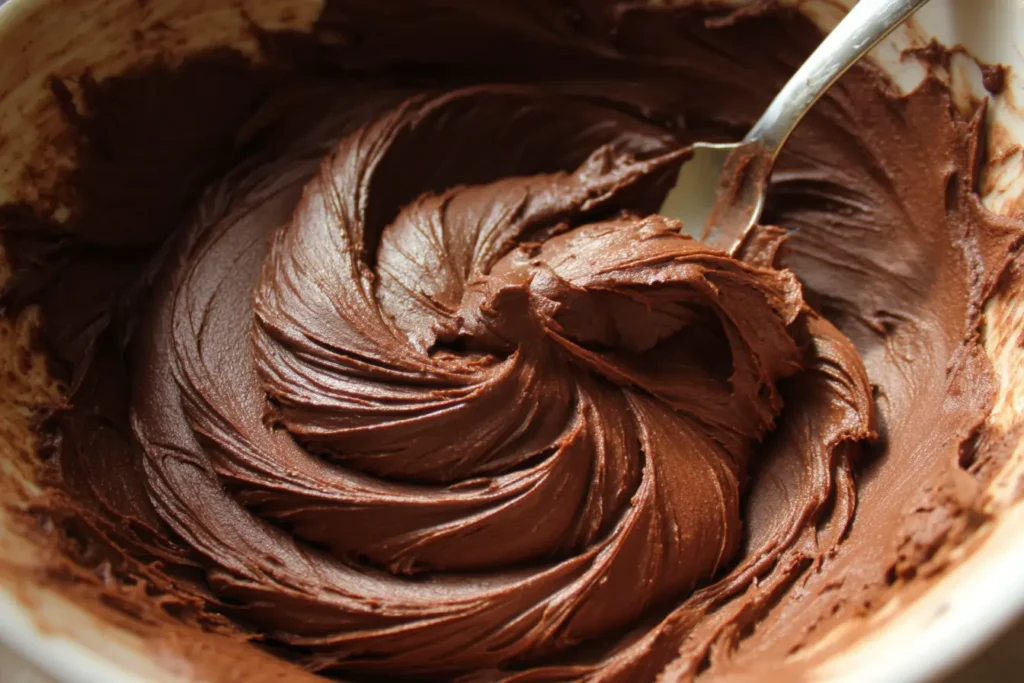
Texture checkpoints: what it should look like
Your frosting should:
- Hold soft peaks
- Spread easily with a spatula
- Feel smooth, not greasy or grainy
If it looks too thick, add a teaspoon of liquid. If it’s too loose, a little more powdered sugar usually does the trick.
Adjusting sweetness and chocolate flavor
Taste as you go. For deeper chocolate flavor, add a bit more cocoa powder or melted chocolate. If it’s too sweet, a tiny pinch of salt can balance everything out beautifully.
How to Choose the Right Eggless Frosting for Your Needs
Not every eggless chocolate frosting works the same way, and choosing the right one depends on what you’re making. Thinking about this upfront saves time—and avoids frustration later.
Best eggless chocolate frosting for cakes
If you’re frosting a layer cake, you want something soft, stable, and easy to spread. Classic eggless chocolate buttercream is usually the best choice because it smooths nicely and holds its shape without feeling heavy.
Best eggless chocolate frosting for cupcakes
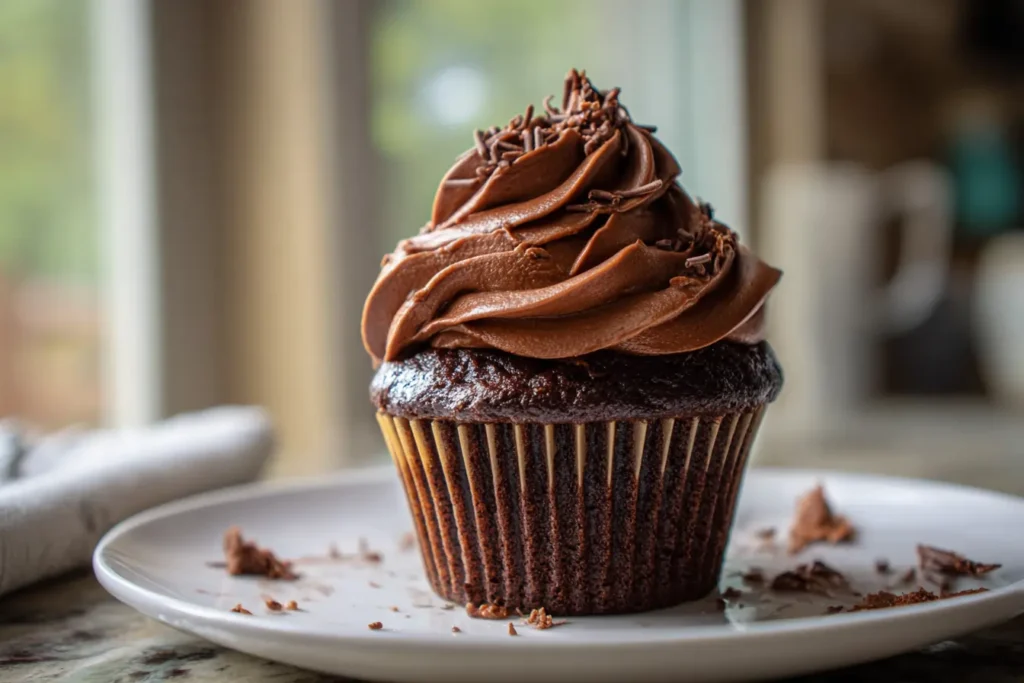
Cupcakes do best with a frosting that’s light and fluffy. Buttercream again works beautifully here, especially if you plan to pipe simple swirls or rosettes on top.
Best eggless chocolate frosting for piping
For piping, texture matters most. You want frosting that’s thick enough to hold its shape, but not stiff. Eggless chocolate buttercream with slightly less liquid is ideal for clean, defined piping.
Best eggless chocolate frosting for warm weather
In warmer kitchens, simpler is better. Ganache tends to stay smoother and less airy, which helps it behave better when temperatures rise—especially for simple cakes or drips.
Quick “Choose Your Frosting” Guide
| If You’re Making… | Best Choice |
|---|---|
| Layer cake | Eggless chocolate buttercream |
| Cupcakes | Eggless chocolate buttercream |
| Piping swirls | Thicker buttercream |
| Warm-weather cake | Eggless chocolate ganache |
Eggless, Vegan & Allergy-Friendly Variations
One of the best things about eggless chocolate frosting is how easy it is to adapt. With a few small swaps, you can make it fit different diets and needs without sacrificing texture or flavor.
Vegan eggless chocolate frosting
To make a fully vegan version:
- Use a plant-based butter instead of dairy butter
- Choose plant-based milk (almond, oat, or soy)
- Make sure your cocoa powder or chocolate is dairy-free
The method stays exactly the same—just keep an eye on texture, as vegan butter can soften faster.
Dairy-free and nut-free options
For a dairy-free frosting:
- Swap butter for a dairy-free margarine or vegan butter
- Use oat milk or rice milk if nut allergies are a concern
Always check labels, especially on chocolate, if allergies are involved.
Eggless frosting without butter
If you prefer a butter-free option:
- Use ganache-style frosting made with chocolate and cream (or coconut cream)
- Expect a richer, denser texture rather than fluffy buttercream
This works especially well for simple cakes or spreads.
Eggless frosting without milk or cream
You can reduce or skip liquid by:
- Using slightly softer butter
- Adding liquid only if needed, one teaspoon at a time
This helps keep the frosting thick and stable, especially for piping.
Nutrition Information (Per Serving)
Eggless chocolate frosting is meant to be enjoyed, not overanalyzed—but having a general nutrition overview helps you make small adjustments if needed. Values will vary depending on the ingredients you choose, especially the type of fat and chocolate.
Estimated Nutrition (Per 2 Tablespoons)
| Nutrient | Approximate Amount |
|---|---|
| Calories | 120–150 kcal |
| Total Fat | 7–9 g |
| Saturated Fat | 4–5 g |
| Carbohydrates | 15–18 g |
| Sugar | 13–15 g |
| Protein | 1 g or less |
| Sodium | 20–40 mg |
These values are estimates and will change based on butter, dairy-free swaps, or chocolate type.
Sugar and fat considerations
This frosting relies on sugar for structure, so cutting it too aggressively can affect texture. If you want to slightly adjust the balance:
- Use cocoa powder instead of melted chocolate for lower sugar
- Choose plant-based milk to reduce saturated fat
- Add a pinch of salt to boost chocolate flavor without extra sugar
Food safety note
One advantage of eggless frosting is that it avoids raw eggs altogether. According to the FDA, raw eggs can carry a risk of salmonella, which is why egg-free frostings are often considered safer for tasting and serving to children.
For general nutrition awareness and portion guidance, the USDA provides helpful information on added sugars and fats in desserts.
Frequently Asked Questions About Eggless Chocolate Frosting
Can I pipe eggless chocolate frosting?
Yes. Eggless chocolate buttercream pipes very well as long as it’s thick enough. For piping, reduce the liquid slightly and make sure the frosting holds soft peaks before transferring it to a piping bag.
Is eggless chocolate frosting safe to eat?
Yes. Because it contains no raw eggs, eggless chocolate frosting is considered safe to taste as you go. This makes it especially popular for kids’ desserts and home baking.
Why is my eggless chocolate frosting too runny?
This usually happens if the butter is too warm or too much liquid is added at once. Letting the frosting rest for a few minutes or adding a small amount of powdered sugar usually helps bring it back to the right consistency.
Does eggless chocolate frosting taste different from regular frosting?
Not really. When made correctly, eggless chocolate frosting tastes rich, chocolate-forward, and very similar to classic buttercream. Many people actually prefer its clean, simple flavor.
Can I make eggless chocolate frosting vegan?
Absolutely. Use plant-based butter and dairy-free milk, and make sure your cocoa powder or chocolate is vegan-friendly. The method stays the same—just watch the texture, as vegan butter can soften faster.
Eggless Chocolate Frosting Made Simple
Eggless chocolate frosting doesn’t have to feel tricky or disappointing. With the right balance of ingredients and a clear method, it can be just as smooth, rich, and satisfying as any classic frosting—sometimes even better.
Whether you’re frosting a cake, topping cupcakes, or just sneaking a spoonful straight from the bowl (no judgment here), this eggless version gives you confidence, flexibility, and peace of mind. It’s safe to taste, easy to adjust, and endlessly adaptable to your kitchen and your preferences.
If there’s one thing to remember, it’s this: great frosting isn’t about eggs—it’s about understanding texture, trusting the process, and enjoying the moment. And honestly, that’s what home baking is all about.
for more recipes follow me in Facebook, Pinterest and medium.