Tempeh Buddha Bowl and I did not have a love-at-first-sight moment.
The very first time I tried making a tempeh dish — long before this Tempeh Buddha Bowl existed — I tossed the tempeh straight into a pan and hoped for the best. The result tasted like a bitter sponge with trust issues. Not my finest kitchen moment.
But if there’s one thing about me, it’s that I don’t accept defeat where food is involved. So I went on a full culinary investigation. I boiled, steamed, marinated, pan-fried, air-fried — basically everything short of offering the tempeh emotional support. And somewhere in that chaos, I accidentally created the Tempeh Buddha Bowl that finally made me understand the hype.
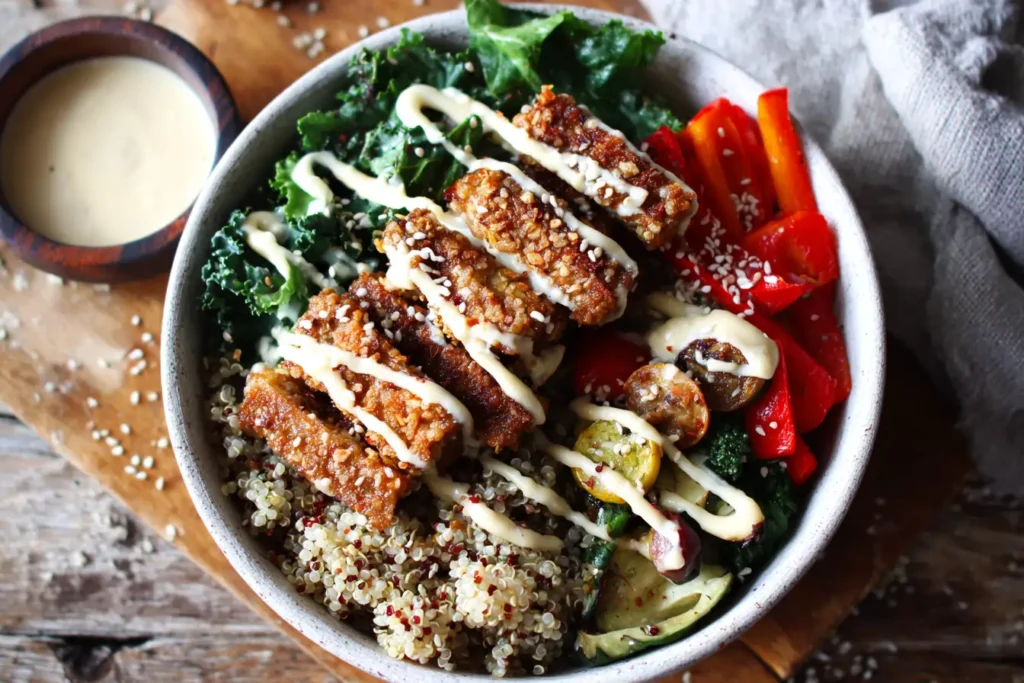
The first bite? Crispy edges, zero bitterness, creamy sauce, colorful veggies — and suddenly I was like, “Okay, wow… I would actually serve this to people I love.”
Now this Tempeh Buddha Bowl is one of my weeknight heroes: cozy, nourishing, high-protein, and ridiculously satisfying.
So if tempeh has ever betrayed you in the past, trust me — this recipe might just be its redemption arc.
Table of Contents
Table of Contents
What Is a Tempeh Buddha Bowl? (And Why You’ll Love It)
A Tempeh Buddha Bowl is a colorful, nourishing bowl filled with grains, veggies, a flavorful sauce, and crispy cooked tempeh. It’s the kind of easy, high-protein vegan dinner that makes you feel good the moment you sit down to eat. If you already enjoy healthy bowls like my Baked Tofu Fajitas, you’ll love this Tempeh Buddha Bowl even more.
What Is a Tempeh Buddha Bowl? (And Why You’ll Love It)
A Tempeh Buddha Bowl is a colorful, nourishing bowl filled with grains, veggies, a flavorful sauce, and crispy cooked tempeh. It’s the kind of easy, high-protein vegan dinner that makes you feel good the moment you sit down to eat. If you already enjoy healthy bowls like my Baked Tofu Fajitas, you’ll love this Tempeh Buddha Bowl even more.
The Basics of a Buddha Bowl
A classic Buddha bowl follows a simple formula:
Grain + Protein + Veggies + Crunch + Sauce + Fresh Herbs
This structure helps your Tempeh Buddha Bowl stay balanced, filling, and full of flavor.
1.Why Tempeh Works So Well
Tempeh is perfect for a Tempeh Buddha Bowl because it’s:
- naturally high in plant-based protein
- firm and satisfying
- great at absorbing marinades
- fantastic for meal prep
If you’re used to tofu (like in my Honey Garlic Tofu), tempeh will feel heartier and more textured.
Tempeh vs. Tofu: What’s the Difference?
A quick friendly breakdown:
| Tempeh | Tofu |
|---|---|
| firm + chewy | soft to firm |
| fermented soybeans | blended soy milk |
| nutty flavor | mild flavor |
| higher in protein + fiber | lower in fiber |
| keeps shape well | softer texture |
Both are great, but tempeh gives your bowl a satisfying bite and more “meal” energy.
Who This Bowl Is For
This Tempeh Buddha Bowl is ideal for:
- busy home cooks wanting an easy vegan dinner
- meal-prep fans needing high-protein options
- anyone who wants a nutritious, fast bowl recipe
- plant-curious beginners ready to try tempeh
Tempeh Buddha Bowl
- Total Time: 35 minutes
- Yield: 2 bowls 1x
- Diet: Vegan
Description
This Tempeh Buddha Bowl is a colorful, high-protein vegan meal made with crispy tempeh, fresh veggies, warm grains, and a creamy sauce. It’s filling, customizable, and perfect for lunch, dinner, or meal prep.
Ingredients
For the Tempeh
-
1 block tempeh (8 oz), cubed
-
1 cup water (for boiling)
-
2 tbsp soy sauce or tamari
-
1 tbsp maple syrup
-
1 tbsp rice vinegar or lime juice
-
1 tsp sesame oil
-
1 clove garlic, minced
-
½ tsp paprika or chili flakes (optional)
For the Bowl
-
1 cup cooked quinoa or brown rice
-
1 cup roasted veggies (sweet potatoes, broccoli, carrots, etc.)
-
1 cup fresh veggies (spinach, cabbage, cucumber, etc.)
-
1 tbsp sesame seeds or pepitas
-
Fresh herbs (cilantro, green onion, parsley)
For the Sauce (Quick Tahini or Peanut Option)
-
2 tbsp tahini or peanut butter
-
1 tbsp soy sauce or tamari
-
1 tbsp maple syrup
-
1 tbsp lime or lemon juice
-
Warm water to thin
Instructions
1. Prep & De-Bitter the Tempeh
-
Add cubed tempeh to a small pot with water.
-
Boil for 10 minutes to remove bitterness.
-
Drain and pat dry.
2. Marinate
-
In a bowl, whisk soy sauce, maple syrup, vinegar, sesame oil, and garlic.
-
Toss tempeh in the marinade.
-
Let sit for 10–15 minutes (or longer for stronger flavor).
3. Cook the Tempeh (Choose One Method)
Bake:
-
Spread tempeh on a lined tray.
-
Bake at 400°F (200°C) for 20–25 minutes until golden.
Pan-Fry:
-
Heat a little oil in a skillet.
-
Fry tempeh for 6–8 minutes, turning until crispy.
Air Fryer:
-
Air fry at 380°F (190°C) for 10–12 minutes, shaking halfway.
4. Prep the Bowl Components
-
Cook quinoa or rice.
-
Roast veggies or use leftovers.
-
Prepare fresh vegetables.
5. Make the Sauce
-
Whisk tahini (or peanut butter), maple syrup, soy sauce, and lime juice.
-
Add warm water until pourable.
6. Assemble the Tempeh Buddha Bowl
-
Add grains to your bowl.
-
Top with crispy tempeh.
-
Add roasted + fresh veggies.
-
Drizzle generously with sauce.
-
Finish with seeds and herbs.
Enjoy immediately or pack for meal prep.
Notes
-
Gluten-Free: Use quinoa/rice + tamari.
-
Nut-Free: Use tahini instead of peanut butter.
-
Extra Protein: Add chickpeas, edamame, or hemp seeds.
-
Make Ahead: Store components separately up to 4 days.
- Prep Time: 15 minutes
- Cook Time: 20 minutes
- Category: Breakfast
- Method: Boiled + Baked
- Cuisine: Fusion
Nutrition
- Serving Size: 1 bowl
- Calories: 480
- Sugar: 10 g
- Sodium: 720 mg
- Fat: 20 g
- Saturated Fat: 3 g
- Unsaturated Fat: 16 g
- Trans Fat: 0 g
- Carbohydrates: 52 g
- Fiber: 9 g
- Protein: 23 g
- Cholesterol: 0 mg
Ingredients & Bowl-Building Blueprint
A great Tempeh Buddha Bowl starts with simple, customizable ingredients that build flavor, texture, and balance. This blueprint helps you create a bowl that’s nourishing, colorful, and satisfying every single time.
Core Ingredients for a Tempeh Buddha Bowl
The essential components include:
- Tempeh – the main high-protein base
- Grain – quinoa, brown rice, jasmine rice, farro, or cauliflower rice
- Veggies – roasted or fresh for flavor + crunch
- Sauce – creamy, nutty, zesty, or spicy
- Toppings – herbs, seeds, nuts, crispy onion, lime
This structure keeps your Tempeh Buddha Bowl balanced and flavorful.
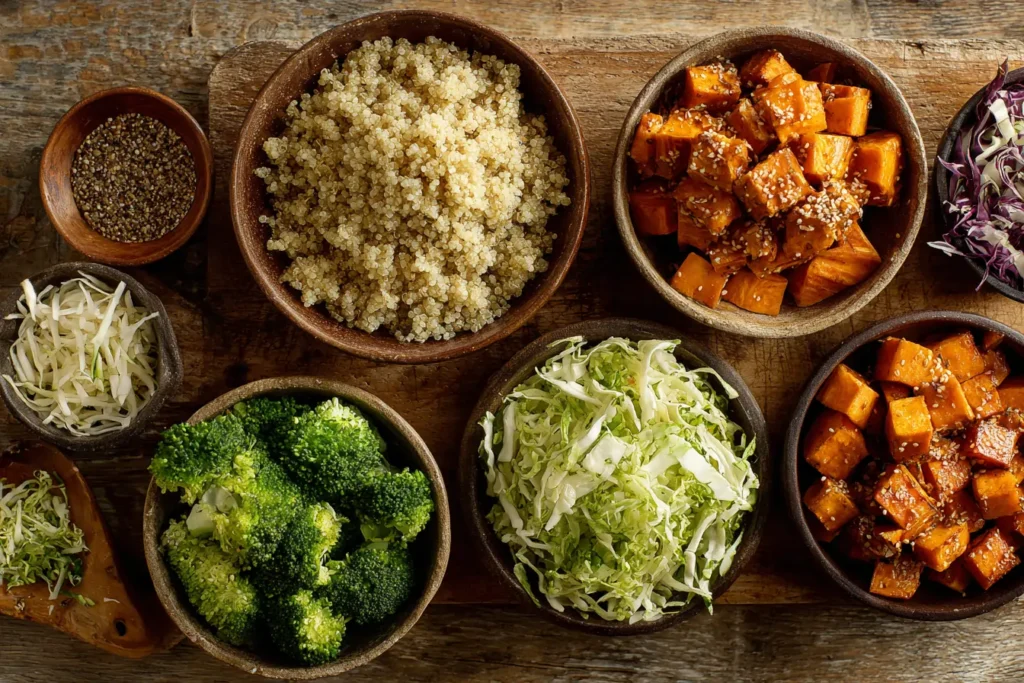
Choose-Your-Base: Grains, Greens & Veggies
Pick one from each category to build your perfect bowl:
Grains: quinoa, brown rice, jasmine rice, couscous, farro
Greens: spinach, kale, mixed greens, arugula
Roasted Veggies: sweet potatoes, broccoli, cauliflower, Brussels sprouts
Fresh Veggies: cucumber, cabbage, tomatoes, shredded carrots
Mix roasted + fresh for the best texture combo.
Sauces That Make Tempeh Shine
A Tempeh Buddha Bowl is only as good as its sauce — and tempeh loves bold flavors. Try:
- Creamy tahini-lime
- Peanut dressing
- Maple-mustard sauce
- Miso-sesame glaze
Each one brings a different mood to your bowl.
Quick Substitution Matrix
Easy swaps for pantry-style cooking:
- No quinoa? → Use rice or farro
- No sweet potato? → Try carrots, squash, or beets
- No tahini? → Use peanut butter or almond butter
- Need gluten-free? → Choose rice, quinoa, or cauliflower rice
- Want more protein? → Add beans, chickpeas, or edamame
Mastering Tempeh: Zero-Bitterness Cooking Methods
If you’ve ever tried tempeh and thought, “hmm… why does this taste slightly weird?”, don’t worry — it’s normal. Tempeh can have a natural bitterness, but with the right prep, it becomes delicious, nutty, and perfect for any Tempeh Buddha Bowl.
Why Tempeh Can Taste Bitter (And How to Fix It)
Tempeh is fermented, which gives it great texture and protein — but sometimes a mild bitterness.
To solve this completely, just pre-cook it:
- Boil for 10 minutes
- OR steam for 8 minutes
- OR microwave with a splash of water for 2 minutes
This step removes bitterness and helps the tempeh absorb marinades better.
Step One: Prep & De-Bitter Your Tempeh
After boiling or steaming:
- Pat dry
- Slice or cube it
- Add marinade
This simple technique makes a huge difference in your Tempeh Buddha Bowl flavor.
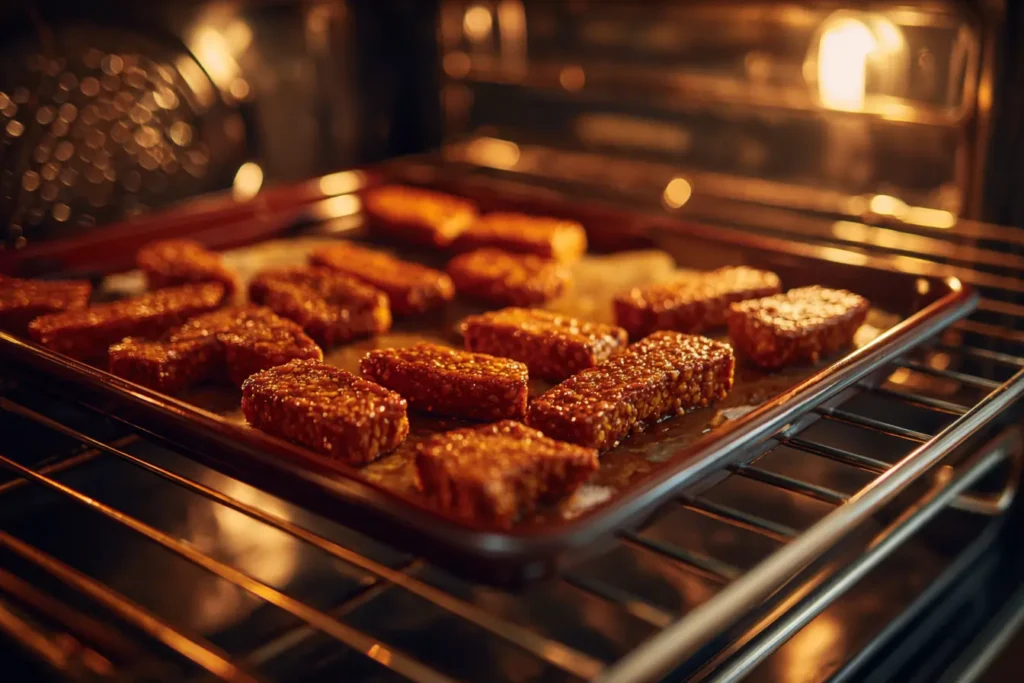
Method 1: Baked Crispy Tempeh (Hands-Off & Easy)
The baked method gives you firm, golden, crispy tempeh with minimal effort.
How to do it:
- Toss tempeh in marinade
- Spread on a lined tray
- Bake at 400°F (200°C) for 20–25 minutes
Great for meal prep or batch cooking.
Method 2: Pan-Fried Tempeh (Fast & Flavorful)
Perfect for weeknights when you want your Tempeh Buddha Bowl now.
How to do it:
- Heat a little oil
- Add tempeh cubes
- Let them crisp on each side
- Add a splash of sauce to glaze
Fast, golden, caramelized tempeh in 10 minutes.
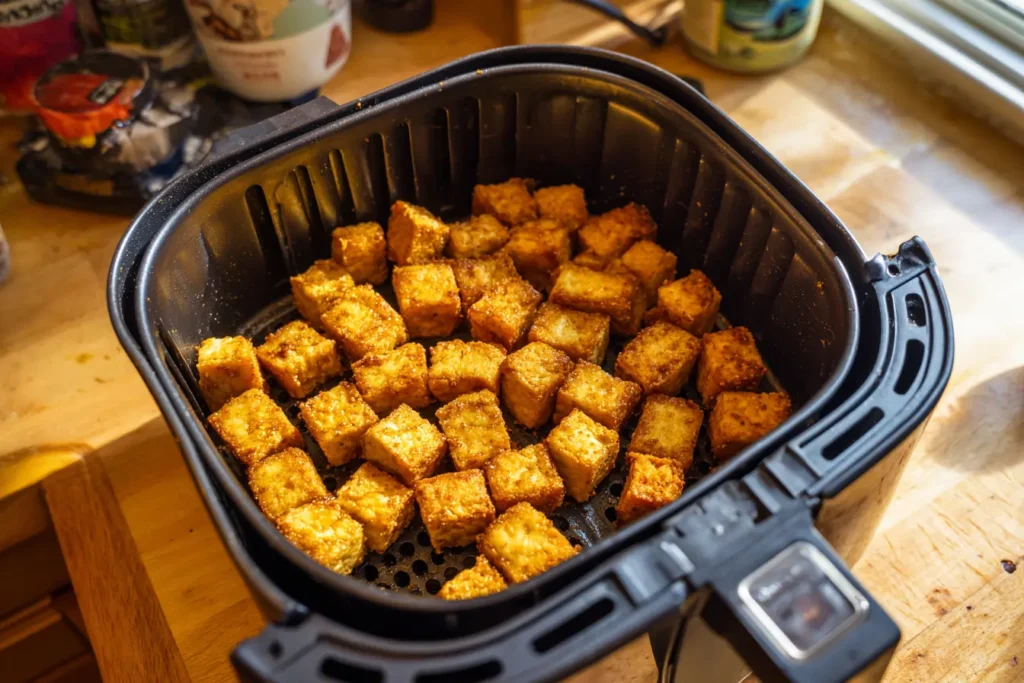
Method 3: Air Fryer Tempeh (Extra Crispy, Less Oil)
If you want ultra-crispy tempeh for your Tempeh Buddha Bowl, the air fryer is magic.
How to do it:
- Air fry tempeh at 380°F (190°C) for 10–12 minutes
- Shake halfway
- Toss in sauce right after cooking
This keeps it crispy on the outside and tender inside.
Troubleshooting: Soft, Dry, or Overcooked Tempeh
Quick fixes:
- Soft? → Air fry or bake longer
- Dry? → Add extra sauce after cooking
- Overcooked? → Reduce heat or shorten cooking time
- Bland? → Marinate longer or double-sauce it
How to Make the Best Tempeh Buddha Bowl
Now that your tempeh is crispy, flavorful, and zero-bitterness, it’s time to bring the whole Tempeh Buddha Bowl together. This is where textures, colors, and flavors start to shine. Don’t worry — the process is simple, fast, and totally customizable.
Ingredients You’ll Need (Base Recipe)
Here’s a flexible ingredient list for building the best Tempeh Buddha Bowl:
- Crispy tempeh (baked, pan-fried, or air-fried)
- Grain base: quinoa, brown rice, couscous, or farro
- Veggies: roasted sweet potatoes, broccoli, carrots, Brussels sprouts
- Fresh elements: spinach, kale, cucumber, shredded cabbage
- Crunch: sesame seeds, pepitas, roasted peanuts, crispy onions
- Sauce: tahini dressing, peanut sauce, maple mustard, or miso sesame
Swap anything you like — this bowl is designed to fit your style.
Step 1 — Cook or Crisp the Tempeh
Choose your favorite technique (baked, air fryer, or pan-fried).
The goal: golden edges, deep flavor, and a texture that stands out in your Tempeh Buddha Bowl.
Step 2 — Prep Your Grains & Veggies
- Cook your grains while the tempeh is crisping
- Roast veggies on a sheet pan for hands-off cooking
- Add something fresh to balance warmth and texture
This combo keeps the bowl hearty and beautiful.
Step 3 — Whisk the Sauce
Your sauce is the “glue” that brings life to your Tempeh Buddha Bowl.
Choose one:
- Creamy tahini
- Bold peanut sauce
- Sweet-tangy maple mustard
- Savory miso sesame
A good sauce transforms a simple bowl into something crave-worthy.
Step 4 — Assemble Your Bowl
Layer everything with intention:
- Grains
- Crispy tempeh
- Roasted veggies
- Fresh greens
- Sauce
- Crunchy toppings
Then… admire your creation. It’s Instagram-ready, friendly-kitchen style.
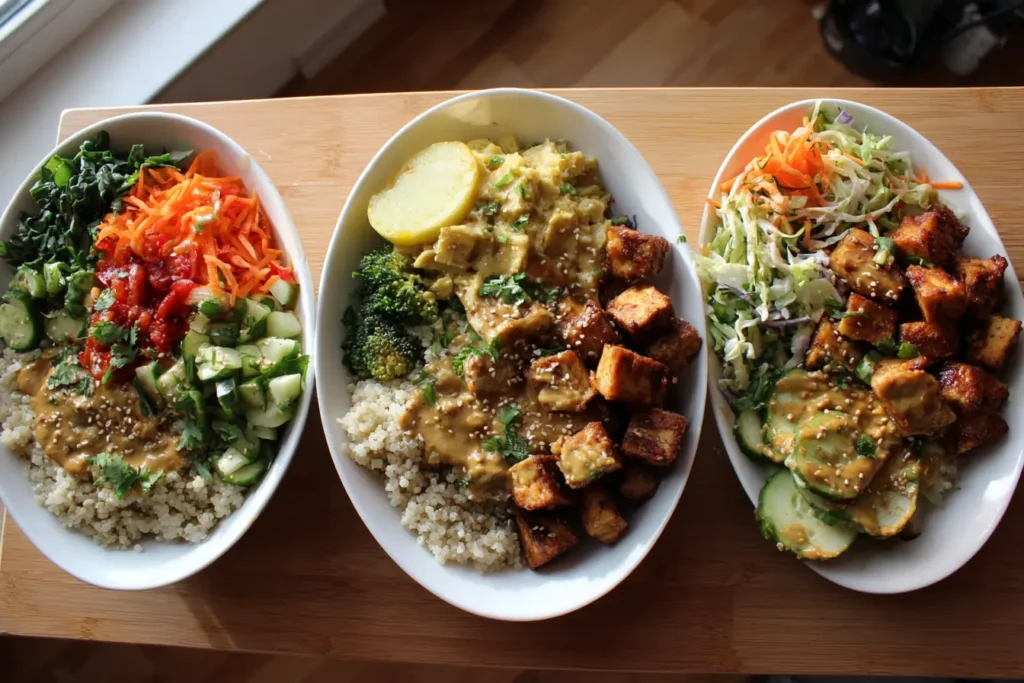
Global Tempeh Buddha Bowl Variations (Quick & Easy)
Give your Tempeh Buddha Bowl a new personality any day of the week with these simple flavor twists.
Thai Peanut Tempeh Bowl (Creamy + Tangy)
- Base: quinoa or jasmine rice
- Veggies: cabbage, carrots, cucumber
- Tempeh: tossed in peanut-lime sauce
- Toppings: cilantro + crushed peanuts
Mediterranean Lemon-Herb Tempeh Bowl (Fresh + Bright)
- Base: couscous or quinoa
- Veggies: tomatoes, cucumber, red onion
- Tempeh: lemon, garlic, oregano
- Toppings: olives + parsley
Chipotle Lime Tempeh Bowl (Smoky + Bold)
- Base: brown rice
- Veggies: corn, black beans, peppers
- Tempeh: chipotle, lime, garlic
- Toppings: avocado + crushed tortilla chips
Maple Mustard Tempeh Bowl (Cozy + Sweet-Savory)
- Base: quinoa or wild rice
- Veggies: roasted squash + Brussels sprouts
- Tempeh: maple + Dijon glaze
- Toppings: pecans or pepitas
Miso-Sesame Tempeh Bowl (Umami + Nutty)
- Base: rice
- Veggies: edamame, broccoli, carrots
- Tempeh: miso, soy, sesame, ginger
- Toppings: sesame seeds + green onions
Nutrition & Easy Dietary Swaps
A Tempeh Buddha Bowl isn’t just flavorful — it’s nutrient-dense and easy to customize for different diets.
High-Protein Benefits
Tempeh is a naturally fermented soy product and an excellent vegan protein source. According to the Harvard School of Public Health, fermented soy foods offer gut-friendly benefits and essential amino acids.
A typical serving of tempeh provides:
- 15–20g of protein
- High fiber
- Prebiotics that support gut health
This makes a Tempeh Buddha Bowl a satisfying, high-protein plant-based meal.
Make It Gluten-Free
Your bowl can be fully gluten-free by choosing:
- Quinoa, rice, or millet
- Tamari instead of soy sauce
- Naturally GF toppings like seeds and vegetables
The Cleveland Clinic lists quinoa as a naturally gluten-free, nutrient-rich grain alternative.
Make It Nut-Free
Swap easily:
- Peanut sauce → tahini or sunflower seed butter
- Almond toppings → pepitas or toasted sesame seeds
The bowl stays creamy, crunchy, and allergy-friendly.
Extra-Protein Add-Ons
Boost protein even further with:
- Chickpeas
- Edamame
- Hemp seeds
- Lentils
These mix beautifully with tempeh for a more filling Tempeh Buddha Bowl.
How to Serve Your Tempeh Buddha Bowl
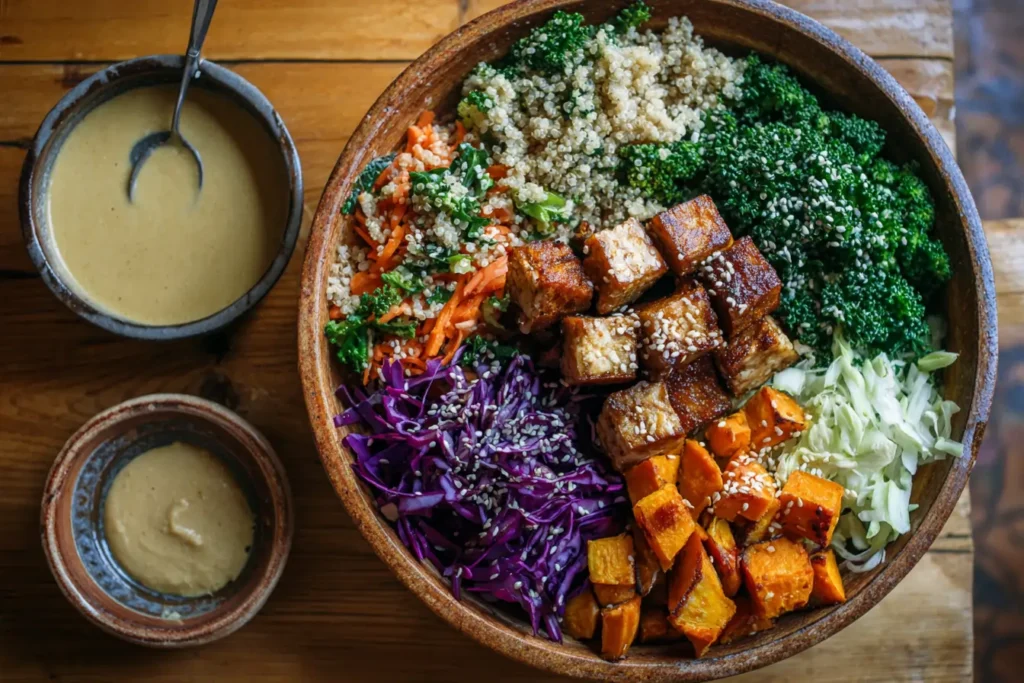
Serving a Tempeh Buddha Bowl is all about balance, color, and a little personal flair. Here’s how to make yours look and taste amazing:
Serve Warm or Room Temperature
A Tempeh Buddha Bowl works beautifully either way.
- Warm tempeh + warm grains = cozy dinner
- Cold veggies + warm tempeh = perfect contrast
Add the Sauce Last
Save your drizzle for the very end.
It makes the bowl look fresh, glossy, and ridiculously appetizing.
Don’t Skip the Crunch
A bowl without crunch is like a party without music.
Try: toasted seeds, nuts, crispy onions, or roasted chickpeas.
Customize for Mood or Season
This bowl can shift with whatever’s in your fridge:
- Summer → cucumber, tomatoes, cabbage
- Fall → sweet potatoes, squash
- Busy days → pre-cut veggies or leftover grains
Make It Pretty (But Not Too Pretty)
Your Tempeh Buddha Bowl should look real — not staged.
A little mess makes it feel homemade and cozy, just like your kitchen.
FAQ: Tempeh Buddha Bowl
What is a Tempeh Buddha Bowl made of?
A Tempeh Buddha Bowl typically includes crispy tempeh, grains (like quinoa or rice), roasted or fresh veggies, a creamy sauce, and a crunchy topping.
Should tempeh be boiled before cooking?
Yes — boiling or steaming tempeh for a few minutes reduces bitterness and helps it absorb flavor better.
How do you make tempeh taste good in a Buddha bowl?
Use a good marinade, cook it until crispy, and finish with a flavorful sauce. Bitterness removal + caramelization = delicious tempeh.
Can I make a gluten-free Tempeh Buddha Bowl?
Absolutely. Use quinoa or rice, tamari instead of soy sauce, and naturally gluten-free toppings.
What sauce works best with tempeh?
Peanut sauce, tahini dressing, maple mustard, and miso-sesame sauces all pair beautifully with tempeh’s nutty flavor.
Conclusion
If you’ve made it this far, you’re officially ready to build the Tempeh Buddha Bowl of your dreams — whether you’re craving something cozy, crunchy, high-protein, or just need a quick “I deserve something delicious” dinner.
Tempeh can feel intimidating at first, but once you learn the easy tricks (hi, boiling step 👋), it becomes one of the most reliable, flavorful plant proteins in your kitchen. And the best part? Every bowl can look completely different depending on your mood, your veggies, or whatever you forgot in the back of your fridge this week.
So go ahead — grab a bowl, drizzle generously, add a little crunch, and enjoy a meal that’s nourishing, colorful, and honestly… way more fun than takeout.
When you make your Tempeh Buddha Bowl, come back and tell me which flavor you tried first. I’m already cheering for you from my kitchen. 💛🥢✨
for more recipes follow me in Facebook, Pinterest and medium.