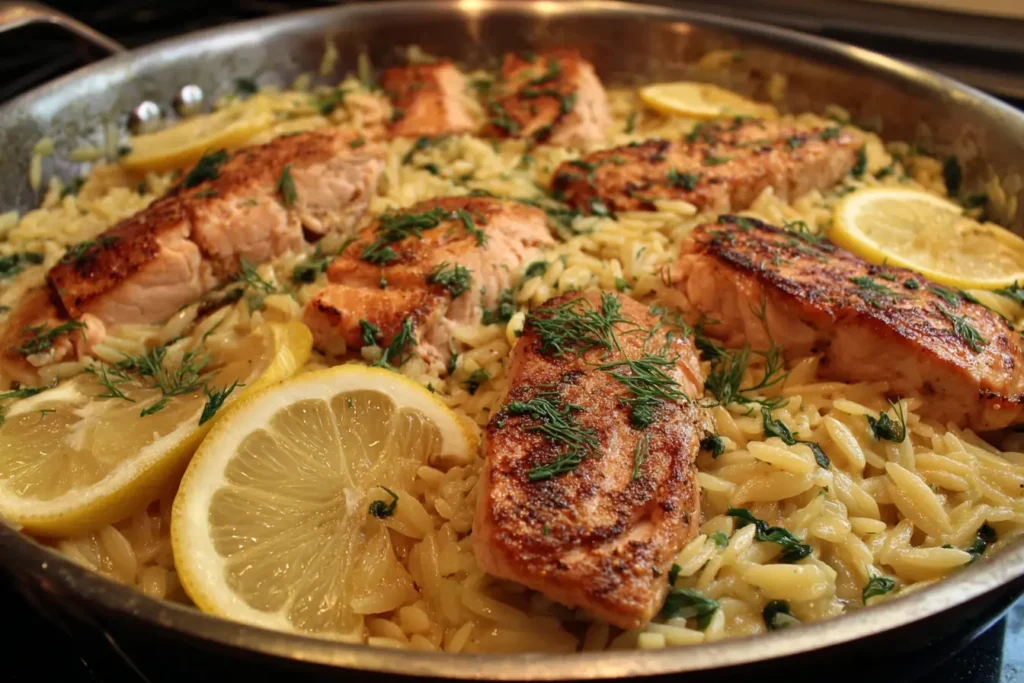
I still remember the first time I tried to make salmon orzo. I was feeling very confident… right up until I wasn’t. The salmon came out dry, the orzo turned into something between soup and glue, and I stood in my kitchen staring at the pan like it had personally betrayed me. 😅
But here’s the thing — I love cozy, one-pan dinners, and salmon orzo had everything I wanted: creamy texture, bright lemony flavor, and that “restaurant-at-home” feeling. So I went back, tweaked the timing, learned when to pull the salmon (early!), and figured out how to keep the orzo creamy instead of clingy.
This salmon orzo recipe is the version I wish I had that night — comforting, flavorful, and honestly pretty hard to mess up. If you’ve ever been nervous about cooking salmon, don’t worry. I’ve got you. 💛
Table of Contents
Table of Contents
Why This Salmon Orzo Recipe Works
Most salmon orzo recipes fail for two simple reasons:
- They cook salmon too long
- They treat orzo like regular pasta
This recipe works because we use a smart one-pan system: sear the salmon fast, pull it early, and let it finish gently while the orzo turns creamy. It’s the same cozy logic I use in other one-pot dinners, like this tofu and beef one pot — less stress, better texture.
The Texture Problem Most Recipes Ignore
Orzo cooks fast and absorbs liquid aggressively. That’s great… until it isn’t.
What usually goes wrong:
- Too much liquid → soupy orzo
- Too little liquid → dry, clumpy orzo
- Over-stirring → gluey texture
What we do instead:
- Add liquid gradually
- Stir just enough
- Let it rest so the starch thickens naturally
This simple shift is what makes creamy salmon orzo actually creamy — without needing tons of cream.
Why Salmon and Orzo Shouldn’t Cook Together the Whole Time
Salmon is delicate. Orzo needs time. Cooking them together from start to finish is a recipe for dry fish.
Here’s the better approach:
- Sear salmon for flavor
- Remove it before it overcooks
- Cook the orzo properly
- Add salmon back at the end to warm through
This is why the salmon stays juicy instead of chalky.
Timing Beats Ingredients (The Real Secret)
You don’t need fancy ingredients — you need good timing.
| Step | Why It Matters |
|---|---|
| Pull salmon early | Prevents dryness |
| Add it back late | Keeps it flaky |
| Rest the orzo | Creates a creamy sauce |
That’s the real reason this salmon orzo recipe works consistently — even on busy weeknights.
Print
Salmon Orzo
- Total Time: 30 minutes
- Yield: 4 servings 1x
Description
This Salmon Orzo is a creamy, cozy one-pan dinner made with tender salmon, lemony orzo, and simple pantry ingredients. It’s comforting without being heavy, full of flavor, and perfect for an easy, stress-free meal that still feels special.
Ingredients
-
1 lb salmon fillets (skinless, fresh or fully thawed)
-
1 cup dry orzo pasta
-
2 tbsp olive oil, divided
-
3 cloves garlic, minced
-
2½ cups chicken or vegetable broth, warm
-
½ cup heavy cream (or milk for a lighter option)
-
½ cup grated Parmesan cheese
-
Zest of 1 lemon
-
2 tbsp fresh lemon juice
-
Salt, to taste
-
Black pepper, to taste
-
Optional garnish: fresh parsley or dill
Instructions
-
Sear the salmon:
Heat 1 tablespoon olive oil in a wide skillet over medium-high heat. Season salmon with salt and pepper. Sear for 2–3 minutes per side until lightly golden but still slightly undercooked in the center. Remove to a plate and set aside. -
Build the flavor:
Reduce heat to medium. Add remaining olive oil, then stir in garlic and cook for about 30 seconds until fragrant. -
Cook the orzo:
Add orzo to the skillet and stir to coat. Pour in warm broth gradually. Simmer uncovered, stirring occasionally, until orzo is tender and creamy, about 8–10 minutes. -
Finish the sauce:
Stir in cream, Parmesan, lemon zest, and lemon juice. Season with salt and pepper to taste. -
Add salmon back:
Nestle salmon back into the skillet. Reduce heat to low and cook for 2–3 minutes, until salmon is warmed through and flaky. -
Serve:
Garnish with fresh herbs if desired and serve warm.
Notes
-
Pull the salmon early — it will finish cooking gently when added back to the pan.
-
If the orzo thickens too much, add a splash of warm broth to loosen it.
-
For dairy-free, use unsweetened oat or cashew milk and skip the Parmesan.
- Prep Time: 10 minutes
- Cook Time: 20 minutes
- Category: Lunch
- Method: Stovetop
- Cuisine: Mediterranean-inspired
Nutrition
- Serving Size: 1 bowl
- Calories: 520 kcal
- Sugar: 3 g
- Sodium: 680 mg
- Fat: 23 g
- Saturated Fat: 8 g
- Unsaturated Fat: 14 g
- Trans Fat: 0 g
- Carbohydrates: 48 g
- Fiber: 3 g
- Protein: 32 g
- Cholesterol: 85 mg
Ingredients That Actually Matter (And Why)
This salmon orzo doesn’t need fancy ingredients, but a few smart choices make a big difference. Here’s what actually matters — and what’s flexible.
Best Salmon to Use (Fresh vs Frozen)
Both fresh and frozen salmon work well. The key is how you handle it, not which one you buy.
Fresh salmon
- Mild flavor
- Sear-ready
- Great for same-day cooking
Frozen salmon
- Convenient and budget-friendly
- Must be fully thawed
- Always pat dry before cooking
| Salmon Type | Key Tip | Result |
|---|---|---|
| Fresh | Pat dry + sear | Better browning |
| Frozen | Thaw + pat dry | No steaming |
| Both | Pull early | Juicy center |
👉 This gentle approach is the same one I use in my citrusy salmon packets.
Is Orzo Pasta or Rice? (Quick Answer)
Orzo looks like rice, but it’s actually pasta — which is why it absorbs liquid fast and releases starch.
That starch is what makes creamy salmon orzo possible without loading it with cream. Cooking it right in the pan is the secret.
Creamy Base Options (Choose Your Vibe)
You don’t need to commit to one version — this recipe is flexible.
- Classic: cream or half-and-half
- Light: milk + parmesan
- Dairy-free: oat or cashew milk + olive oil
The orzo does most of the thickening. The dairy just finishes the sauce.
Flavor Builders That Matter
Keep it simple:
- Garlic
- Lemon zest + juice (added at the end)
- Parmesan
- Olive oil or butter
That’s enough to make this salmon orzo dinner taste bright, cozy, and balanced.
Ingredient Takeaway
- Easy to find
- Simple swaps allowed
- Texture matters more than extras
Before You Start (30-Second Confidence Checklist)
Take a quick moment before cooking — this saves most salmon orzo mistakes.
- Use a wide skillet (12-inch is ideal) for even cooking
- Pat the salmon dry so it sears instead of steams
- Warm the broth before adding it to the orzo
- Add liquid gradually, not all at once
That’s it. These four steps make the rest of the recipe smooth and stress-free.
Salmon Orzo Step-by-Step (One-Pan Method)

This is where everything comes together. One pan, smart timing, and no rushing — that’s how salmon orzo turns creamy and cozy instead of chaotic.
Step 1: Sear the Salmon (Pull It Early!)
- Heat olive oil in a wide skillet over medium-high heat
- Season salmon simply with salt and pepper
- Sear 2–3 minutes per side until lightly golden
- Remove salmon to a plate (it should be slightly underdone)
👉 Pulling it early is intentional. The salmon will finish cooking later — gently.
Step 2: Build Flavor in the Same Pan
- Lower heat to medium
- Add a little more oil or butter if needed
- Sauté garlic just until fragrant (about 30 seconds)
This keeps all that salmon flavor in the pan — no washing, no wasted goodness.
Step 3: Cook Orzo Until Creamy, Not Gluey
- Add orzo to the pan and toast briefly
- Pour in warm broth gradually
- Simmer uncovered, stirring occasionally, until orzo is tender and saucy
What you’re looking for:
- Glossy
- Creamy
- Loose enough to move, not stiff
This is where creamy salmon orzo magic happens.
Step 4: Add Salmon Back at the Right Moment
- Nestle the salmon back into the orzo
- Reduce heat to low
- Let everything warm together for 2–3 minutes
No boiling. No panic. Just gentle heat.
Step 5: Finish Like a Pro
- Add lemon zest and juice
- Stir in parmesan or chosen creamy base
- Taste and adjust salt and pepper
Finish with herbs if you like — parsley or dill are perfect.
Quick Step Recap
- Sear salmon → remove early
- Build flavor
- Cook orzo gently
- Add salmon back late
- Finish with lemon + creaminess
That’s the system.
Salmon Doneness Science (No Guessing, No Stress)
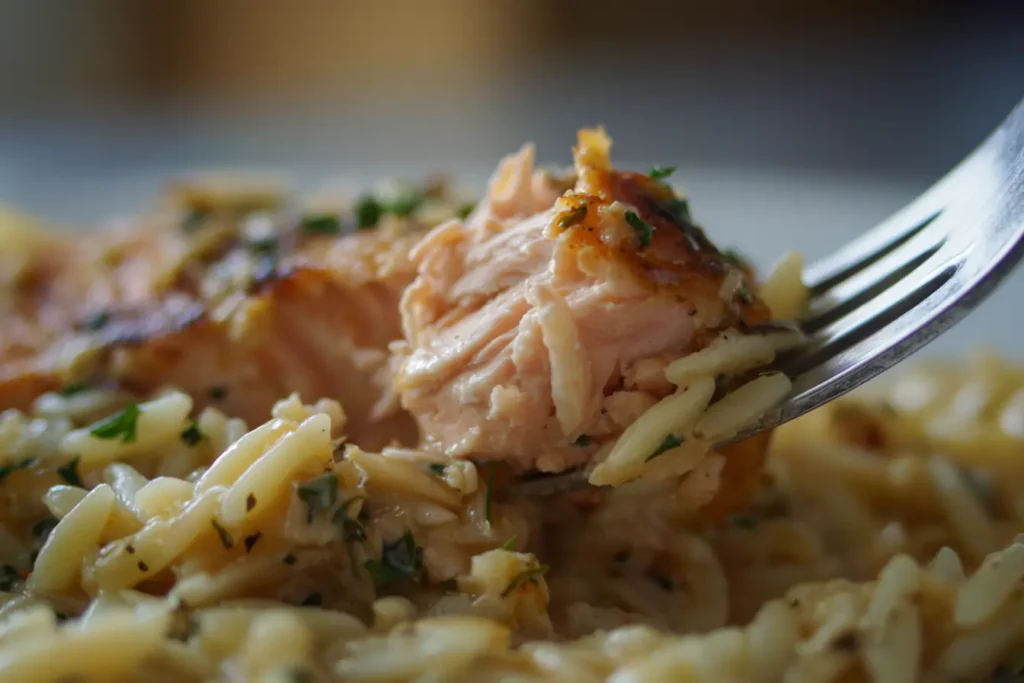
If salmon makes you nervous, you’re not alone. The good news? Perfect salmon isn’t about luck — it’s about knowing what to look for.
Visual Doneness Cues (Your Best Friend)
You don’t need a thermometer if you watch the fish.
Look for:
- Opaque edges creeping toward the center
- Gentle flaking when pressed with a fork
- A center that’s just slightly translucent, not raw
If it looks glossy and soft, you’re in the sweet spot.
Internal Temperature (Quick & Simple)
If you like numbers, here’s the easy guide:
| Doneness | Temp Range | Texture |
|---|---|---|
| Medium | 120–125°F | Very juicy |
| Medium-well | 130–135°F | Flaky, moist |
| Fully done | 140–145°F | Firm, less juicy |
👉 For this salmon orzo, aim for 125–130°F when you pull the salmon.
Carryover Cooking (The Calm Secret)
Salmon keeps cooking after you remove it from the pan.
That’s called carryover cooking — and it’s your best ally.
- Pull salmon early
- Let it rest while the orzo cooks
- Add it back gently at the end
This is how your salmon orzo stays juicy instead of dry — every single time.
Confidence Check
If you’re unsure, remember this:
You can always cook salmon a little more.
You can’t fix dry salmon.
Trust your eyes, trust the timing, and you’ll be just fine.
Orzo Mastery: Texture Control Guide
The goal with orzo is simple: creamy and loose, never stiff or soupy. A few small choices make all the difference.
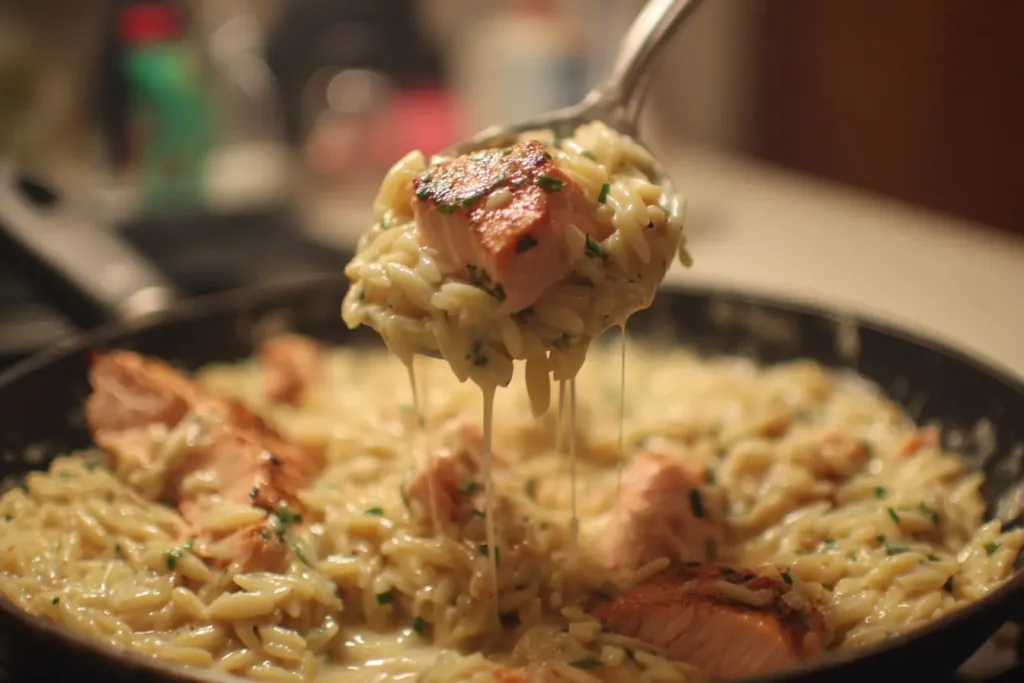
Orzo vs Rice vs Pasta (Quick Note)
Orzo may look like rice, but it’s actually pasta — which means it:
- Absorbs liquid quickly
- Releases starch as it cooks
- Creates natural creaminess in the pan
That starch is what makes salmon orzo creamy without relying on lots of cream.
Liquid Control (The Real Trick)
Orzo is pasta, but it behaves differently than most shapes.
| Ingredient | How It Cooks | Why It Matters |
|---|---|---|
| Rice | Absorbs slowly | Needs precise liquid |
| Pasta | Boils freely | Drained afterward |
| Orzo | Absorbs fast + releases starch | Naturally creamy |
That starch is what gives salmon orzo its signature texture when cooked in the pan.
The Resting Step (Don’t Skip)
When the orzo is tender:
- Turn off the heat
- Let it rest for 1–2 minutes
If it looks slightly loose before resting, it will thicken perfectly after.
Quick Fix
If the orzo tightens up, stir in a splash of warm broth and stop cooking. Done.
Flavor Customization Matrix (Make It Yours)
This salmon orzo is a great base. Once you’ve nailed the method, you can tweak the flavors to match your mood — no extra stress, no extra pans.
Choose Your Flavor Path
Creamy Classic (Crowd-Pleaser)
- Parmesan + a splash of cream
- Lemon zest at the end
- Cozy, rich, restaurant vibes
Light & Fresh
- Milk instead of cream
- Extra lemon juice
- Finish with fresh parsley
Dairy-Free (Still Creamy)
- Unsweetened oat or cashew milk
- Olive oil for richness
- Bright, clean flavor
Mediterranean Add-Ins
- Spinach or asparagus stirred in at the end
- A pinch of dried oregano or dill
Spicy or Kid-Friendly
- Red pepper flakes for heat
- Or skip spice entirely and keep it mild
Flavor Rule to Remember
Change one thing at a time.
The base method stays the same — that’s why this salmon orzo is so repeatable.
Section 10 — Nutrition Breakdown (Balanced & Honest)
This salmon orzo feels rich and comforting, but it’s actually a well-balanced meal with protein, carbs, and healthy fats all in one pan.
Estimated Nutrition (Per Serving)
| Nutrient | Approx. Amount |
|---|---|
| Calories | 480–550 kcal |
| Protein | 30–35 g |
| Carbohydrates | 45–50 g |
| Fat | 20–25 g |
| Fiber | 3–5 g |
| Omega-3s | Naturally high |
Salmon is especially valued for its high-quality protein and omega-3 fatty acids, which support heart and overall health. You can read more about salmon’s nutrition benefits.
Nutrition Notes
- Protein from salmon keeps this filling
- Orzo provides steady energy
- Lemon keeps the dish light, not heavy
This salmon orzo is balanced enough for a regular weeknight dinner — not just a special occasion.
FAQ’s: Salmon Orzo
Can I use frozen salmon for salmon orzo?
Yes. Just make sure the salmon is fully thawed and patted dry before searing. This prevents steaming and helps you get better texture in your salmon orzo.
Is orzo pasta or rice?
Orzo is pasta, not rice. It’s made from wheat, but its small size lets it absorb liquid quickly, which is why it works so well in creamy dishes like salmon orzo.
How do you keep salmon from overcooking?
The key is to sear the salmon briefly and pull it early, then add it back at the end. Gentle heat + carryover cooking keeps salmon juicy and flaky.
Can I make salmon orzo dairy-free?
Absolutely. Use unsweetened oat or cashew milk and finish with olive oil instead of butter or cream. The orzo’s starch still creates a creamy texture.
What vegetables go well with salmon orzo?
Spinach and asparagus are great options. Stir them in at the end so they stay fresh and vibrant without overcooking.
Final Thoughts: Your Go-To Salmon Orzo 💛
If there’s one thing I hope you take away from this salmon orzo, it’s this: you don’t need complicated steps or fancy ingredients to make a dinner that feels special. You just need good timing, gentle heat, and a little trust in the process.
This is the kind of recipe I come back to on busy nights — cozy, creamy, bright with lemon, and reliable every single time. Once you make it once, it becomes one of those meals you know you can pull off without stress.
Save it, make it again, tweak the flavors to fit your mood, and don’t be afraid of the salmon. You’ve got this. 💫
for more recipes follow me in Facebook, Pinterest and medium.