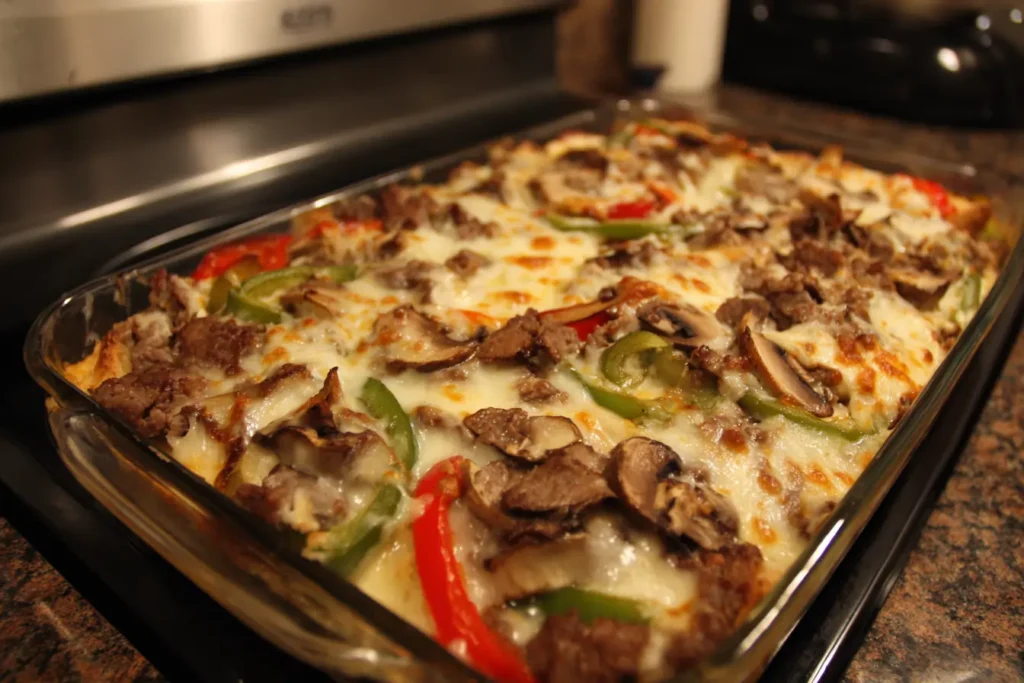
Philly Cheesesteak Casserole was supposed to be an easy dinner win the first time I made it. Beef, cheese, onions — it sounded foolproof. I slid that Philly Cheesesteak Casserole into the oven already imagining a cozy, cheesy meal that would practically serve itself. What came out, though, was… edible, but definitely closer to cheesy beef soup than the sliceable casserole I had in mind.
Instead of giving up, I did what I always do in my kitchen — I tested it again. And again. I played with the beef, the cheese, and the timing until I finally figured out why some Philly Cheesesteak Casserole recipes turn watery while others come out rich, cheesy, and perfectly set. This is the version I make now — the Philly Cheesesteak Casserole that fills the kitchen with that irresistible steak-and-cheese smell and quietly convinces everyone that I really know what I’m doing.
Table of Contents
Table of Contents
Philly Cheesesteak Casserole (What It Is & Why It Works)
Philly Cheesesteak Casserole takes everything we love about a classic cheesesteak—tender beef, sweet onions, and melty cheese—and turns it into an easy, oven-baked dinner that feeds everyone at once. If you enjoy cozy, beefy bakes like my French Onion Ground Beef Casserole, this recipe will feel right at home.
What makes this Philly Cheesesteak Casserole work is simple: moisture control. That’s the difference between a cheesy, sliceable casserole and a watery one.
What Gives It Classic Philly Cheesesteak Flavor
- Beef-first flavor (no heavy sauce)
- Onions cooked until soft and slightly sweet
- A cheese that melts smoothly, not oily
- Optional peppers or mushrooms for a casserole-friendly twist
Why Most Philly Cheesesteak Casseroles Fail
Casseroles don’t have bread to absorb liquid, so small mistakes add up fast. Here’s the quick comparison:
| Common Mistake | What Works Better |
|---|---|
| Overcrowding the pan | Cook in batches so liquid evaporates |
| Salting too early | Salt after vegetables soften |
| Wrong cheese choice | Use provolone or American-style melt |
| Cutting right away | Rest 10 minutes before serving |
Once you understand these basics, the rest of the recipe becomes almost impossible to mess up.
Print
Philly Cheesesteak Casserole
- Total Time: 45 minutes
- Yield: 6 servings 1x
- Diet: Gluten Free
Description
This Philly Cheesesteak Casserole delivers all the classic steak-and-cheese flavor you love in an easy, oven-baked dish. Tender beef, sweet onions, optional peppers, and melty provolone come together in a cozy, sliceable casserole that’s perfect for busy weeknights and family dinners—no soggy results, guaranteed.
Ingredients
-
1½ lb thin-sliced steak (ribeye, sirloin, or shaved steak)
-
1 large yellow onion, thinly sliced
-
1 green bell pepper, thinly sliced (optional)
-
8 oz mushrooms, sliced (optional)
-
8 oz provolone cheese, shredded
-
2 tbsp olive oil
-
2 cloves garlic, minced
-
1 tbsp Worcestershire sauce
-
¾ tsp salt (divided)
-
½ tsp black pepper
Instructions
-
Preheat the oven to 375°F (190°C). Lightly grease a 9×13-inch baking dish.
-
Cook the vegetables: Heat 1 tablespoon olive oil in a large skillet over medium-high heat. Add onions (and peppers/mushrooms if using). Cook until soft and lightly golden, and all liquid has cooked off. Add garlic, cook 30 seconds, then transfer vegetables to a bowl.
-
Cook the beef: Add remaining olive oil to the skillet. Increase heat to high. Add beef in batches, seasoning lightly with salt and pepper. Cook quickly until just browned. Stir in Worcestershire sauce.
-
Assemble: Spread beef evenly in the baking dish. Top with cooked vegetables, then sprinkle provolone evenly over the top.
-
Bake: Bake uncovered for 20–25 minutes, until bubbly around the edges and cheese is fully melted.
-
Rest: Remove from oven and let rest for 10 minutes before slicing and serving.
Notes
-
For the best texture, do not overcrowd the pan when cooking beef or vegetables.
-
Provolone gives the most classic flavor, but a small amount of American-style cheese can be added for extra creaminess.
-
Letting the casserole rest before cutting helps it set and stay sliceable.
- Prep Time: 15 minutes
- Cook Time: 30 minutes
- Category: Lunch
- Method: Oven-Baked
- Cuisine: American
Nutrition
- Serving Size: 1 slice
- Calories: 430 kcal
- Sugar: 3 g
- Sodium: 680 mg
- Fat: 30 g
- Saturated Fat: 14 g
- Unsaturated Fat: 14 g
- Trans Fat: 0 g
- Carbohydrates: 7 g
- Fiber: 1 g
- Protein: 32 g
- Cholesterol: 110 mg
Ingredients That Matter (And Why They Matter)
In a Philly Cheesesteak Casserole, ingredients aren’t just flavor—they control texture and moisture. Choosing the right beef and cheese upfront makes the rest of the recipe much easier.
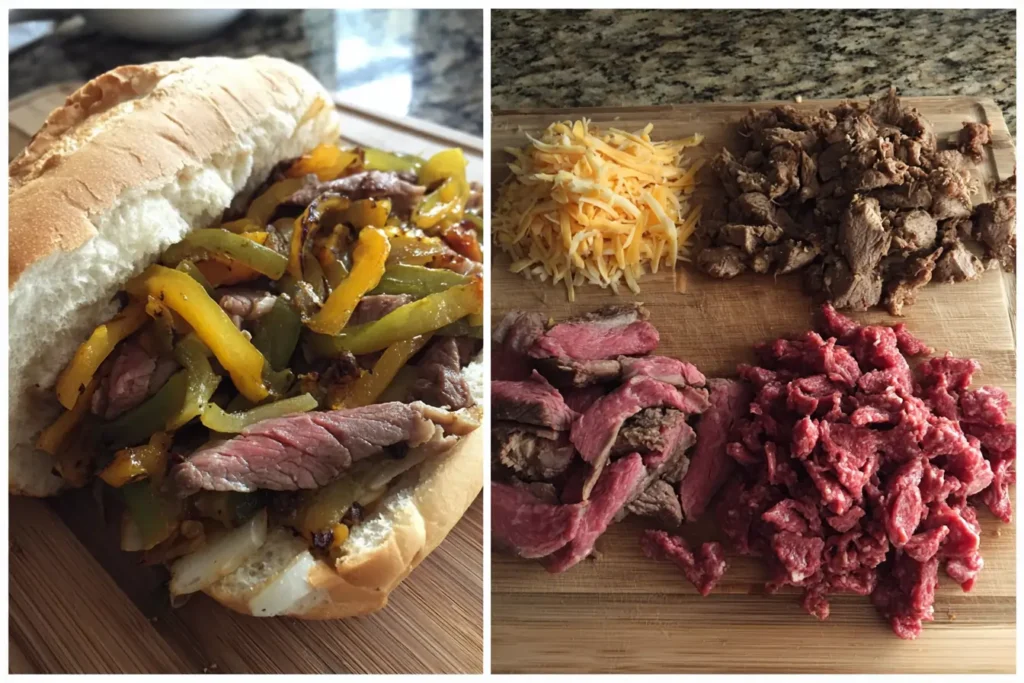
Best Beef for Philly Cheesesteak Casserole
You want beef that stays tender after baking, not chewy or dry.
| Beef Option | Texture After Baking | Best Use |
|---|---|---|
| Ribeye | Very tender | Best overall result |
| Sirloin | Tender if sliced thin | Leaner option |
| Shaved steak | Very soft | Quick prep |
| Ground beef | Soft, crumbly | Budget-friendly |
Thin slicing matters more than the cut itself.
Best Cheese for Philly Cheesesteak Casserole
Cheese affects how the casserole melts and sets.
- Provolone: smooth melt, classic flavor
- American-style cheese: extra creamy, helps bind
- Mozzarella: melts well but can turn oily if used alone
Best choice: provolone alone or paired with a small amount of American-style cheese.
Onions, Peppers & Mushrooms
- Onions: essential for sweetness
- Bell peppers: optional (popular, not traditional)
- Mushrooms: optional, but must be cooked well
Vegetables are fine—as long as their liquid is cooked off first.
Seasonings That Keep It From Tasting Flat
You only need a few, used at the right time:
- Salt (added after vegetables soften)
- Black pepper
- Garlic
- Worcestershire sauce
That’s enough to keep the beef and cheese front and center.
The No-Soggy Method (Moisture Control Explained)
If there’s one thing that makes or breaks a Philly Cheesesteak Casserole, it’s moisture control. Beef, onions, peppers, and mushrooms all release liquid as they cook. If that liquid goes into the oven, it turns into a watery casserole instead of a rich, cheesy bake.
This method fixes that before baking, not after.
Why Philly Cheesesteak Casseroles Get Watery
Most watery casseroles come from the same few issues:
- Vegetables releasing water in the oven
- Beef juices not cooked off first
- Overcrowded pans that steam instead of brown
- Salting too early, which pulls moisture out fast
The oven can’t fix excess liquid—it only traps it.
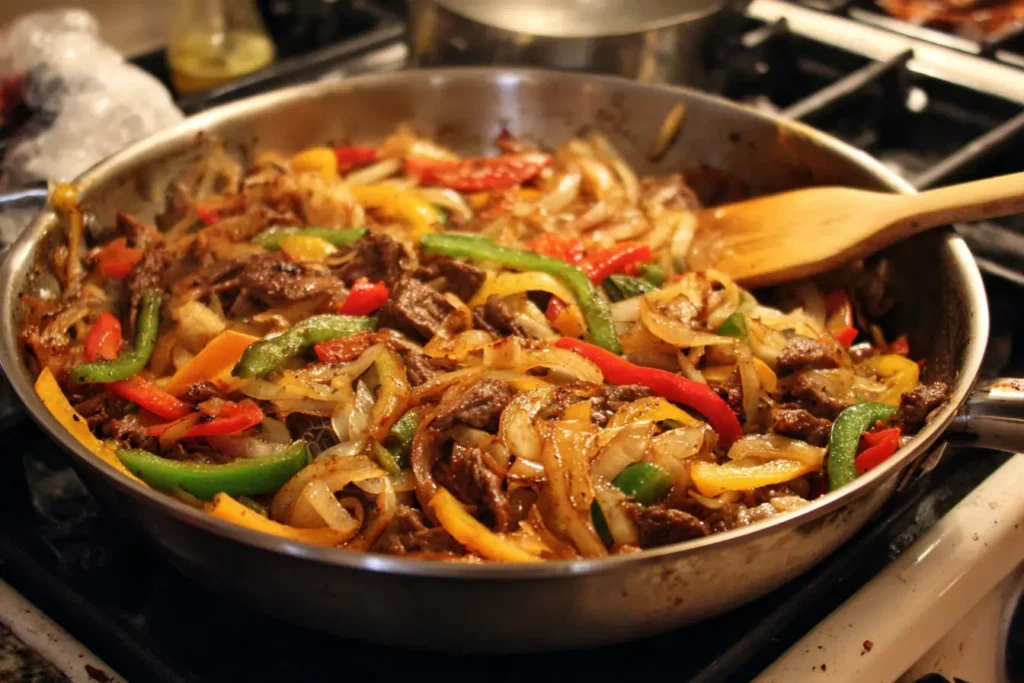
Browning vs Steaming: Pan Temperature Matters
A hot pan is non-negotiable.
- Hot pan + space → browning, flavor, less moisture
- Crowded pan → steaming, pale meat, extra liquid later
Cook beef and vegetables in batches if needed. If you see liquid pooling in the pan, keep cooking until it evaporates.
How to Control Onion & Pepper Moisture
Onions and peppers are the biggest moisture offenders.
- Cook them until they’re soft and lightly golden
- Let their liquid fully cook off before moving on
- Don’t rush this step—it usually takes longer than you think
If the pan looks wet, the casserole will be wet too.
When to Add Salt (Timing Is Everything)
Salt pulls moisture out of vegetables.
- Add salt after onions and peppers have softened
- Season gradually instead of all at once
This keeps flavor balanced without flooding the pan.
Do You Need a Thickener?
Usually, no.
If moisture is controlled properly, the casserole sets on its own. Thickeners like cornstarch or cream cheese are only helpful if you’re adding extra liquid ingredients. Otherwise, they can make the texture heavy.
Step-by-Step Philly Cheesesteak Casserole (With Visual Cues)
The steps are simple. What matters is knowing what each stage should look like, so you don’t second-guess yourself.
Prep the Beef
- Slice the beef thin and against the grain
- Pat it dry so it browns instead of steaming
Visual cue: thin slices that separate easily, not thick chunks.
Cook the Beef and Vegetables
- Cook vegetables first until their liquid cooks off
- Remove them, then cook beef quickly over high heat
- Beef should brown lightly but stay tender
Visual cue: dry pan, lightly browned beef, no puddles.
Layer the Casserole
Layer in this order:
- Beef
- Vegetables
- Cheese
This keeps moisture away from the cheese and helps the casserole set.
Bake, Broil, and Rest
- Bake until bubbly at the edges
- Broil briefly for light browning
- Rest 10 minutes before cutting
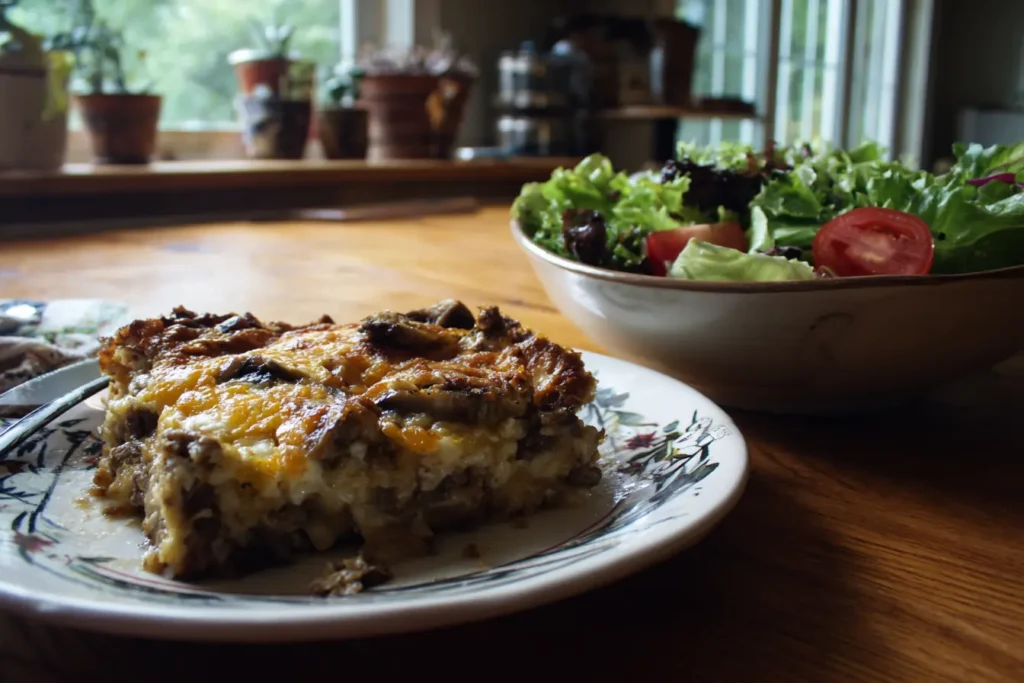
Visual cue: melted, lightly golden cheese and a casserole that holds together when sliced.
Choose Your Version (Classic, Ground Beef, Keto)
This Philly Cheesesteak Casserole is flexible. Use the version that fits your budget, diet, and what you’ve got in the fridge — the method stays the same.
Classic Philly Cheesesteak Casserole (Most “Cheesesteak” Flavor)
- Use thin-sliced steak (ribeye if you want the richest flavor)
- Stick with provolone for that classic taste
- Onions are essential; peppers are optional
Best for: maximum cheesesteak vibe.
Ground Beef Philly Cheesesteak Casserole (Budget-Friendly)
- Brown ground beef and drain excess grease
- Season well so it doesn’t taste “plain beef casserole”
- Provolone still works great here
Best for: cheaper, faster prep, still super cheesy.
Keto / Low-Carb Philly Cheesesteak Casserole
- Skip pasta/bread completely (this version doesn’t need them)
- Use full-fat cheese for better melt and satisfaction
- Keep vegetables cooked down to avoid extra moisture
Best for: low-carb comfort food that still feels filling.
Gluten-Free Notes
This casserole is naturally gluten-free as long as your ingredients are:
- Worcestershire sauce (check label)
- Any seasoning blends (check additives)
What to Serve With Philly Cheesesteak Casserole
This casserole is rich and cheesy, so the best sides either add freshness or lean into comfort without competing.
Classic, Easy Sides
- Simple green salad with a light vinaigrette
- Roasted vegetables (broccoli, green beans, or carrots)
- Crispy fries or oven wedges for a full comfort-food plate
Cheesy & Comfort Sides (If You’re Going All In)
If you’re serving this for family night or guests, these pair especially well:
- Soft, cheesy bread like Cheese and Onion Rolls
- Crispy potato sides such as Crispy Cheesy Hash Browns
Low-Carb Side Ideas
- Sautéed green beans or zucchini
- Simple cucumber salad
- Roasted cauliflower with olive oil and salt
Sauces & Toppings (Optional)
- Hot sauce for heat lovers
- A spoonful of sautéed onions on top
- Extra provolone melted over individual portions
These sides keep the Philly Cheesesteak Casserole feeling like a complete, satisfying meal without stealing the spotlight.
Nutrition Information (Per Serving)
The nutrition values below are estimates and will vary based on the cut of beef, type of cheese, and portion size used.
Estimated Nutrition Breakdown
| Nutrient | Amount (Approx.) |
|---|---|
| Calories | 430 kcal |
| Protein | 32 g |
| Total Fat | 30 g |
| Saturated Fat | 14 g |
| Carbohydrates | 7 g |
| Fiber | 1 g |
| Sugar | 3 g |
| Sodium | 680 mg |
Nutrition Notes
- This Philly Cheesesteak Casserole is high in protein, thanks to the beef and cheese.
- It’s naturally low in carbohydrates, especially when made without pasta or bread.
- Sodium levels depend heavily on cheese choice and seasoning, so adjusting those can make a noticeable difference.
For general guidance on safe beef consumption and portion awareness, refer to the
USDA food safety and nutrition guidelines.
If you’re following a low-carb or keto-style approach, this casserole fits well within those guidelines when paired with low-carb sides.
FAQ’s: Philly Cheesesteak Casserole
What cheese is best for Philly Cheesesteak Casserole?
Provolone is the best choice for classic flavor and a smooth melt. You can also mix in a small amount of American-style cheese for extra creaminess. Mozzarella works, but it’s best combined with another cheese to avoid an oily texture.
Why does my Philly Cheesesteak Casserole turn watery?
Too much moisture usually comes from vegetables releasing liquid in the oven. Cooking onions and peppers until their liquid evaporates before baking is the most important step to prevent a watery casserole.
Can I use ground beef instead of steak?
Yes. Ground beef works well and is more budget-friendly. Just be sure to brown it fully and drain excess grease so the casserole doesn’t become oily.
Is Philly Cheesesteak Casserole keto or low-carb?
This recipe is naturally low in carbs when made without pasta or bread. Using full-fat cheese and well-cooked vegetables keeps it keto-friendly for most low-carb diets.
Do Philly cheesesteaks traditionally have peppers?
Traditionally, Philly cheesesteaks are made with beef, onions, and cheese only. Bell peppers aren’t classic, but they’re very common in casserole versions and add extra flavor and color.
Final Thoughts: Why This Philly Cheesesteak Casserole Works
This Philly Cheesesteak Casserole works because it respects the details that matter—how moisture is handled, how the beef is cooked, and how the cheese melts. Once you understand those basics, the recipe stops feeling risky and starts feeling reliable.
It’s the kind of dinner that looks impressive without being fussy, feels cozy without being heavy, and somehow makes everyone wander into the kitchen asking, “Is it ready yet?” And honestly, that’s always a good sign.
Save this one, make it once, then make it again your own. Whether you go classic, budget-friendly, or low-carb, this is the version that’s meant to work every single time.
for more recipes follow me in Facebook, Pinterest and medium.