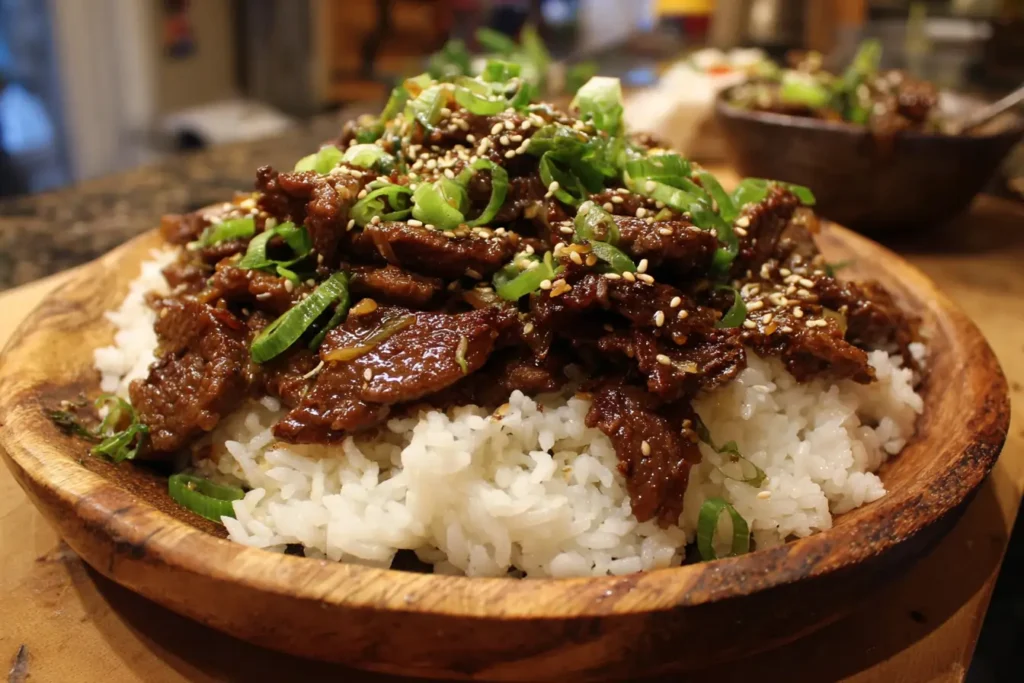
Korean Bulgogi Beef was the first “wait… I can’t make this at home” dish I ever fell for. Korean Bulgogi Beef at that little neighborhood Korean restaurant came out sizzling, glossy, and smelling like garlic-sesame heaven, and I was convinced they had some secret grill magic I didn’t.
Then I got brave (and cheap) and tried it in my own kitchen with a basic pan and a slightly panicky attitude. The first time, I sliced the beef wrong and it chewed like a shoelace. The second time, I figured it out. And when my family cleaned the plate so fast I barely got a bite? That’s when I knew this recipe was a keeper.
If you want restaurant-style Korean BBQ flavors but you’re worried about tough meat, hard-to-find ingredients, or needing a grill, I’ve got you. This is cozy, weeknight-friendly bulgogi you can make with normal grocery store stuff and one hot cooking surface.
You’ll learn the easy slicing trick that makes the beef tender, how to build a sweet-savory bulgogi marinade that actually tastes right, and three different ways to cook it (stovetop, broiler, or grill). No special equipment. No stress spiral.
Table of Contents
Table of Contents
Quick Overview
- Prep Time: 15 minutes
- Marinate Time: 30 minutes (or up to 24 hours)
- Cook Time: 8–10 minutes
- Total Time: About 55 minutes
- Servings: 4–6
- Difficulty: Easy
Why You’ll Love This Korean Bulgogi Beef
– A quick marinade made from real-life ingredients: soy sauce, garlic, sesame oil, and brown sugar.
– Three cooking methods (grill, stovetop, broiler), so you’re not blocked by “I don’t own a grill” energy.
– The slicing technique is the whole game—once you do it, you get that tender, almost melt-y bite.
– Meal-prep friendly: it marinates beautifully and reheats without turning sad.
– Sweet-savory flavor that makes picky eaters happy, but still feels exciting if you love trying new food.
Korean Bulgogi Beef
- Total Time: 55 minutes
- Yield: 6 servings 1x
Description
This Korean Bulgogi Beef is sweet-savory, garlicky, and sesame-rich—just like restaurant Korean BBQ, but totally doable at home. Thin-sliced beef marinates fast, cooks in minutes, and works on the stovetop, under the broiler, or on the grill.
Ingredients
1 1/2 lb flank steak (or ribeye/sirloin), very thinly sliced against the grain
1 small yellow onion, thinly sliced
1/2 cup soy sauce (regular or low-sodium)
3 tbsp brown sugar
2 tbsp sesame oil
4 cloves garlic, minced
1 tbsp fresh ginger, grated (or 1 tsp ground ginger)
1/2 small pear, grated (Asian pear, Bosc/Anjou, or sweet apple)
3 green onions, thinly sliced
1/2 tsp black pepper
1–2 tsp gochugaru (optional) or a small squeeze of sriracha (optional)
1 tbsp neutral oil, for cooking (as needed)
Toasted sesame seeds + extra green onion, for serving (optional)
Instructions
1. Freeze the steak for 20–30 minutes until firm but not frozen solid.
2. Slice the beef very thinly against the grain.
3. In a bowl, whisk soy sauce, brown sugar, sesame oil, garlic, ginger, grated pear, green onions, and black pepper (plus gochugaru/sriracha if using).
4. Add sliced beef and onion; toss until evenly coated.
5. Cover and marinate at least 30 minutes (2–8 hours is even better; up to 24 hours max).
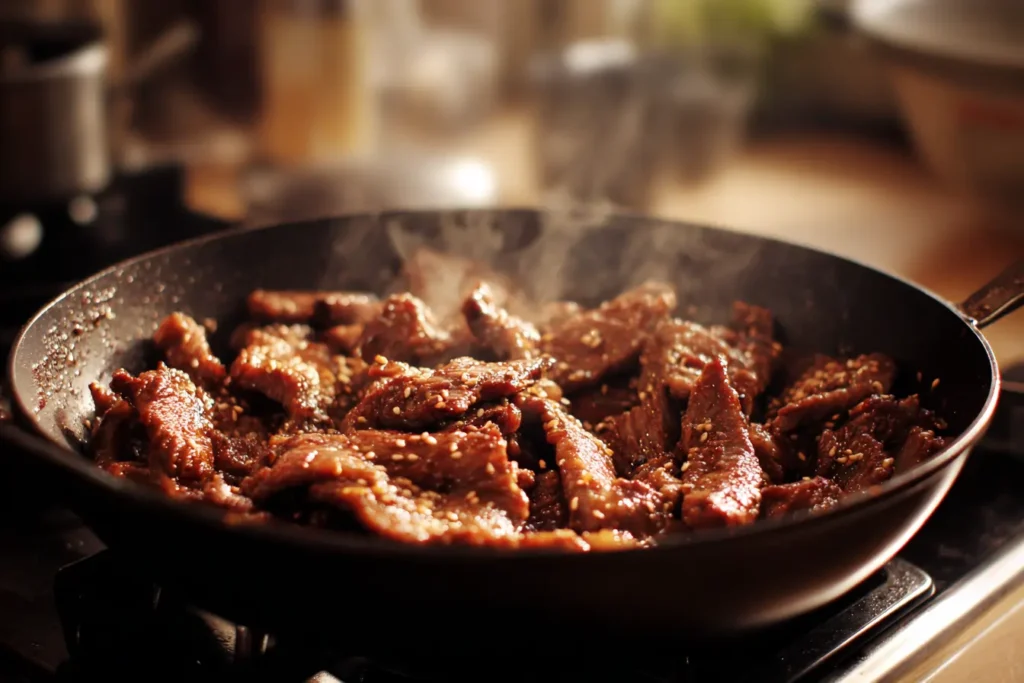
6. STOVETOP: Heat a large skillet over medium-high heat until hot. Add a small drizzle of neutral oil if needed.
7. Cook bulgogi in batches (don’t crowd the pan) for about 2–3 minutes per side until browned and caramelized.
8. Serve hot over rice or in lettuce wraps. Top with sesame seeds and extra green onion if you like.
Notes
TENDERNESS SECRET: Slice very thinly AGAINST the grain.
NO PEAR? Swap grated sweet apple or 1–2 tbsp applesauce.
DON’T STEAM IT: Cook in batches so it browns instead of turning watery.
SUGAR CAN BURN: Use medium-high heat (not “nuclear”) and watch closely.
BROILER OPTION: Spread on a foil-lined sheet pan; broil 3–6 min, toss, then broil 2–4 min more.
FREEZER MEAL: Freeze raw beef in marinade up to 2–3 months; thaw overnight, then cook.
- Prep Time: 15 minutes
- Cook Time: 10 minutes
- Category: Dinner
- Method: Stovetop
- Cuisine: Korean
Nutrition
- Serving Size: 1 serving
- Calories: 320 kcal
- Sugar: 12g
- Sodium: 900mg
- Fat: 14g
- Saturated Fat: 4g
- Unsaturated Fat: 9g
- Trans Fat: 0g
- Carbohydrates: 20g
- Fiber: 1g
- Protein: 28g
- Cholesterol: 70mg
Ingredients for Korean Bulgogi Beef
Let me walk you through what you need. I’m breaking it into two groups so you can shop (and cook) without rereading the same list 12 times.
For the beef:
- 1 1/2 pounds flank steak, ribeye, or sirloin, thinly sliced (flank is classic; ribeye is extra juicy; sirloin is budget-friendly and still great)
- 1 small yellow onion, thinly sliced (it softens and gets sweet)
- Optional: 1 cup sliced mushrooms or 1 sliced bell pepper (if you want a veggie-loaded, stir-fry-ish version)
For the bulgogi marinade:
- 1/2 cup soy sauce (regular or low-sodium; low-sodium gives you more control)
- 3 tablespoons brown sugar (for that caramelized edge)
- 2 tablespoons sesame oil (this is the “it tastes like Korean food” ingredient)
- 4 cloves garlic, minced (don’t be shy)
- 1 tablespoon grated fresh ginger (or 1 teaspoon ground ginger in a pinch)
- 1/2 small pear, grated (Asian pear is traditional, but a ripe Bosc/Anjou pear or even a sweet apple works)
- 3 green onions, thinly sliced (white and green parts)
- 1/2 teaspoon black pepper
- Optional heat: 1–2 teaspoons gochugaru (Korean red pepper flakes) or a little sriracha if that’s what you’ve got
Why the pear matters: it adds a gentle sweetness and helps tenderize the meat. Is it the end of the world if you skip it? No. But when you include it, this Korean Bulgogi Beef tastes more like the restaurant version.
Ingredient Substitutions & Variations
Here’s the thing about bulgogi: it’s flexible. You can make it work with what you have, and it’ll still be delicious.
Protein swaps:
- Chicken thighs: Use boneless/skinless thighs, thinly sliced. They stay juicy and are very forgiving.
- Pork shoulder or pork loin: Thin slices work great, same marinade.
- Tofu: Press it well, then slice. It won’t be “bulgogi” in the traditional sense, but it’s a tasty sweet-savory tofu situation.
- Mushrooms (vegetarian): Use thick-sliced shiitake or portobello. They soak up the marinade like little sponges of joy.
Sweetener options:
- Honey or maple syrup instead of brown sugar (start with 2 tablespoons and taste).
- White sugar works too, but brown sugar gives more depth.
Pear/apple options:
- Asian pear is the gold standard, but a ripe pear or sweet apple is totally fine.
- No fruit? Add 1–2 tablespoons pineapple juice if you have it. (Just don’t over-marinate with pineapple—more on that later.)
Soy sauce options:
- Tamari works for gluten-free.
- Coconut aminos can work, but it’ll be noticeably sweeter—reduce the sugar a bit.
Heat and flavor extras:
- Add gochugaru for gentle heat and color.
- Add a spoonful of gochujang (Korean chili paste) if you want deeper spicy-sweet flavor.
- Sprinkle toasted sesame seeds at the end for crunch.
If you want more ideas in this flavor family, you might also like our Asian Wonton Meatball Bites recipes
What is Korean Bulgogi Beef?
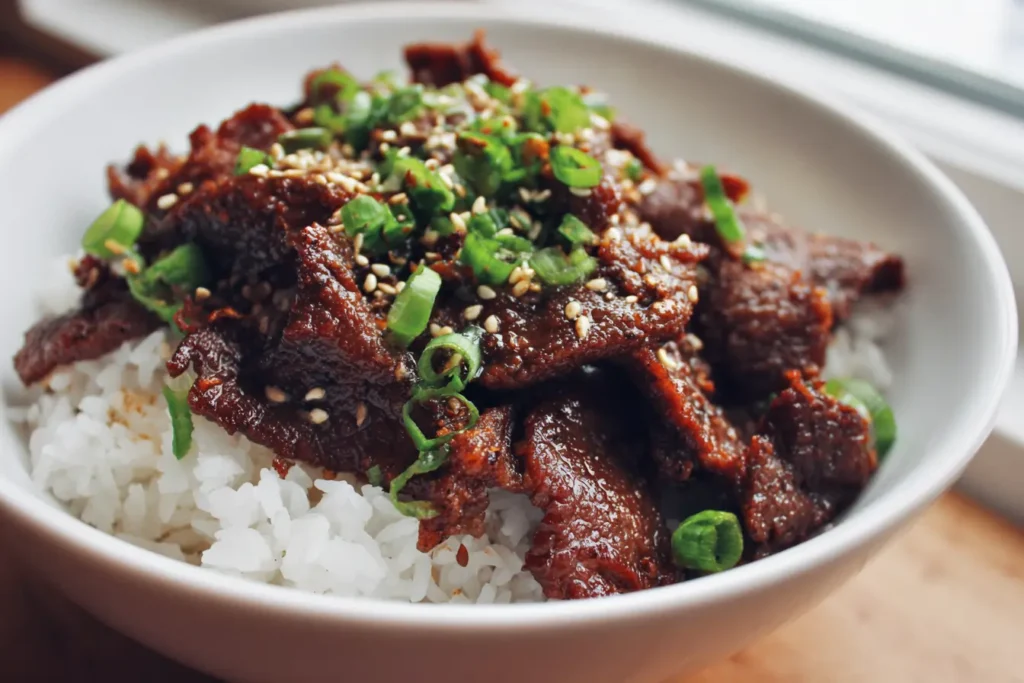
Korean Bulgogi Beef is thinly sliced beef marinated in a sweet-savory mixture—usually soy sauce, garlic, sesame oil, and some kind of fruit (often Asian pear)—then cooked quickly over high heat. “Bulgogi” roughly translates to “fire meat,” which sounds dramatic, but honestly it’s just describing that fast, hot cooking that gives you those browned edges.
Traditionally it’s cooked on a grill, but you can absolutely make it in a skillet or under the broiler and still get that caramelized, Korean BBQ vibe.
If you want a deeper background on bulgogi as a Korean dish, Maangchi is a wonderful resource and I’ve learned a lot from her over the years: https://www.maangchi.com/recipe/bulgogi
And Serious Eats has a great practical approach to Korean BBQ-style cooking at home too: https://www.seriouseats.com/korean-barbecue-at-home
Now, let’s make it happen in your kitchen.
How to Make Korean Bulgogi Beef
Once you’ve got the slicing and marinade down, everything else is basically “let it sizzle and don’t overthink it.”
1. Slice the beef thin (this is the tenderness secret)
Put your steak in the freezer for 20–30 minutes first. Not rock-solid frozen—just firm enough to slice cleanly.
Then slice it very thinly against the grain (meaning you cut across the muscle lines, not along them). If you’ve ever had chewy steak in a stir-fry, this is usually why. For a visual walkthrough, this guide on how to slice meat against the grain is genuinely helpful: https://example.com/how-to-slice-meat-against-the-grain
2. Mix the marinade and combine
In a bowl, stir together soy sauce, brown sugar, sesame oil, garlic, ginger, grated pear, green onions, and black pepper (plus gochugaru if you’re using it).
Add the sliced beef and toss until everything’s coated. Add the sliced onion (and any optional veggies) and toss again.
Cover and marinate for at least 30 minutes. If you’ve got time, 2–8 hours is even better. Up to 24 hours is fine in the fridge.
3. Cook it (choose your method: stovetop, broiler, or grill)
No grill? No problem. Korean Bulgogi Beef is surprisingly friendly like that.
Stovetop method (my weeknight default):
- Heat a large skillet or cast-iron pan over medium-high heat. Get it hot.
- Add a small drizzle of neutral oil if your pan needs it.
- Cook the beef in batches so it sears instead of steaming, about 2–3 minutes per side (thin slices go fast).
- Let some edges caramelize. That’s the good stuff.
Broiler method (closest to “BBQ-ish” without going outside):
- Line a sheet pan with foil (future you will be grateful).
- Spread the beef in a single layer.
- Broil 3–6 minutes, toss once, broil another 2–4 minutes until browned. Watch closely—broilers go from “beautiful” to “smoke alarm concert” quickly.
Grill method:
- Preheat your grill to medium-high.
- Use a grill pan or skewers if the slices are tiny and you’re worried about losing them to the flames.
- Grill quickly, turning once, until browned and cooked through.
When it’s done, you can finish with sesame seeds and extra sliced green onion if you want it to look (and taste) extra special.
Pro Tips & Common Mistakes
- Don’t skip slicing against the grain. I know I’m repeating myself. I’m doing it because it matters more than almost anything else for tender Korean Bulgogi Beef.
- Freeze the steak briefly for easier slicing. Trying to thin-slice floppy beef is a personal test of patience I don’t recommend.
- Marinate at least 30 minutes, but don’t stress if you only have that. This isn’t a “24 hours or it’s pointless” situation.
- Avoid overcrowding the pan. If you dump it all in at once, the beef steams and you lose that browned, caramelized edge. Cook in two batches if you need to.
- Watch the sugar. Bulgogi marinade has sweetness, which means it can burn if the heat is too high for too long. You want hot enough to sear, not so hot it scorches instantly.
- Pear/pineapple caution: Fruit helps tenderize, but very strong enzymes (hello pineapple) can make meat mushy if it sits too long. If you use pineapple juice, keep the marinating time closer to 30–60 minutes.
Also, if you’re using a nonstick pan, keep the heat at medium-high (not nuclear) to protect your pan and still get good browning.
Storage, Make-Ahead & Freezing – Korean Bulgogi Beef
Korean Bulgogi Beef is one of those meals that makes future-you feel taken care of.
- Fridge (cooked): Store leftovers in an airtight container for 3–4 days. Reheat in a hot skillet for best texture, or microwave in short bursts so it doesn’t overcook.
- Fridge (marinating): You can marinate the beef up to 24 hours. After that, it can get a little too soft.
- Freezer (raw in marinade): Add the beef and marinade to a freezer bag, squeeze out air, freeze up to 2–3 months. Thaw overnight in the fridge, then cook.
- Freezer (cooked): Freeze cooked bulgogi in a tight container for up to 2 months. It’s not quite as perfect as fresh, but it’s still very good for quick rice bowls.
My favorite move: double the marinade and freeze half with raw sliced beef. You basically gift yourself a weeknight dinner later.
Serving Suggestions
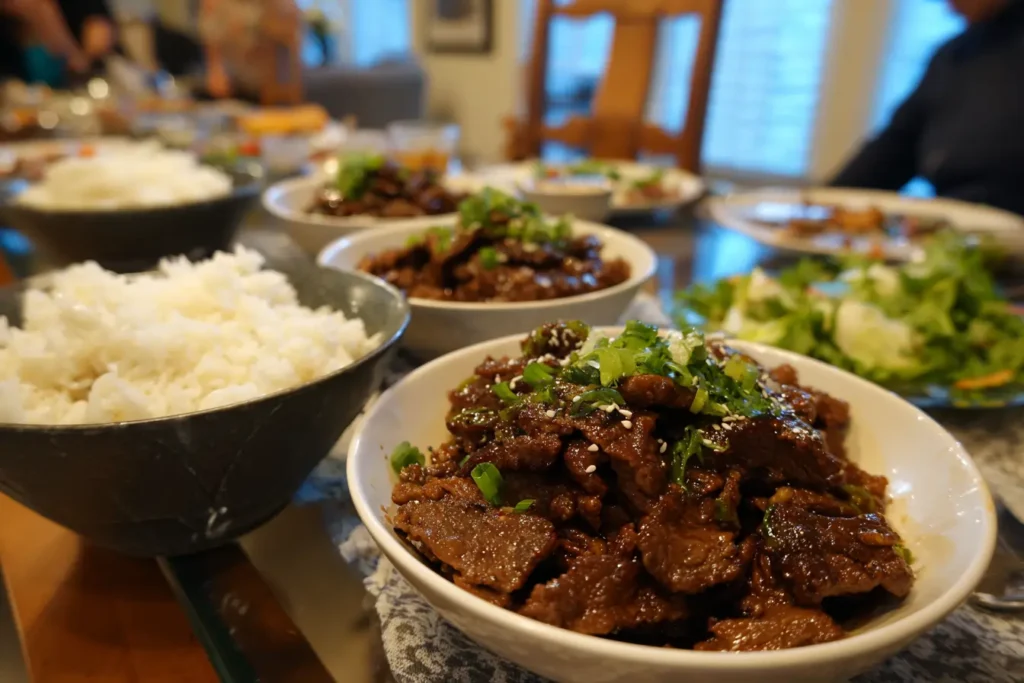
This is the part where Korean Bulgogi Beef becomes a whole cozy spread with basically no extra effort.
- Classic rice bowls: Steamed rice, bulgogi, quick cucumber slices, and a fried egg if you’re feeling fancy.
- Lettuce wraps (ssam-style): Butter lettuce or romaine leaves + beef + rice + a little kimchi. Messy, fun, and weirdly satisfying.
- Noodles: Toss with cooked rice noodles or ramen noodles (drained) and a splash of extra soy sauce/sesame oil.
- Bibimbap-ish bowl: Add sautéed spinach, shredded carrots, and a dollop of gochujang. Not traditional bibimbap, but it scratches the itch.
- Party platter: Put the beef on a big plate with rice, kimchi, and pickled veggies and let everyone build their own.
Side dish ideas:
- Kimchi (store-bought is totally fine)
- Quick pickled cucumbers
- Steamed broccoli with sesame oil and salt
- A simple scallion salad
If you want to go full “Korean food night,” pair this with our General Tso’s Chicken recipe.
And if you’re building a whole menu, check out our best Air Fryer Kielbasa.
For food safety basics (especially if you’re marinating and batch-cooking), the USDA has clear guidance that’s easy to follow
FAQ’s about Korean Bulgogi Beef
What cut of meat is best for Korean Bulgogi Beef?
Ribeye is the most tender and juicy, but flank steak is the classic “bulgogi at home” choice because it’s flavorful and slices beautifully when slightly chilled. Sirloin is a great middle ground if you want something affordable that still stays tender when sliced thin.
Can I make Korean Bulgogi Beef without pear?
Yes. The pear helps with sweetness and tenderness, but you can swap in a grated sweet apple, a spoonful of applesauce, or even just add an extra teaspoon of brown sugar and call it a day. Your bulgogi will still taste delicious.
How long should I marinate bulgogi?
Thirty minutes is the minimum for good flavor. If you can do 2–8 hours, it’s even better. I try not to go past 24 hours because the texture can get too soft (especially if you used very ripe fruit).
Why did my bulgogi turn watery instead of browning?
Two common culprits: your pan wasn’t hot enough, or you overcrowded it. Cook in batches and let the pan preheat properly. Also, don’t pour all the marinade into the pan—let most of it cling to the beef, but leave the puddle behind.
Is bulgogi supposed to be sweet?
A little, yes. That sweet-savory balance is part of what makes it so addictive. If you prefer it less sweet, reduce the brown sugar to 2 tablespoons and add a little more black pepper or a pinch of gochugaru to keep the flavor lively.
Final Thoughts – Korean Bulgogi Beef
If you’ve been nervous to try Korean Bulgogi Beef at home, I want you to know this: you don’t need a grill, you don’t need rare ingredients, and you definitely don’t need chef-level skills. You just need thin slices, a good bulgogi marinade, and a hot pan.
Make it once, then make it your own. Add mushrooms, turn it into rice bowls, do lettuce wraps, stash some in the freezer for a future Wednesday when cooking feels impossible. And if you try this Korean Bulgogi Beef, tell me how you served it—because I’m always looking for new lazy-genius ways to eat leftovers.