I still remember the first time I made a crescent breakfast ring.
I had my coffee in one hand, crescent dough in the other, and that dangerous level of confidence that only exists before breakfast. I thought, “How hard can this be?”
The kitchen smelled amazing. Golden edges, cheesy bubbles… I was already picturing myself as the brunch hero.
Then I cut into it.
The center was pale. The eggs had opinions. And I learned—very quickly—that this recipe isn’t difficult, it’s just misunderstood.
That little kitchen moment is exactly why I love cooking so much. It’s not about perfection — it’s about learning, fixing, and turning “almost” into wow. And once I figured out why crescent breakfast rings fail, this became one of my favorite ways to make breakfast feel special without stressing myself out.
If you love your kitchen, love cooking, and love hearing “Wait… you MADE this?” — you’re in the right place.
Table of Contents
Table of Contents
Why Most Crescent Breakfast Rings Fail
Most crescent breakfast ring recipes make this sound like a “just assemble and bake” situation. And that’s exactly why so many of them come out with golden edges… and a raw, doughy middle.
If you’ve ever baked something like my ham and cheese croissant casserole, you already know this:
pastry and eggs need a little strategy, not just oven time.
The good news? This recipe isn’t hard — it just has a few common failure points.
The 3 Main Reasons Rings Go Wrong
- The center bakes last
A ring shape means heat hits the outside first. Add thick overlapping dough in the middle, and the center lags behind. - Raw eggs release moisture
As eggs cook, they give off liquid and steam. That moisture seeps into seams and softens the dough underneath. - Too much dough overlap
Overlapping “for safety” creates a dense center that traps moisture and stays pale even when the edges look done.
What That Leads To
| Mistake | Result |
|---|---|
| Thick center overlap | Raw middle |
| Raw eggs on dough | Leaks + soggy spots |
| Uneven heat | Overbrowned edges |
Brand recipes rarely explain this because they assume perfect ovens and “rustic” results. But once you understand why rings fail, fixing it is simple.
And now that you know what goes wrong, let’s build the version that actually works.
The Foolproof Crescent Breakfast Ring Method
Once you understand why crescent breakfast rings fail, the fix is surprisingly simple. This method isn’t about fancy tricks — it’s about controlling moisture, dough thickness, and order.
Think of this as the calm, organized version of the recipe your future brunch self will thank you for.
Ingredients That Actually Matter (And Why)
Not every ingredient plays an equal role here. These are the ones that truly affect the final result:
- Crescent dough – chilled but pliable (too warm = sticky, too cold = tearing)
- Eggs – how they’re prepared matters more than how many
- Protein – bacon or sausage must be fully cooked and drained
- Cheese – good melt, low grease is the goal
If you’ve made baked egg dishes like my crustless quiche, you already know that eggs and moisture control make or break the texture.
The Dough Layout That Prevents Raw Centers
This is where most problems start — and where most recipes stay vague.
What works best:
- Arrange the crescent triangles in a circle with the wide ends overlapping slightly
- Keep overlaps even, not stacked
- Leave the very center open and light, not packed with dough
What to avoid:
- Stacking multiple layers in the center
- Pressing the dough too thick “just in case”
Secure seams are good. A dough pile is not.
Egg Prep: Raw vs Par-Scrambled vs Fully Scrambled
Here’s the truth most recipes skip:
| Egg Method | Result |
|---|---|
| Raw eggs | Leaks, soggy dough |
| Fully scrambled | Safe but slightly firmer |
| Par-scrambled | Best balance |
Par-scrambled eggs (just barely set) release less liquid while still finishing gently in the oven. That’s the sweet spot for a ring.
Assembly Order That Prevents Leaks
Order matters more than you think.
Always layer like this:
- Dough
- Cheese (acts as a barrier)
- Eggs
- Protein
- Final light cheese sprinkle
Never place raw eggs directly on dough.
That one small change alone prevents most leaks.

Crescent Breakfast Ring
- Total Time: 40 minutes
- Yield: 6 servings 1x
- Diet: Vegetarian
Description
This Crescent Breakfast Ring is a warm, savory breakfast that looks impressive but is surprisingly easy to make. Flaky crescent dough is wrapped around eggs, cheese, and your choice of bacon or sausage, then baked until golden and sliceable. Perfect for weekend breakfasts, brunch, or special mornings when you want something cozy and crowd-pleasing.
Ingredients
-
2 cans refrigerated crescent roll dough
-
6 large eggs
-
1 cup shredded mozzarella cheese
-
½ cup shredded sharp cheddar cheese
-
6 slices bacon, cooked and crumbled or 8 oz breakfast sausage, cooked and drained
-
¼ teaspoon salt
-
¼ teaspoon black pepper
Optional additions:
-
½ teaspoon garlic powder
-
1 tablespoon chopped chives or green onions
Instructions
-
Preheat the oven to 375°F (190°C). Line a baking sheet with parchment paper.
-
Prepare the eggs.
Lightly scramble the eggs in a skillet over medium-low heat just until barely set (soft and slightly glossy). Season with salt and pepper, then remove from heat. -
Arrange the dough.
Unroll the crescent dough and arrange the triangles in a circle on the baking sheet, wide ends overlapping slightly in the center and points facing outward. Leave the center light and open. -
Assemble the ring.
Sprinkle half of the cheese over the dough, then spoon the eggs evenly around the ring. Add the cooked bacon or sausage, then top with the remaining cheese. -
Fold and seal.
Fold the pointed ends of the dough over the filling toward the center, tucking gently to seal without piling dough. -
Bake.
Bake for 22–28 minutes, until the dough is golden brown and the center is fully set. -
Rest and serve.
Let the crescent breakfast ring rest for 5–10 minutes before slicing and serving.
Notes
-
Par-scrambling the eggs helps prevent leaks and soggy dough.
-
Avoid overfilling the ring — less filling means cleaner slices.
-
Mozzarella + cheddar gives the best balance of melt and structure.
-
Letting the ring rest before slicing helps it hold its shape.
- Prep Time: 15 minutes
- Cook Time: 25 minutes
- Category: Breakfast
- Method: Baking
- Cuisine: American
Nutrition
- Serving Size: 1 slice
- Calories: 400 kcal
- Sugar: 2 g
- Sodium: 720 mg
- Fat: 24 g
- Saturated Fat: 11 g
- Unsaturated Fat: 11 g
- Trans Fat: 0 g
- Carbohydrates: 30 g
- Fiber: 1 g
- Protein: 18 g
- Cholesterol: 215 mg
Step-by-Step Instructions (With Visual Cues)
This is the part where most people start second-guessing themselves — so instead of focusing only on time, we’re focusing on what you should actually see. Your eyes are more reliable than the clock here.
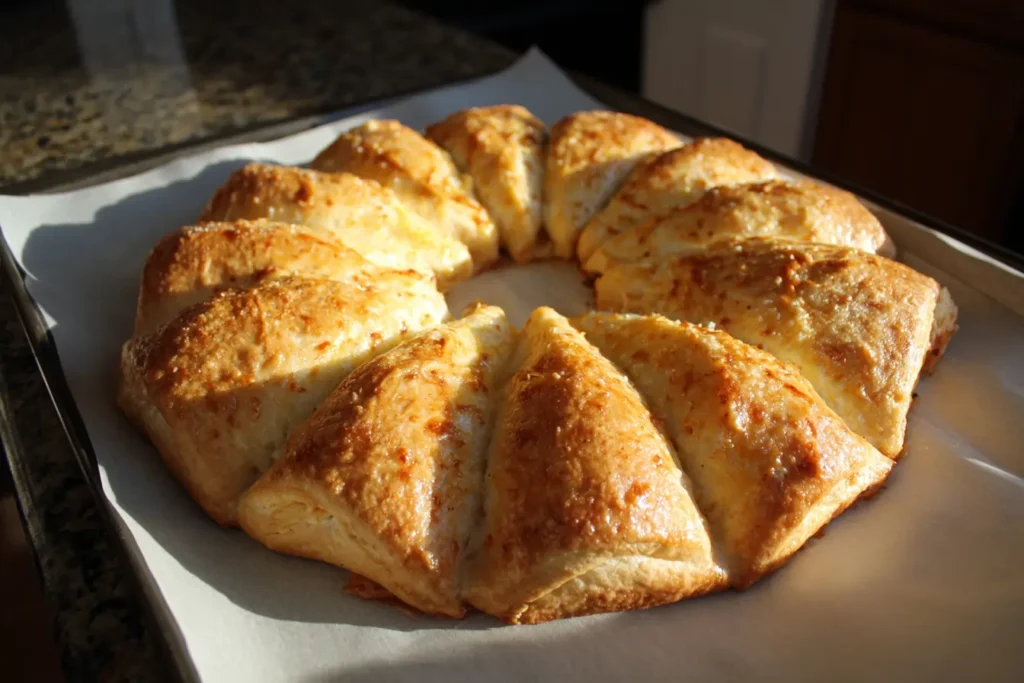
Before Baking: What It Should Look Like
Before the ring goes into the oven, pause for a second and check these cues:
- Dough is evenly overlapped, not piled up
- The center looks light and open, not thick
- Filling stays inside the ring, not spilling outward
- Cheese lightly covers the eggs and protein
If it already looks overloaded or messy now, it won’t magically fix itself in the oven.
Good sign: everything looks neat, supported, and balanced.
Halfway Through Baking: What’s Normal (And What’s Not)
About halfway through baking, this is what you want to see:
Normal
- Edges starting to turn light golden
- Cheese melted and gently bubbling
- Center still a bit pale
Not normal
- Liquid pooling in the center
- Filling escaping through seams
- Center looking shiny and wet
If the edges are browning faster than the middle, that’s okay — it’s expected with a ring shape.
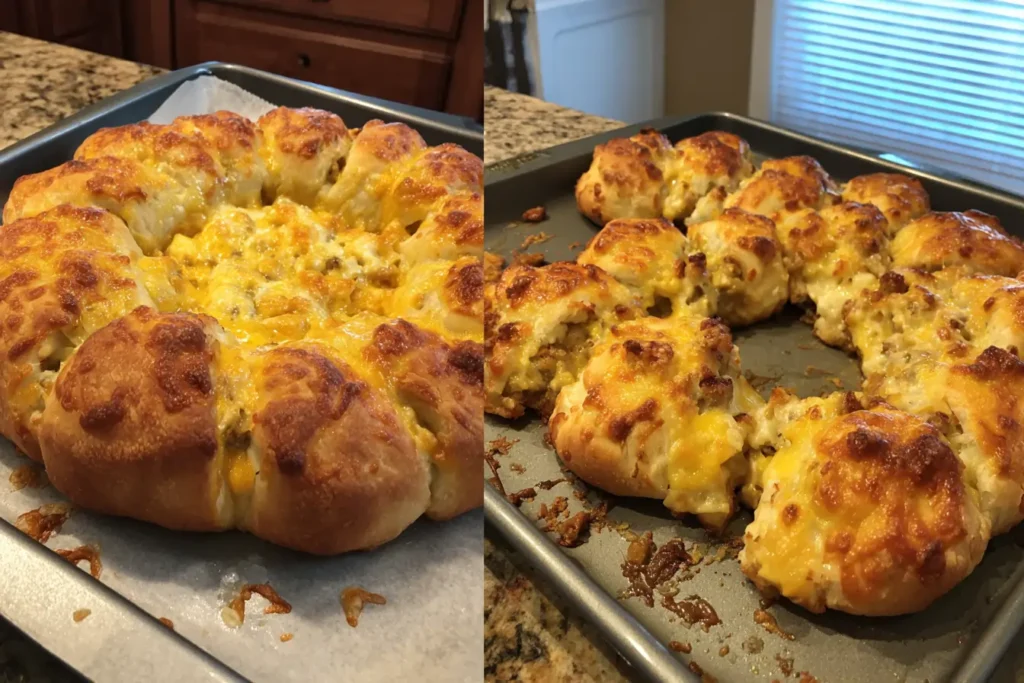
Final Bake: How to Tell It’s Done
Instead of guessing, look for these signs:
- The dough is fully golden, not blond
- The center feels set, not jiggly
- Cheese is melted with light browning
- The ring holds its shape when nudged
If the center still looks soft while the edges are dark, give it a few more minutes — don’t rush the finish.
Resting Time (Why It Matters)
This part is easy to skip — and easy to regret.
Let the ring rest for 5–10 minutes before slicing. During this time:
- Eggs finish setting
- Cheese firms slightly
- Slices hold together cleanly
Cutting too early is the fastest way to undo a perfect bake.
Egg & Cheese Science (The Part Everyone Skips)
Eggs and cheese are the quiet decision-makers in a crescent breakfast ring. When they’re chosen well, the ring slices cleanly. When they’re not, you get leaks, grease, and a soggy bottom.
Here’s what actually works.
Best Cheese for a Crescent Breakfast Ring
For a breakfast crescent ring recipe, you want cheese that melts smoothly without releasing too much oil.
Best options:
- Mozzarella – low moisture, clean melt
- Sharp cheddar – flavor without excess grease
- Monterey Jack – soft melt, balanced
Avoid using only very fatty or processed cheeses, which can make the crescent breakfast ring greasy underneath.
Simple rule:
Mix one low-moisture cheese with one flavorful cheese.
Bacon vs Sausage: What Works Better?
Protein choice affects moisture more than flavor in a crescent breakfast ring.
| Protein | Main Issue | Fix |
|---|---|---|
| Bacon | Grease | Cook until crisp, drain well |
| Sausage | Moisture | Cook, drain, and cool |
No matter which you use, always add protein on top of eggs and cheese, not directly on the dough.
Variations That Actually Work
Once you understand the method, making variations of this crescent breakfast ring is easy — as long as you respect moisture and balance. These versions are tested, reliable, and still slice cleanly.
Sausage Egg & Cheese Crescent Breakfast Ring
This is the heartiest version of a breakfast crescent ring recipe and a favorite for weekend brunch.
What to adjust:
- Use fully cooked, well-drained sausage
- Let the sausage cool slightly before adding
- Stick to a moderate cheese amount
Sausage releases more moisture than bacon, so keeping everything cooked and drained is key to avoiding a soggy crescent roll breakfast ring.
Bacon Egg & Cheese Crescent Breakfast Ring
This version is a little lighter and very reliable.
Why it works well:
- Bacon releases fat, not water
- Crisp bacon adds structure
- Less risk of a soggy bottom
For best results, use crisp bacon and blot it well before adding it to your crescent breakfast ring.
Veggie Crescent Breakfast Ring (No Soggy Center)
Yes, a veggie crescent breakfast ring can work — but only if vegetables are handled correctly.
Rules to follow:
- Pre-cook vegetables completely
- Remove excess moisture
- Use smaller pieces
Mushrooms, spinach, and onions must be cooked down first or they’ll release water into the dough.
Mini Crescent Breakfast Rings vs One Large Ring
Mini rings bake faster and are easier to portion, but the same rules apply.
| Version | Result |
|---|---|
| Full crescent breakfast ring | Best for slicing and presentation |
| Mini crescent breakfast rings | Faster bake, great for guests |
No matter the size, the method stays the same — that’s what makes this crescent breakfast ring recipe so dependable.
Nutrition Information (Per Serving)
This crescent breakfast ring is meant to be comforting and satisfying. The exact nutrition will vary depending on the cheese and protein you use, but these estimates reflect a typical bacon or sausage crescent breakfast ring made with standard ingredients.
Estimated Nutrition (Per Slice)
| Nutrition | Approx. Amount |
|---|---|
| Calories | 380–420 kcal |
| Protein | 16–20 g |
| Carbohydrates | 28–32 g |
| Fat | 22–26 g |
| Saturated Fat | 9–12 g |
| Fiber | 1–2 g |
| Sodium | 650–780 mg |
A crescent breakfast ring recipe like this is naturally filling thanks to the combination of eggs, cheese, and protein, which is why even a modest slice feels satisfying.
How to Adjust the Nutrition (Optional)
If you want to tweak this crescent roll breakfast ring slightly, small changes make a difference:
- Use part-skim mozzarella instead of full-fat cheese
- Choose turkey sausage or lean bacon
- Add cooked vegetables like spinach or peppers
- Cut thinner slices — the ring is rich and hearty
No pressure to “lighten” it unless you want to. This is brunch food, not punishment.
Food Safety & Nutrition Notes
Because this is an egg-based breakfast dish, it should be fully cooked for safety. According to FoodSafety, egg dishes should be cooked until set and no longer runny.
For additional guidance on safe internal temperatures and handling egg-based meals, the USDA recommends cooking egg dishes thoroughly and storing leftovers promptly.
This nutrition information is here to inform, not restrict. The real goal of this crescent breakfast ring is to enjoy a warm, homemade breakfast that feels special and satisfying.
When to Serve This (And How to Scale It)
This crescent breakfast ring is one of those recipes that fits almost any morning where you want food to feel a little special — without extra stress.
Perfect Times to Serve a Crescent Breakfast Ring
- Holiday brunches (Christmas, Easter, Mother’s Day)
- Weekend family breakfasts when you want something fun but filling
- Brunch with friends, because it looks impressive on the table
- Lazy mornings when coffee deserves good food next to it
If you already love cozy baked breakfasts like a blueberry pancake casserole, this crescent breakfast ring fits right into that same relaxed, shareable vibe.
How to Scale a Crescent Breakfast Ring for a Crowd
This crescent breakfast ring recipe scales easily — you just need to think in rings, not slices.
| Number of People | What to Make |
|---|---|
| 2–4 | 1 small ring |
| 5–8 | 1 large ring |
| 9–12 | 2 rings |
| 12+ | Mini crescent breakfast rings |
Tip:
For larger groups, two medium rings bake more evenly than one oversized ring.
What to Serve With a Crescent Breakfast Ring
Because a breakfast crescent ring is rich and savory, simple sides work best:
- Fresh fruit or a light fruit salad
- Crispy breakfast potatoes or hash browns
- A small green salad for balance
- Good coffee (non-negotiable ☕)
This keeps the meal balanced without stealing attention from the star of the table.
Frequently Asked Questions About Crescent Breakfast Rings
Why is my crescent breakfast ring raw in the middle?
This usually happens because the center has too much overlapping dough or too much moisture from raw eggs or wet fillings. A crescent breakfast ring bakes from the outside in, so keeping the center light and using par-scrambled eggs helps it bake evenly.
Can I use scrambled eggs in a crescent breakfast ring?
Yes. Fully scrambled eggs are safe and reliable in a crescent breakfast ring recipe, though the texture will be slightly firmer. Par-scrambled eggs give the best balance between moisture control and tenderness.
What cheese melts best in a crescent breakfast ring?
Low-moisture cheeses work best. Mozzarella, sharp cheddar, and Monterey Jack melt smoothly without releasing too much grease, which helps keep the bottom of the crescent breakfast ring from turning soggy.
How do I keep eggs from leaking out of crescent dough?
Never place raw eggs directly on the dough. In a crescent roll breakfast ring, layering cheese first creates a barrier that keeps eggs and moisture contained while baking.
Is a crescent breakfast ring good for brunch?
Absolutely. A crescent breakfast ring is ideal for brunch because it’s easy to slice, looks impressive, and pairs well with simple sides like fruit, potatoes, or a light salad.
Final Thoughts: A Crescent Breakfast Ring That Actually Works
A crescent breakfast ring doesn’t need to be stressful to be impressive. Once you understand how the dough bakes, how eggs behave, and why moisture matters, this recipe becomes calm, predictable, and honestly… fun to make.
This isn’t about chasing perfection. It’s about knowing what to look for, trusting your kitchen instincts, and enjoying the process — from laying out the dough to slicing into a golden ring that holds together just the way you hoped it would.
Whether you make this crescent breakfast ring recipe for a slow weekend morning or a special brunch, it’s the kind of dish that brings people to the table and makes breakfast feel a little more special.
Save it, come back to it, and make it your own — because once you’ve made a crescent breakfast ring that actually works, you’ll wonder why it ever felt intimidating in the first place 💛
for more recipes follow me in Facebook, Pinterest and medium.