The first time I tried making cinnamon sugar swirl sourdough bread, my kitchen smelled like a cozy bakery… and looked like a full-on crime scene. Cinnamon everywhere. Melted sugar bubbling out of the loaf. I stood there, hands covered in flour, staring at my oven like, why is cinnamon swirl sourdough bread so dramatic when all I want is comfort?
But honestly, this is exactly why I love cooking — and especially baking sourdough at home. The slow fermentation, the quiet moments in my kitchen, and that tiny rush when you slice into a loaf of cinnamon sugar swirl sourdough bread hoping for a perfect swirl. I kept baking, tweaking, and yes… scraping caramelized sugar off the oven floor more times than I’d ever admit.
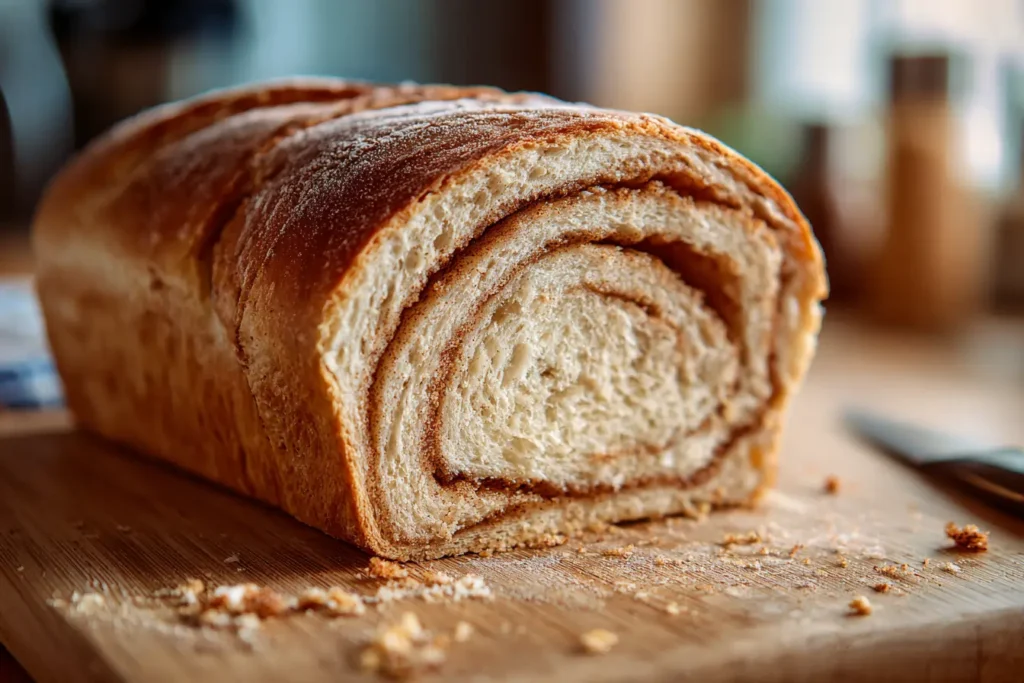
Eventually, it all clicked. A cinnamon swirl sourdough loaf that stayed put. No leaks. No gaps. Just soft, bakery-style cinnamon sugar sourdough bread with a warm cinnamon ribbon running straight through the middle. This is the version I make now — the one that finally feels as good as it smells.
Table of Contents
Table of Contents
Cinnamon Sugar Swirl Sourdough Bread at a Glance
If you’ve ever wanted cinnamon sugar swirl sourdough bread that looks bakery-pretty and behaves in the oven, this recipe was made for you. It’s built for real kitchens, real schedules, and bakers who want cozy results without cinnamon sugar leaking everywhere.
This loaf focuses on control, not complexity. The swirl stays put, the crumb stays soft, and the flavor is warm and comforting without turning the bread into dessert. If you love cozy cinnamon bakes like my Amish cinnamon sugar coffee cake, this bread will feel familiar — just slower, deeper, and more sourdough-forward.
Why this recipe works
- Helps prevent leaking cinnamon sugar
- Designed to reduce swirl gaps
- Beginner-friendly shaping rules
- Sweet, but still clearly sourdough
Who this is for
This cinnamon sugar swirl sourdough bread is perfect if:
- You’re a beginner–intermediate sourdough baker
- You want bakery-style slices at home
- You enjoy sweet breads like Amish apple fritter bread
Timing options
| Option | Best For |
|---|---|
| Same-day bake | When you can start early |
| Overnight proof | Busy days, relaxed mornings |
Same dough, same method — just different timing. You’ll choose what fits your day.
Print
Cinnamon Sugar Swirl Sourdough Bread
- Total Time: ~6–18 hours (depending on proofing method)
- Yield: 1 loaf (about 10 slices) 1x
- Diet: Vegetarian
Description
This Cinnamon Sugar Swirl Sourdough Bread is soft, lightly chewy, and filled with a warm ribbon of cinnamon sugar that stays perfectly in place. Naturally leavened with sourdough starter, this loaf delivers cozy sweetness without losing that classic sourdough character. Perfect for slicing, toasting, and enjoying slowly with a cup of coffee.
Ingredients
For the Dough
-
500 g bread flour
-
350 g water
-
100 g active sourdough starter (at peak)
-
10 g salt
For the Cinnamon Sugar Swirl
-
80 g sugar (white or brown)
-
2 tsp ground cinnamon
-
1 tbsp flour (optional, helps prevent leaking)
Instructions
-
Mix the Dough
In a large bowl, mix flour and water until no dry spots remain. Rest for 20–30 minutes. Add sourdough starter and salt, then mix until fully incorporated. -
Build Dough Strength
Perform stretch-and-folds or coil folds every 30 minutes for the first 2 hours. The dough should become smooth and elastic. -
Bulk Fermentation
Let the dough rise until it has increased about 30–50% in volume and looks airy with bubbles along the sides. -
Pre-Shape and Rest
Gently pre-shape the dough into a round. Cover and rest for 20–30 minutes to relax the gluten. -
Add the Cinnamon Sugar Swirl
Roll the dough into an even rectangle. Mix sugar, cinnamon, and optional flour, then spread a thin, even layer over the dough, leaving a small border around the edges. -
Shape the Loaf
Roll the dough snugly into a log, seal the seam, and pinch the ends closed. Place seam-side down into a proofing basket or loaf pan. -
Final Proof
Proof at room temperature until slightly puffy, or refrigerate overnight for a cold proof. -
Bake
Bake in a preheated Dutch oven or loaf pan until deep golden brown and fully baked through. Allow to cool completely before slicing.
Notes
-
Use a thin cinnamon sugar layer to avoid leaks.
-
Cold proofing helps create a cleaner swirl and deeper flavor.
-
Let the loaf cool fully before slicing to prevent gumminess.
- Prep Time: 30 minutes
- Cook Time: 45 minutes
- Category: Breakfast
- Method: Baking
- Cuisine: American
Nutrition
- Serving Size: 1 slice
- Calories: 200 kcal
- Sugar: 7 g
- Sodium: 220 mg
- Fat: 2 g
- Saturated Fat: 0.4 g
- Unsaturated Fat: 1.5 g
- Trans Fat: 0 g
- Carbohydrates: 40 g
- Fiber: 2.5 g
- Protein: 6 g
- Cholesterol: 0 mg
Ingredients That Make or Break the Cinnamon Swirl
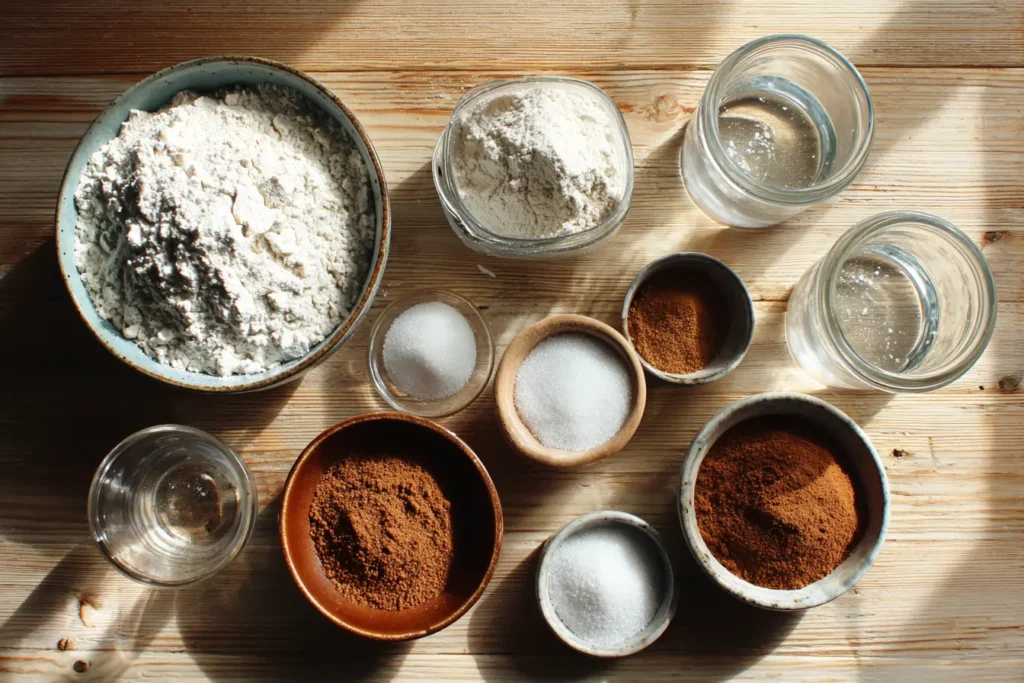
When it comes to cinnamon sugar swirl sourdough bread, the ingredients matter less for flavor and more for behavior. One small choice can be the difference between a clean swirl and cinnamon sugar leaking everywhere.
Flour choice (structure first)
- Bread flour → best option for holding the swirl in place
- All-purpose flour → works, but the swirl spreads more easily
For this bread, strength matters more than softness. A stronger dough gives the cinnamon sugar something to cling to instead of sliding out.
Sourdough starter readiness (don’t skip this)
Your starter should be:
- Active and bubbly
- At or just past peak
- Able to double in size within 4–6 hours
A weak starter won’t cause leaks directly, but it can lead to a dense crumb that hides the swirl instead of showing it off.
Brown sugar vs white sugar (quick verdict)
Both sugars work, but they behave very differently once they hit heat.
| Sugar Type | Flavor | Swirl Behavior |
|---|---|---|
| Brown sugar | Deep, caramel-like | Melts faster, needs more control |
| White sugar | Clean sweetness | Holds shape more easily |
If your priority is flavor, brown sugar wins. If your priority is a clean swirl, white sugar is more forgiving.
Cinnamon and optional binders
- Regular ground cinnamon works perfectly
- Too much cinnamon can turn bitter
- Optional binders (a tiny bit of flour or butter) help slow melting
The goal isn’t more cinnamon — it’s control.
Why Cinnamon Sugar Swirls Fail (Simple Science)
Most problems with cinnamon sugar swirl sourdough bread don’t come from bad technique — they come from ingredients behaving differently once heat and fermentation get involved. Once you understand why swirls fail, fixing them becomes surprisingly easy.
Why sugar pulls moisture and causes leaks
Sugar is hygroscopic, which means it pulls moisture toward itself. Inside dough, that moisture turns the cinnamon sugar layer into syrup as the bread heats up. If the dough isn’t strong enough or the swirl isn’t sealed well, that syrup looks for an escape route — usually straight out the bottom of the loaf.
This is why cinnamon sugar swirl sourdough bread can leak even when everything looked fine before baking.
How cinnamon affects fermentation (without killing it)
Cinnamon doesn’t stop fermentation, but it slows yeast activity slightly when it’s concentrated in one layer. That means:
- The dough above and below the swirl rises normally
- The swirl layer lags behind just a bit
That small imbalance is enough to create separation if the dough is under-proofed or rolled unevenly.
Why swirls separate and create gaps
Gaps form when three things happen together:
- The sugar melts too fast
- Steam builds during oven spring
- The dough layers weren’t rolled or sealed evenly
As the loaf expands, the dough pulls away from the syrupy swirl instead of stretching with it — and that’s when you see empty space around the cinnamon layer.
Why sugar burns at the bottom of the loaf
As melted sugar flows downward, it collects at the base of the bread. High heat + concentrated sugar = caramelization, and if nothing slows it down, that caramel can quickly turn bitter or burnt.
This isn’t a recipe failure — it’s physics. The solution comes from heat control and positioning, which we’ll handle later.
Dough Method with Confidence Checkpoints
This cinnamon sugar swirl sourdough bread starts like a classic sourdough loaf, but a few small details matter more because we’re adding a sweet cinnamon sugar swirl later. Think of this dough as the foundation that holds everything together — literally.
Mixing the dough (and when autolyse helps)
For cinnamon sugar swirl sourdough bread, a slightly stronger dough makes shaping easier and helps the swirl stay in place.
- Mix flour and water first if you like using an autolyse
- Rest 20–30 minutes to improve gluten development
- Add starter and salt after the rest
If your kitchen is warm or your flour absorbs water quickly, you can shorten or skip the autolyse. This dough should feel soft but not sticky.
Building strength without overworking
Strong dough = better swirl control.
During bulk fermentation:
- Use stretch and folds or coil folds
- Space folds about 30 minutes apart
- Stop once the dough feels elastic and smooth
Overworking can make the crumb tight, which hides the cinnamon sugar swirl instead of showing it clearly in the finished sourdough bread.
Bulk fermentation cues (don’t watch the clock)
For cinnamon sugar swirl sourdough bread, visual cues matter more than time.
Look for:
- 30–50% rise in volume
- Bubbles forming along the sides
- Dough that jiggles when you gently shake the bowl
Under-fermented dough can tear during shaping. Over-fermented dough struggles to hold a clean cinnamon swirl.
Pre-shape and bench rest
Before adding the cinnamon sugar swirl, give the dough time to relax.
- Gently pre-shape into a loose round
- Rest 20–30 minutes, uncovered
- Dough should feel relaxed, not springy
This short rest makes it much easier to roll the dough evenly for a cinnamon sugar swirl sourdough bread that stays neat and controlled.
The Foolproof Cinnamon Swirl System (No Leaks, No Gaps)
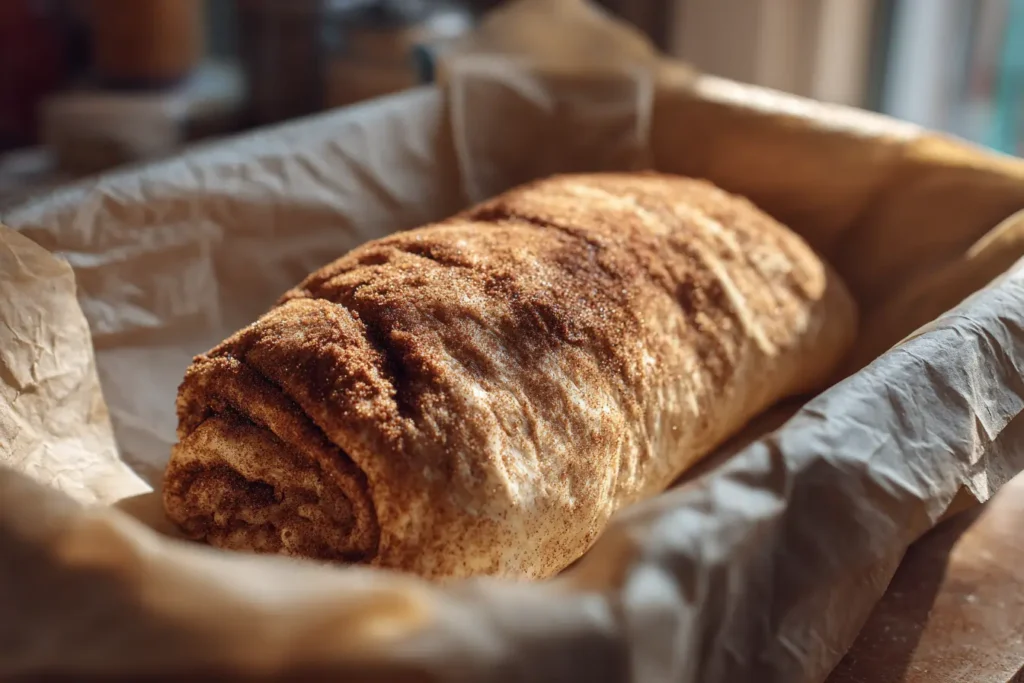
This is the step that defines cinnamon sugar swirl sourdough bread. Even perfect dough won’t save the loaf if the swirl isn’t controlled.
Roll the dough evenly
For cinnamon sugar swirl sourdough bread, even thickness matters.
- Roll into a rectangle, not a circle
- Keep thickness even from edge to edge
- Too thin causes tearing and leaks
- Too thick creates gaps
You should be able to roll it without seeing through the dough.
Use less filling than you think
A clean cinnamon sugar swirl sourdough bread comes from restraint.
- Spread a thin, even layer
- Avoid piling cinnamon sugar
- Leave a small border around the edges
More sugar melts faster — and melted sugar always tries to escape.
Seal the swirl properly
This is the most skipped step.
- Roll snug, not tight
- Press the seam gently to seal
- Pinch the ends closed
- Place seam-side down
Sealing keeps the cinnamon sugar swirl where it belongs.
Proof with control
After shaping your cinnamon swirl sourdough bread:
- Warm room = faster rise, softer crumb
- Cold proof = slower rise, cleaner swirl
If in doubt, the fridge gives you more control.
Baking Without Burnt Sugar
One of the most common frustrations with cinnamon sugar swirl sourdough bread is pulling a beautiful loaf out of the oven… only to find burnt, sticky sugar baked onto the bottom. This isn’t bad luck — it’s heat management.
Choose the right baking setup
Both methods work for cinnamon sugar swirl sourdough bread. The key is controlling direct heat.
- Dutch oven: best oven spring and swirl protection
- Loaf pan: softer crumb, better for sandwich-style slices
If you’ve had burning issues before, a loaf pan gives you more control.
Protect the bottom of the loaf
Melted cinnamon sugar always travels downward.
To prevent burning:
- Use parchment paper under the loaf
- Place an empty baking tray on the rack below
- Avoid placing the loaf too close to the oven’s bottom element
These small steps dramatically reduce burnt sugar on the base of your cinnamon swirl sourdough bread.
Adjust temperature if needed
High heat encourages caramelization.
- Start hot for oven spring
- Lower the temperature partway through baking
- If sugar smells bitter, it’s time to reduce heat
A steady bake keeps the cinnamon sugar swirl flavorful, not bitter.
Know when it’s done
Don’t guess.
Your cinnamon sugar swirl sourdough bread is ready when:
- The crust is deep golden, not dark brown
- The loaf feels light when lifted
- The internal temperature reaches about 96–98°C (205–208°F)
Pulling the loaf at the right moment keeps the swirl soft instead of sticky.
Cinnamon Swirl Sourdough Variations
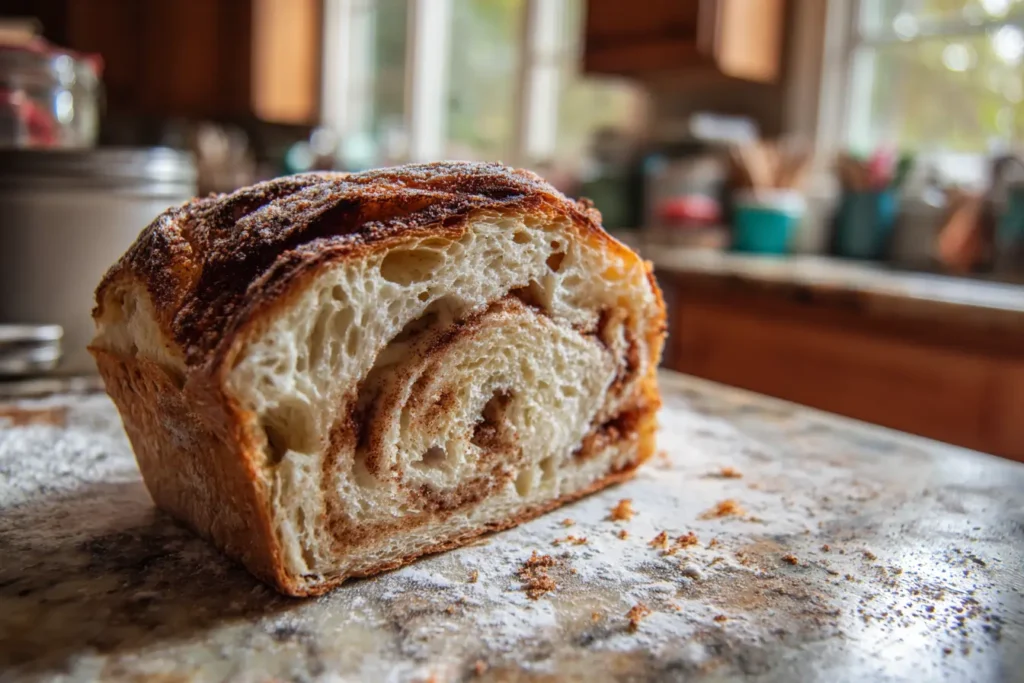
Once you’ve mastered the base cinnamon sugar swirl sourdough bread, you can easily adapt it to match your taste, your schedule, or how you plan to serve it. These variations keep the same dough and swirl system — only small tweaks change the outcome.
Cinnamon raisin sourdough
If you love classic flavors, this variation adds texture without disrupting the swirl.
- Use plump, well-dried raisins
- Scatter them lightly over the cinnamon sugar layer
- Avoid piling them in one spot
Too many raisins can create gaps, so less is more.
Extra-soft sandwich-style cinnamon sourdough
For softer slices that toast beautifully:
- Shape the loaf for a pan instead of a Dutch oven
- Proof slightly longer for a lighter crumb
- Keep the cinnamon sugar layer thin
This version turns cinnamon sugar swirl sourdough bread into a perfect everyday breakfast loaf.
Brown sugar vs white sugar swirl
You can adjust flavor without changing technique.
- Brown sugar: deeper, caramel-like flavor, slightly softer swirl
- White sugar: cleaner sweetness, sharper swirl lines
Both work — the difference is taste, not success.
Overnight cinnamon swirl sourdough
For a slower schedule:
- Shape the loaf
- Refrigerate for a cold proof
- Bake straight from the fridge
Cold proofing often gives cinnamon swirl sourdough bread a cleaner, more defined swirl with less risk of leaking.
Nutrition Details
This cinnamon sugar swirl sourdough bread is meant to be enjoyed — slowly, warmly, and without overthinking it. The nutrition here reflects a naturally leavened bread with a sweet cinnamon swirl, not a dessert loaf.
Serving size
- 1 slice (based on slicing the loaf into even pieces)
Approximate nutrition per slice
(Values may vary depending on flour type and sugar choice)
| Nutrient | Amount |
|---|---|
| Calories | ~180–220 kcal |
| Carbohydrates | ~38–42 g |
| Sugar | ~6–8 g |
| Protein | ~5–6 g |
| Fat | ~1–2 g |
| Fiber | ~2–3 g |
| Sodium | ~200–250 mg |
What to know nutritionally
- Naturally leavened sourdough is often easier to digest than fast-rise breads
- The cinnamon sugar swirl adds sweetness, but the loaf is still balanced and not overly rich
- Pairing a slice with protein or healthy fats (like yogurt or nut butter) helps keep it satisfying
This cinnamon sugar swirl sourdough bread is best enjoyed as part of a varied, balanced diet — especially when shared, toasted, and eaten warm.
Frequently Asked Questions About Cinnamon Sugar Swirl Sourdough Bread
Why does cinnamon sugar swirl sourdough bread leak during baking?
Cinnamon sugar melts as the bread heats, and that syrup naturally moves downward. In cinnamon sugar swirl sourdough bread, leaks usually happen when the dough isn’t sealed well or the filling layer is too thick.
How do you keep cinnamon sugar from separating in sourdough bread?
A thin, even cinnamon sugar layer and a well-sealed roll help the dough expand together during baking instead of pulling apart.
Is brown sugar or white sugar better for cinnamon swirl sourdough?
Both work. Brown sugar gives deeper flavor but melts faster, while white sugar creates a cleaner, more defined swirl in cinnamon swirl sourdough bread.
Can I make cinnamon sugar swirl sourdough bread with discard?
Yes, but the crumb will be slightly denser and the swirl may be softer. Active starter gives the best structure for a clean cinnamon swirl.
Why is my cinnamon swirl sourdough bread gummy?
Gumminess usually comes from underbaking or slicing too soon. Let the loaf cool completely so the crumb can set around the swirl.
Closing Thoughts
If there’s one thing I hope you take away from this cinnamon sugar swirl sourdough bread, it’s that you don’t need perfection — just a little understanding and a lot of joy in the process. Once you learn how the swirl behaves, everything feels calmer, easier, and honestly… more fun.
This is the kind of loaf I love baking on slow mornings, slicing while it’s still slightly warm, and serving without overthinking it. The swirl stays where it should, the crumb stays soft, and the kitchen smells like comfort. That’s a win in my book.
If you make this cinnamon sugar swirl sourdough bread, I’d love to know how it turns out for you. Save it, bake it, tweak it, and make it yours — that’s where the magic really happens.
for more recipes follow me in Facebook, Pinterest and medium.