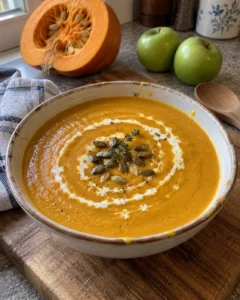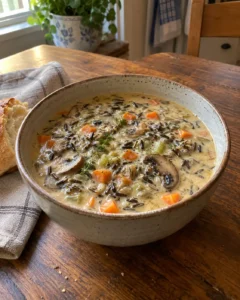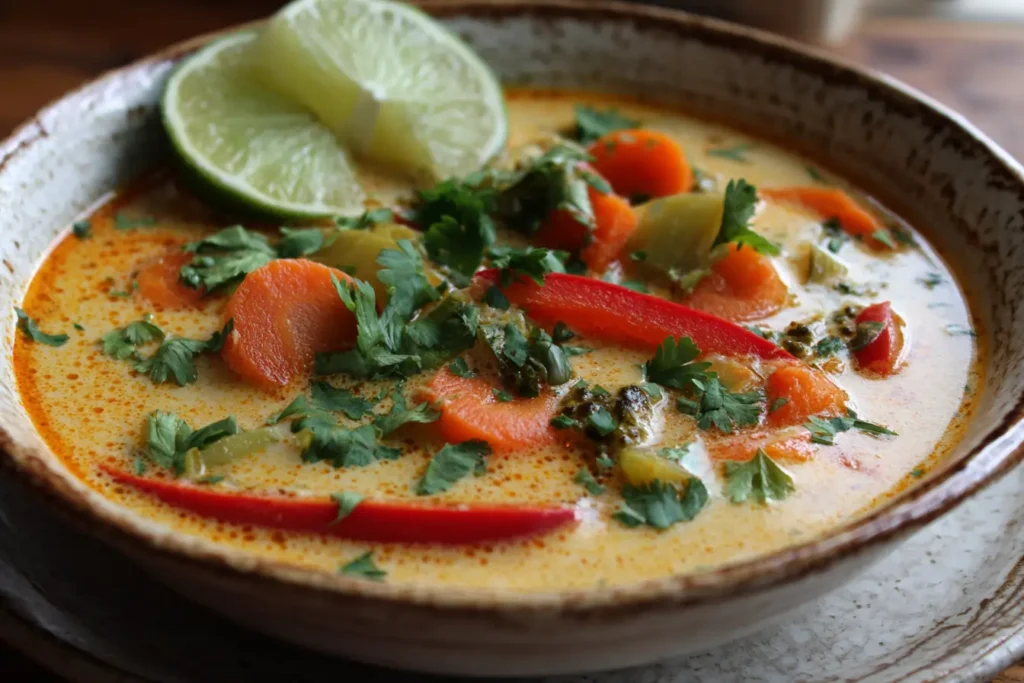
This Thai coconut curry soup is everything you need on a rainy Tuesday evening when your kitchen feels a little too quiet and your to-do list feels a little too loud. I made this Thai coconut curry soup for the first time on exactly that kind of night—standing there in socks, staring into the fridge like it might offer emotional support.
I wanted takeout. I also didn’t want to pay takeout prices or wait an hour for something lukewarm.
And then it hit me: the flavors I crave most—creamy coconut, warm curry, a little zing of lime—are actually shockingly simple to build at home. Like, “why have I been outsourcing this?” simple. Fresh off your stove, it’s brighter, silkier, and honestly more satisfying than delivery.
Most people assume Thai curry soup means specialty shopping, mysterious ingredients, and a technique that requires a calm spirit and a mortar and pestle. Nope. This version is weeknight-friendly, made in one pot, and uses easy-to-find ingredients with smart swaps if your store is… not feeling particularly international today.
I’ll walk you through how to balance the flavors (spicy-salty-sour-sweet), how to choose a protein, how to adjust heat without panic, and how to store leftovers so tomorrow’s bowl tastes even better.
Table of Contents
Table of Contents
Quick Overview
- Prep Time: 10 minutes
- Cook / Chill Time: 20 minutes
- Total Time: 30 minutes
- Servings: 4–6 bowls
- Difficulty: Easy (beginner-friendly)
Why You’ll Love This Thai Coconut Curry Soup
- – Ready in 30 minutes, one pot, minimal chopping. The kind of dinner that makes you feel like you have your life together (even if you absolutely don’t).
- – It tastes richly aromatic and cozy, like your favorite Thai place, but it’s built from supermarket staples.
- – You can customize it endlessly—chicken, shrimp, tofu, or all veggies—without losing that creamy, curry comfort.
- – Leftovers reheat like a dream. The flavor gets deeper overnight, in that “wow, who cooked this?” way.
- – It’s more budget-friendly and lighter than takeout, and you control the salt and heat.
Thai Coconut Curry Soup
- Total Time: 30 minutes
- Yield: 4–6 bowls 1x
Description
Creamy Thai Coconut Curry Soup made in one pot in 30 minutes—bright lime, warm red curry, silky coconut milk, tender chicken, mushrooms, and rice noodles. Weeknight-friendly and better than takeout.
Ingredients
1 tablespoon neutral oil (avocado/canola)
1 small onion, thinly sliced (or 2 shallots)
3 cloves garlic, minced
1 tablespoon fresh ginger, grated
1 stalk lemongrass, smashed and cut into 2–3 pieces (or 2 teaspoons lemongrass paste)
3–5 kaffir/makrut lime leaves (optional)
3 tablespoons Thai red curry paste (add more to taste)
2 cans full-fat coconut milk (13.5 oz each)
4 cups chicken broth (or vegetable broth)
1 tablespoon fish sauce (or soy sauce)
1 tablespoon brown sugar (optional)
1 red bell pepper, thinly sliced
8 ounces mushrooms, sliced (shiitake or cremini)
1 pound boneless chicken thighs or breasts, thinly sliced
6–8 ounces rice noodles
Juice of 1–2 limes (to taste)
1/2 cup chopped cilantro
1/4 cup Thai basil or regular basil (optional)
2 green onions, sliced
Optional heat: chili oil, sriracha, or sliced Thai chiles
Instructions
1. Heat a large pot over medium heat. Add oil, then sauté onion for 2–3 minutes until softened.
2. Add garlic and ginger; stir 30 seconds until fragrant.
3. Add lemongrass (and lime leaves if using); stir 30 seconds.
4. Add red curry paste and stir constantly for 1 minute to bloom the spices.
5. Pour in coconut milk and broth; stir well. Add fish sauce and brown sugar. Bring to a gentle simmer (do not boil hard).
6. Add bell pepper and mushrooms.
7. Add sliced chicken and simmer 6–8 minutes, until cooked through.
8. Stir in rice noodles and cook according to package directions (usually 3–6 minutes). Add a splash of broth or water if needed.
9. Turn off heat. Remove lemongrass pieces and lime leaves.
10. Stir in lime juice (start with 1 lime), then taste and adjust (more lime, curry paste, fish sauce, or a pinch of sugar).
11. Ladle into bowls and top with cilantro, basil, green onions, and optional extra heat.
Notes
Protein swaps: Use 1 lb shrimp (add at the very end and rest 2–3 minutes) or 14 oz extra-firm tofu (simmer 5 minutes).
Noodle tip for leftovers: Cook noodles separately and add to each bowl so they don’t soak up all the broth.
Storage: Refrigerate up to 3–4 days. Reheat gently; add broth/water to loosen.
Freezing: Freeze broth + veggies + protein (no noodles or herbs) up to 2 months. Add fresh noodles + lime + herbs after reheating.
Nutrition is an estimate and will vary by curry paste brand, coconut milk, and chosen protein.
- Prep Time: 10 minutes
- Cook Time: 20 minutes
- Category: Soup
- Method: Stovetop
- Cuisine: Thai
Nutrition
- Serving Size: 1 bowl
- Calories: 450 kcal
- Sugar: 6g
- Sodium: 900mg
- Fat: 28g
- Saturated Fat: 18g
- Unsaturated Fat: 9g
- Trans Fat: 0g
- Carbohydrates: 32g
- Fiber: 3g
- Protein: 22g
- Cholesterol: 70mg
Ingredients for Thai Coconut Curry Soup
Here’s what you’ll need for Thai coconut curry soup, grouped so you can shop (and cook) without rereading the same line 12 times.
Aromatics (the “your kitchen smells amazing” crew)
- 1 small onion, thinly sliced (or 2 shallots)
- 3 cloves garlic, minced
- 1 tablespoon fresh ginger, grated (galangal is more traditional, but ginger is easier to find)
- 1 stalk lemongrass, smashed and cut into 2–3 pieces (or 1–2 teaspoons lemongrass paste in a tube)
- Optional but worth it: 3–5 kaffir lime leaves (sometimes labeled makrut lime leaves; they add that unmistakable Thai perfume)
Curry base + creamy backbone
- 3–4 tablespoons Thai red curry paste (start at 3, add more later)
- Brands I reliably find: Thai Kitchen (milder), Maesri or Mae Ploy (more punchy)
- 2 cans full-fat coconut milk (13.5 oz each; full-fat makes it luscious)
- 4 cups chicken broth or veggie broth
Soup add-ins
- 1–2 tablespoons fish sauce (salty-umami magic; soy sauce works in a pinch)
- 1 tablespoon brown sugar or palm sugar (optional, but it rounds out heat and salt)
- 1 red bell pepper, thinly sliced
- 1–2 cups mushrooms, sliced (shiitake or cremini)
- 6–8 oz rice noodles (or ramen noodles; we’re flexible here)
Protein (choose one)
- 1 pound boneless chicken thighs or breasts, thinly sliced
- OR 1 pound shrimp, peeled and deveined
- OR 14 oz extra-firm tofu, cubed
Finish + garnishes (don’t skip all of these, please)
- 1–2 limes (juice to taste at the end)
- Big handful of cilantro
- Thai basil if you can find it (regular basil works too)
- Sliced green onions
- Optional heat: chili oil, sriracha, or sliced Thai chiles
Helpful links while you’re shopping:
- If you’ve ever wondered about ginger vs. galangal without wanting a lecture, Serious Eats has a clear explanation.
- If you want a trustworthy note on storing leftovers safely (especially with seafood), FoodSafety.gov is my go-to.
And there’s some thai recipes in mysite:
Ingredient Substitutions & Variations
Here’s the thing about Thai coconut curry soup: it’s forgiving. You’re building a flavorful broth and then you’re basically in charge.
Curry paste swaps
- Red curry paste is my default for this Thai coconut curry soup—warm, a little spicy, super cozy.
- Green curry paste is brighter and often hotter. Use it if you like a sharper herb-y vibe.
- Yellow curry paste is milder and a little sweeter. Great if you’re cooking for spice-sensitive people.
Coconut milk options
- Full-fat coconut milk gives you that silky restaurant texture.
- Light coconut milk works, but the broth will be thinner. If you go light, I’d use one can full-fat and one can light as a compromise.
No lemongrass? No problem.
– Lemongrass paste is the easiest substitute.
– If you have neither, add extra lime zest at the end. It’s not identical, but it does bring that lift.
No fish sauce?
– Use soy sauce or tamari, and consider adding a tiny squeeze of lime plus a pinch of sugar to keep the balance. Fish sauce is unique, but we can still make a very good soup.
Make it vegetarian/vegan
- Use veggie broth and tofu.
- Swap fish sauce for soy sauce, or a vegan “fish sauce” if you have it.
- Add extra mushrooms for depth.
Veggie add-ins that work great
- Baby spinach (stir in at the end)
- Zucchini (thin half-moons)
- Snap peas
- Shredded carrots
- Broccoli florets (small ones cook fast)
Want it more like tom kha?
This Thai coconut curry soup leans curry-forward, but you can nudge it toward tom kha vibes by using more lime, adding extra ginger, and going heavier on mushrooms. If you happen to have chili paste and lots of lime leaves, you’re basically halfway there.
Internal links you might like: homemade red curry paste, easy weeknight dinners
How to Make Thai Coconut Curry Soup
Let me walk you through this. The method is simple: bloom the curry paste, build the broth, cook the protein, finish with lime and herbs.
1. Sauté the aromatics
Set a large pot over medium heat. Add a small splash of oil. Sauté onion for 2–3 minutes until it starts to soften.
Add garlic and ginger and stir for 30 seconds, just until fragrant (don’t let garlic brown; it gets bitter fast).
Add lemongrass (and kaffir lime leaves if using). Stir for another 30 seconds. Your kitchen should smell like you accidentally moved into a Thai restaurant. Convenient.
2. Bloom the curry paste (this is where flavor is born)
Add the red curry paste to the pot and stir it into the aromatics for 1 full minute. It’ll look a little dry and stuck at first—keep stirring.
This step matters. It wakes up the spices so your Thai coconut curry soup tastes bold instead of flat.
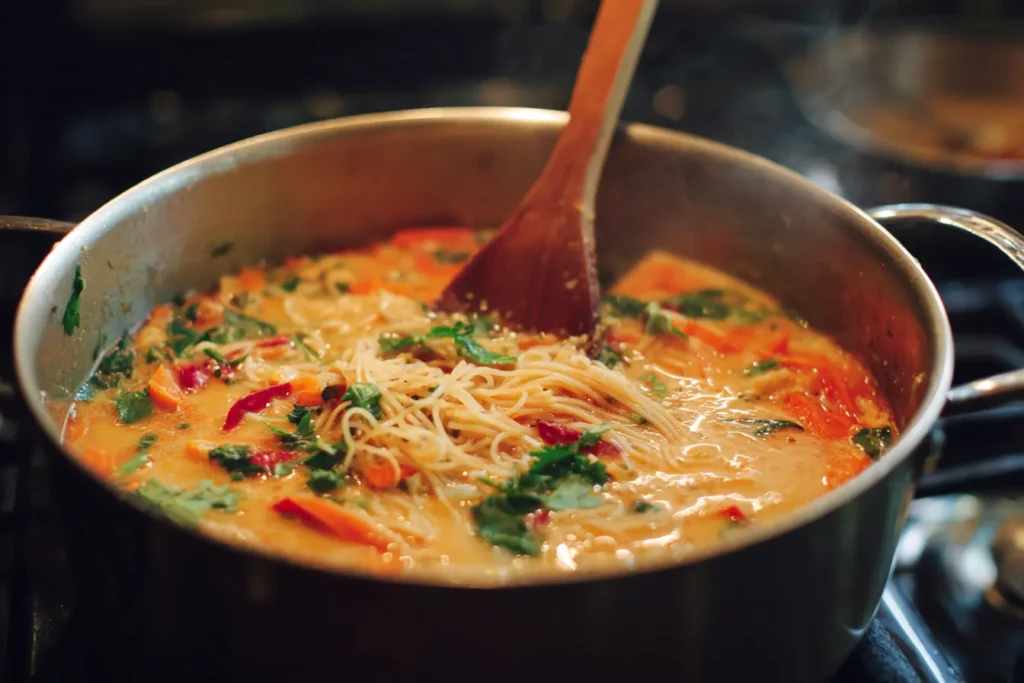
3. Add coconut milk + broth and simmer
Pour in both cans of coconut milk, then the broth. Stir well.
Add fish sauce and brown sugar (if using). Bring to a gentle simmer—don’t boil it like you’re mad at it. Coconut milk can split if it’s abused.
Simmer for 5 minutes so everything gets friendly.
4. Cook your protein + veggies
Add bell pepper and mushrooms.
- If using chicken: add thinly sliced chicken and simmer 6–8 minutes until cooked through.
- If using tofu: add cubes and simmer 5 minutes (just to heat through and soak up flavor).
- If using shrimp: wait until the very end; shrimp cooks fast and hates being overcooked.
5. Add noodles
Stir in rice noodles and cook according to package timing, usually 3–6 minutes.
If your noodles soak up too much broth (they love to do that), just splash in extra broth or water. No one will call the soup police.
6. Finish like you mean it
Turn off the heat. Remove lemongrass stalk pieces and lime leaves if you used them (they’ve done their job; they’re not meant to be eaten).
Add lime juice, starting with 1 lime. Taste. Add more if it needs brightness.
If using shrimp, add it now and let it sit in the hot broth 2–3 minutes until pink and cooked.
Ladle into bowls and top with cilantro, basil, green onions, and any extra heat you want.
That’s it. That’s the whole “takeout at home” trick.
Pro Tips & Common Mistakes
- Don’t skip blooming the curry paste. I tried rushing this once and the soup tasted… fine. Which is not what we’re going for.
- Start with less curry paste, then add. Curry paste heat varies wildly by brand. Thai Kitchen is pretty gentle; Maesri and Mae Ploy can be spicy-spicy.
- Taste at the end, not the middle. The noodles and protein change the balance, and lime juice should always be last so it stays bright.
- Keep the simmer gentle. A rolling boil can make coconut milk look grainy. Still edible, just less silky.
- Don’t overcook shrimp. Add it at the end and let residual heat do the work.
- Salt carefully. Between curry paste, broth, and fish sauce, you might not need much extra. Taste first.
- Noodles tip (learned the second time I made it): if you want perfect leftovers, cook noodles separately and add to each bowl. Rice noodles keep drinking broth like they’re getting paid for it.
Storage, Make-Ahead & Freezing
Thai coconut curry soup stores beautifully, with one little noodle caveat.
- Fridge: Store in an airtight container for up to 3–4 days.
- Reheat: Warm gently on the stove over medium-low. If it thickens, add a splash of broth or water and stir.
- Noodles: If noodles are stored in the soup, expect them to soften a lot. Still tasty, just less “slurpy.” For best texture, store noodles separately if you can.
Make-ahead tips
- Chop onion, garlic, ginger, and veggies up to 2 days ahead.
- You can also mix coconut milk + broth + curry paste in a container so dinner comes together faster.
Freezing (with honesty)
- I don’t love freezing this Thai coconut curry soup with noodles in it. The texture gets odd.
- If you want to freeze, freeze the broth + veggies + protein (no noodles, no herbs). Add fresh noodles and fresh lime/cilantro after reheating.
- Freeze up to 2 months, thaw overnight in the fridge.
Serving Suggestions
This soup is a full meal as-is, but if you want the whole cozy spread, here are my favorite pairings:
- A bowl of jasmine rice or coconut rice to soak up the broth (and to make it extra filling). Internal link: coconut rice
- Simple cucumber salad with rice vinegar, a pinch of sugar, and salt—cold and crunchy next to the warm curry soup
- Warm naan or flatbread if you’re not trying to be traditional, just happy
- Extra herbs and lime wedges on the table so everyone can customize
If you’re on a Thai-inspired dinner kick, put Thai basil chicken on your list for next week. It’s fast and plays very nicely with the flavors here.
FAQs about Thai Coconut Curry Soup
Is Thai coconut curry soup very spicy?
It depends on your curry paste. For a mild Thai coconut curry soup, use a milder brand (often Thai Kitchen), start with 2–3 tablespoons, and add more after simmering. You can always increase heat at the end with chili oil or sriracha, which is way less risky than trying to fix an over-spicy pot.
Can I make this soup without fish sauce?
Yes. Your Thai coconut curry soup will still taste great. Swap fish sauce with soy sauce or tamari, then adjust with a little extra lime juice and a pinch of sugar if it needs balance. Fish sauce adds a specific savory depth, but you’re not doomed without it.
What protein works best: chicken, shrimp, or tofu?
Chicken thighs are the most forgiving and stay juicy. Shrimp is the fastest (add at the end). Tofu is perfect if you want vegetarian. Honestly, Thai coconut curry soup is a “use what you’ve got” situation, and it’s hard to choose wrong.
Why did my coconut milk look separated or grainy?
Usually it was boiled too hard or reheated too aggressively. Keep your Thai coconut curry soup at a gentle simmer and reheat slowly. If it does separate, don’t panic—it’ll still taste good. A good stir and a splash of broth can help it look smoother.
Can I add more vegetables?
Please do. This soup loves vegetables. Bell peppers, mushrooms, spinach, snap peas, carrots, and zucchini all work well. Just keep pieces fairly thin so they cook in the same quick timeline as the Thai coconut curry soup.
Final Thoughts – Thai Coconut Curry Soup
If you’re craving something warm, creamy, and a little bit magical without committing to a whole kitchen production, this is it. Once you make it the first time, you’ll realize the “mystery” of Thai coconut curry soup is mostly just good ingredients and a few smart steps—especially that moment when curry paste hits the pot and everything starts smelling impossible-in-a-good-way.
Make it once, then make it your own. And if you do, tell me what protein you chose and how spicy you went—because now you know how simple Thai coconut curry soup can be to make at home.