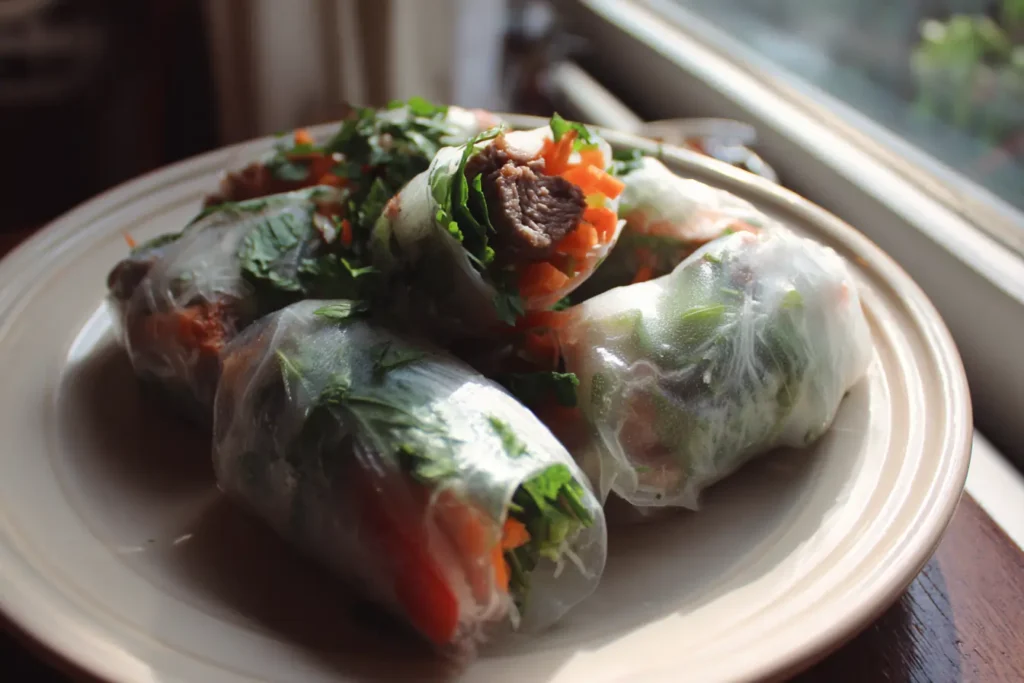
Thai Basil Beef Rolls changed my whole dinner-party personality in about five minutes. Thai Basil Beef Rolls were the first “fancy-looking” thing I served that made everyone stop mid-conversation and go, “Wait… you made these?” I was hosting, trying to act chill, while privately worrying the rice paper would glue itself together like wet office supplies.
Then the platter hit the table. People grabbed one, then another, then started hovering like polite little snack seagulls. I watched a friend—who normally “doesn’t do herbs”—go back for seconds and ask what that amazing basil flavor was. I didn’t even pretend to be casual. I told them the truth: I was terrified, and it worked anyway.
Rice paper rolls look like something you need restaurant hands to pull off. The usual fears are real: tearing, sticking, overstuffing, bland fillings, and that sad moment when everything slides out the side like it’s trying to escape. It’s why so many of us just order takeout and call it a night.
But here’s the cozy little secret: once you know two or three simple tricks, these are shockingly doable. This recipe walks you through how to handle rice paper wrappers without drama, how to make a savory-sweet Thai basil beef filling that actually tastes bold, and how to roll everything up so the finished Thai Basil Beef Rolls look impressive—without you sweating through your shirt.
Table of Contents
Table of Contents
Quick Overview
- Prep Time: 20 minutes
- Cook / Chill Time: 10 minutes
- Total Time: 30 minutes
- Servings: 12–15 rolls (about 4–6 servings)
- Difficulty: Beginner-friendly
Why You’ll Love This Thai Basil Beef Rolls
– Fresh and light but still satisfying. You get that crisp bite of cucumber and carrots, plus savory beef that’s a little sticky in the best way.
– Beginner-friendly technique. I’ll tell you exactly how long to soak rice paper wrappers so they don’t tear or turn to mush.
– Customizable filling. Swap proteins, add more veggies, make it gluten-free-ish (with the right soy sauce), or crank up the heat.
– Perfect for entertaining. They look like you tried very hard, even if you made them in sweatpants.
– Quick weeknight option. These Thai Basil Beef Rolls are totally realistic on a regular Tuesday.
Irresistible Thai Basil Beef Rolls
- Total Time: 30 minutes
- Yield: 12–15 rolls 1x
Description
Thai Basil Beef Rolls are fresh, fancy-looking rice paper rolls filled with savory-sweet Thai basil beef, crisp veggies, and tender vermicelli. Beginner-friendly rolling tips + a quick hoisin-peanut dipping sauce make these perfect for dinner parties or easy weeknights!
Ingredients
FOR THE THAI BASIL BEEF FILLING:
1 lb ground beef (85/15 recommended)
3 cloves garlic, minced
1 tbsp fresh ginger, grated
2 tbsp soy sauce (use tamari for gluten-free)
1 tbsp fish sauce
1 tbsp brown sugar
1 to 1 1/2 cups fresh Thai basil leaves, loosely packed
1 tsp neutral oil (optional, if needed)
FOR THE ROLLS:
12–15 rice paper wrappers (8.5–9 inch)
Butter lettuce or romaine leaves
1 cucumber, cut into thin sticks
2 carrots, cut into thin sticks or shredded
Rice vermicelli noodles, cooked + rinsed (about 2 oz dry)
Fresh Thai basil and/or mint leaves
FOR THE HOISIN-PEANUT DIPPING SAUCE:
1/3 cup hoisin sauce
2 tbsp peanut butter
1–2 tbsp lime juice (to taste)
Sriracha, to taste
1–3 tbsp warm water (to thin)
Optional: extra lime wedges for serving
Instructions
1. Cook the rice vermicelli noodles according to package directions, then rinse under cold water, drain well, and set aside.
2. Heat a skillet over medium-high heat. Add oil if needed, then add ground beef and cook until browned, breaking it up as it cooks.
3. Add garlic and ginger and cook for about 30 seconds until fragrant.
4. Stir in soy sauce, fish sauce, and brown sugar. Let it bubble 1–2 minutes until glossy and slightly sticky.
5. Turn off the heat and stir in Thai basil leaves until wilted. Let the filling cool 5–10 minutes (warm is fine; steaming hot is not).
6. In a small bowl, whisk hoisin, peanut butter, lime juice, and sriracha. Add warm water 1 tbsp at a time until smooth and dippable.
7. Set up your rolling station: cooled beef, noodles, herbs, lettuce, cucumber, carrots, and a shallow dish of warm water. Place a damp towel or damp cutting board surface for rolling.
8. Dip one rice paper wrapper in warm water for 5–10 seconds (it should still feel slightly firm). Lay it on the damp surface and let it soften for 20–30 seconds.
9. On the lower third of the wrapper, add a lettuce leaf, a small handful of noodles, a spoonful of beef, cucumber, carrots, and a few basil/mint leaves.
10. Roll like a burrito: fold bottom over filling, tuck snugly, fold in sides, then roll up. Repeat with remaining wrappers and filling.
11. Serve immediately with hoisin-peanut dipping sauce. If holding longer than 20 minutes, cover rolls with a barely damp paper towel and plastic wrap to prevent drying.
Notes
RICE PAPER TIP: Don’t over-soak. Quick dip + rest on the board is the secret to non-tearing wrappers.
USE WARM (NOT HOT) WATER: Hot water makes rice paper extra sticky and fragile.
LETTUCE = INSURANCE: The lettuce layer protects the wrapper from sharp veggie edges and helps the roll stay strong.
MAKE AHEAD: Cook the beef filling up to 2 days ahead and store chilled. Prep veggies ahead. Roll fresh for best texture.
STORAGE: Store assembled rolls in a single layer with a slightly damp paper towel in the container. Best within 24 hours.
FREEZING: Don’t freeze assembled rice paper rolls (texture turns chewy). Freeze cooked beef filling up to 2 months instead.
- Prep Time: 20 minutes
- Cook Time: 10 minutes
- Category: Appetizer
- Method: Stovetop + No-Cook Assembly
- Cuisine: Thai-Inspired
Nutrition
- Serving Size: 1 roll
- Calories: 160 kcal
- Sugar: 4 g
- Sodium: 380 mg
- Fat: 7 g
- Saturated Fat: 2.5 g
- Unsaturated Fat: 4 g
- Trans Fat: 0 g
- Carbohydrates: 16 g
- Fiber: 1.5 g
- Protein: 9 g
- Cholesterol: 22 mg
Ingredients for Thai Basil Beef Rolls
I’m breaking this up so you’re not playing “find the ingredient” while hungry.
For the beef filling:
- 1 lb ground beef (I like 85/15—enough fat for flavor, not so much it gets greasy)
- 3 cloves garlic, minced
- 1 tablespoon fresh ginger, grated (or 1 teaspoon from a tube; life is busy)
- 2 tablespoons soy sauce
- 1 tablespoon fish sauce (this is the “why does it taste like a Thai restaurant?” ingredient)
- 1 tablespoon brown sugar
- 1 to 1 1/2 cups fresh Thai basil leaves, loosely packed (plus more for the rolls)
- 1 teaspoon neutral oil (if your pan needs it)
For the rolls:
- Rice paper wrappers (8.5–9 inch size is easiest to roll)
- Lettuce leaves (butter lettuce or romaine; think “flexible and sturdy”)
- Cucumber, cut into thin sticks
- Carrots, cut into thin sticks or shredded
- Rice vermicelli noodles, cooked and rinsed (a small bundle goes a long way)
- Fresh Thai basil and/or mint (mint makes everything taste brighter)
For the dipping sauce (quick hoisin-peanut situation):
- 1/3 cup hoisin sauce
- 2 tablespoons peanut butter
- 1–2 tablespoons lime juice (start with 1, then taste)
- Sriracha, to taste
- Warm water, 1–3 tablespoons to thin
Where to find things:
- Thai basil is usually at Asian grocery stores, some farmer’s markets, and sometimes bigger supermarkets in the herb section. If you can’t find it, Italian basil works in a pinch, but Thai basil has that slightly licorice-y, spicy aroma that makes these Thai Basil Beef Rolls taste extra special.
- Rice paper wrappers are usually in the “international” aisle or at Asian markets. If you want a reliable primer on handling them.
Ingredient Substitutions & Variations
Make these rolls fit your life, your fridge, and your mood.
Protein swaps:
– Ground chicken or turkey: lighter, still great with the same sauce mix. Add a little extra oil since they’re leaner.
– Ground pork: richer and super flavorful with Thai basil.
– Steak strips: quick-sear thin slices and toss with the same garlic-ginger sauce.
Herb swaps:
- No Thai basil? Use regular basil plus extra mint. It won’t be identical, but it’ll still be delicious.
- Cilantro is also great if you’re not one of those people who thinks it tastes like soap (I’m not judging, I’m just… sorry for your loss).
Veggie add-ins:
- Bell pepper strips for sweetness and crunch
- Bean sprouts for extra fresh snap
- Avocado for creamy (not traditional, but very “why haven’t I done this sooner?”)
Noodle options:
- Skip vermicelli if you want fewer steps. The rolls still hold together fine with lettuce and veg.
- Use thin cooked rice noodles if that’s what you have.
Sauce variations:
- Peanut allergy? Do sunflower seed butter or tahini in the dip.
- Want something lighter? Do a simple fish sauce-lime dipping sauce (nuoc cham style).
- Or go full lazy-genius and serve sweet chili sauce.
If you need more ideas for party-friendly bites, I keep a running list of Asian appetizer recipes on my site.
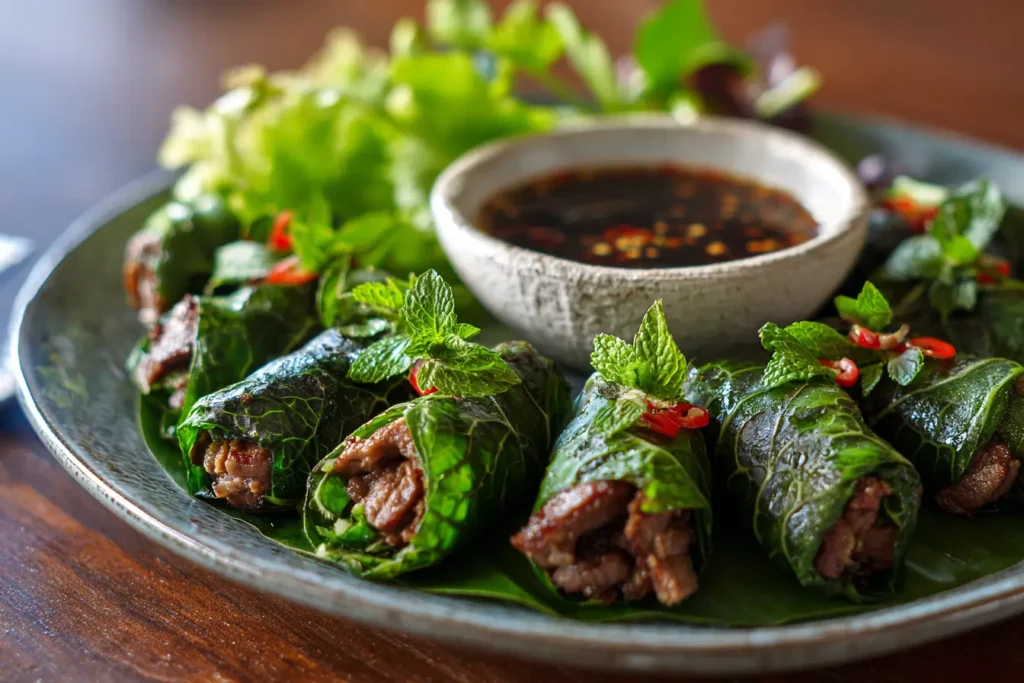
How to Make Thai Basil Beef Rolls
Now for the fun part. Also the slightly slippery part. But fun.
1. Cook the vermicelli noodles
Cook according to the package, then rinse under cold water and drain well. (Hot noodles inside rice paper = steamy rolls = sad texture.) Set them aside.
2. Make the Thai basil beef filling
Heat a skillet over medium-high heat. Add a little oil if needed, then add the ground beef. Break it up and cook until browned.
Add garlic and ginger and cook for about 30 seconds, just until fragrant.
Stir in soy sauce, fish sauce, and brown sugar. Let it bubble for 1–2 minutes so it gets a little glossy and clings to the beef.
Turn off the heat and stir in the Thai basil leaves. They’ll wilt fast. Taste and adjust—more lime later in the dip, more heat later with sriracha, more salt with a splash of soy if needed.
Let the filling cool for 5–10 minutes. Warm is fine. Hot is not. Hot makes the rice paper wrappers sticky and more likely to tear.
3. Mix the dipping sauce
In a small bowl, whisk hoisin, peanut butter, lime juice, and sriracha. Add warm water a tablespoon at a time until it’s smooth and dippable.
This is one of those “trust your taste buds” moments. I like it tangy and a little spicy, but you do you.
4. Prep your roll station (this matters more than you think)
Set out: cooled beef, noodles, herbs, lettuce, cucumber, carrots, and a big shallow dish of warm water for the rice paper.
Also: a damp (not soaking) clean kitchen towel or a damp cutting board surface to roll on. This is the trick that stopped my rice paper from sticking to everything in my kitchen.
Need a quick refresher on safe ground beef temps? The USDA’s guidance is clear and helpful.
5. Soften one rice paper wrapper
Dip one wrapper into warm water for about 5–10 seconds. Don’t wait until it feels soft in the water. It should still feel a bit firm when you take it out.
Lay it on your damp towel/board and give it 20–30 seconds. Plot twist: it keeps softening as it sits. This is how you avoid the gummy, over-soaked mess.
6. Build and roll
Near the bottom third of the wrapper, place:
- A piece of lettuce (this protects the wrapper from sharper veggies and helps prevent tearing)
- A small handful of noodles
- A spoonful of the beef filling
- Cucumber, carrots
- A few mint and Thai basil leaves
Roll like a burrito: fold the bottom up over the filling, tuck it in snug, fold the sides in, and roll up.
Repeat until you run out of filling or someone “taste tests” half your ingredients (I live with one of those).
7. Serve right away (or cover smartly)
Arrange on a platter with the dipping sauce. If you’re waiting more than 20 minutes, keep them covered with a barely damp paper towel and plastic wrap so they don’t dry out.
These Thai Basil Beef Rolls are best when the rice paper is tender and everything inside is crisp and fresh.
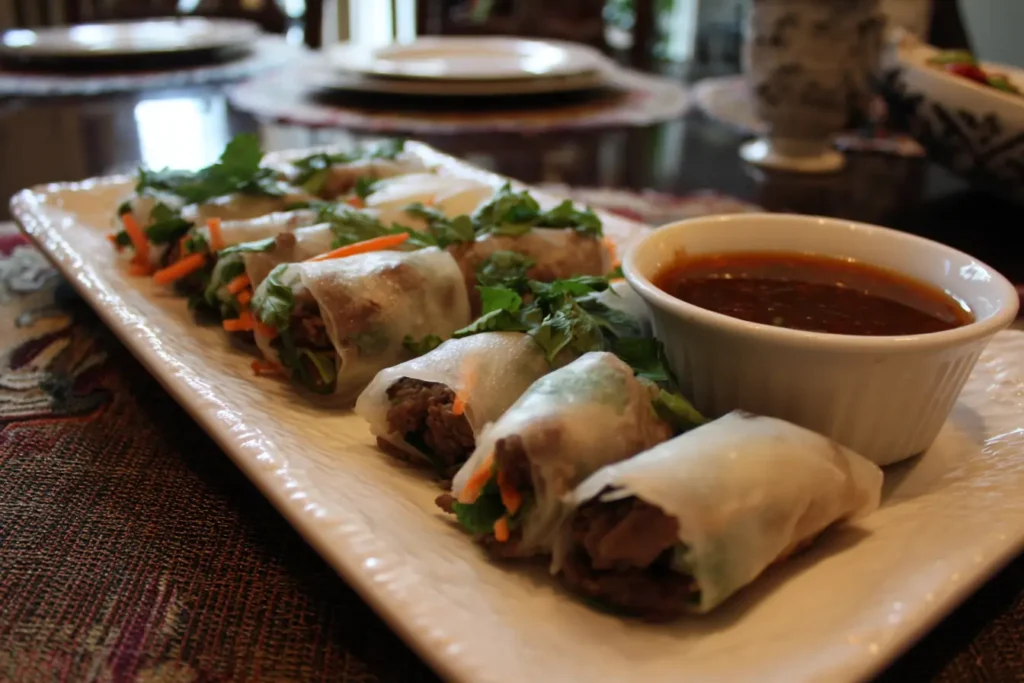
Pro Tips & Common Mistakes
Here’s what I learned after tearing through multiple wrappers and briefly questioning my life choices.
– Don’t over-soak the rice paper wrappers.
If they’re fully soft in the water, they’ll be too soft on the board and they’ll tear when you roll. Quick dip, then rest.
– Use warm water, not hot.
Hot water turns rice paper into a clingy little gremlin.
– Roll on a damp surface.
Dry cutting board = sticking. Wet cutting board = sliding. Damp towel/board = perfect.
– Cool the beef filling a bit.
If it’s steaming, you’ll get condensation inside the roll. That’s the fast track to mushy rice paper.
– Don’t overstuff.
I know. It’s hard. But too much filling makes the rolls burst, and then you’re basically eating a salad with extra steps.
– Lettuce is your insurance policy.
That leaf layer helps protect the wrapper from pointy cucumber ends and gives structure. I skipped it once and regretted it immediately.
– Keep completed rolls from sticking to each other.
Give them a little space on the platter. If they touch while still tacky, they’ll bond like best friends who refuse to separate.
If you want another beef idea with big flavor and not much effort, you might like my beef stir-fry dishes roundup.
Storage, Make-Ahead & Freezing
These Thai Basil Beef Rolls are happiest fresh, but you’ve got options.
Make-ahead (best method):
Cook the beef filling up to 2 days ahead and store it in the fridge. Prep veggies and herbs a day ahead. Cook noodles the day of (or the night before) and rinse well, then store with a tiny splash of water so they don’t clump.
Storing assembled rolls:
Store in a single layer in an airtight container, with a slightly damp paper towel in the container (not dripping wet). Refrigerate up to 24 hours for best texture. The rice paper wrappers will firm up a bit in the fridge, but they’re still good.
Freezing:
I don’t recommend freezing assembled rice paper rolls. The texture goes weird and chewy after thawing. Freeze the cooked beef filling instead (up to 2 months), then thaw and roll fresh.
Serving Suggestions – Thai Basil Beef Rolls
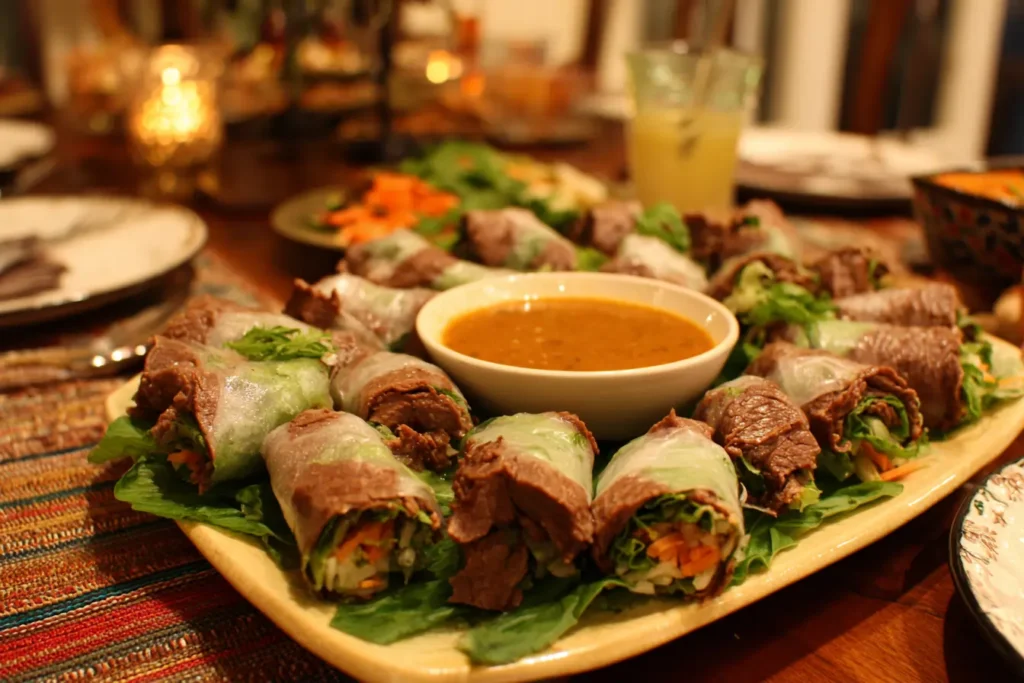
I love these as a “hands busy, hearts happy” kind of meal.
– Party platter style:
Serve Thai Basil Beef Rolls with the hoisin-peanut dip, plus extra lime wedges and sliced cucumber on the side. Put out napkins. You will need them.
– Make it dinner:
Add jasmine rice or a simple cucumber salad. Or do a little DIY roll bar and let everyone build their own. It’s interactive in a way that feels fun, not exhausting.
– Sauce trio (highly recommended if you’re entertaining):
- hoisin-peanut (the cozy one)
- sweet chili sauce (the crowd-pleaser)
- quick lime-fish sauce dip (the bright, punchy one)
If you’re a sauce person (I am, I always am), you might want to browse my homemade Green sauces collection.
FAQs about Thai Basil Beef Rolls
Can I make Thai Basil Beef Rolls without Thai basil?
Yes. Thai Basil Beef Rolls still work with Italian basil, and I’d add mint to bring back some of that bright, herbal punch. The flavor won’t be exactly the same (Thai basil is more peppery and licorice-y), but it’ll absolutely still be a roll you’ll want to keep eating.
Why are my rice paper wrappers tearing?
Usually it’s one of three things: you soaked them too long, you overstuffed, or you’re rolling on a dry surface. Do a quick dip, let the wrapper soften on a damp towel, and keep the filling modest. Also, tuck in any sharp veggie ends (cucumber is a repeat offender).
Can I cook the beef ahead of time?
Totally—and I recommend it if you’re hosting. Cook the beef filling up to 2 days ahead, cool it, and refrigerate. Then you’re just rolling when you’re ready, which makes Thai Basil Beef Rolls feel like a calm, controlled decision instead of a chaotic one.
What’s the best dipping sauce for these rolls?
The hoisin-peanut dip in the recipe is my go-to because it’s creamy, salty-sweet, and plays so nicely with fresh Thai basil. If you want something lighter, do a lime-forward fish sauce dip. If you want easiest, sweet chili sauce wins.
How do I keep the rolls from sticking together on the platter?
Give them a little breathing room, and don’t stack them. If you need to layer them in a container, place parchment paper between layers and keep a slightly damp paper towel in the container to prevent drying. Sticky rice paper is great… until it’s glued to its neighbor.
Final Thoughts – Thai Basil Beef Rolls
If rice paper has been haunting you from afar, let these Thai Basil Beef Rolls be your low-stress way in. The beef is savory-sweet and a little sticky, the herbs taste like summer, and the crunch from the veggies makes every bite feel bright and satisfying. Make them for friends, make them for dinner, make them because you want an easy win that looks impressive. And when you nail your first neat little roll, you have to tell me—because these Thai Basil Beef Rolls have a way of turning nervous cooks into very confident hosts.
for more recipes follow me in Facebook, Pinterest and medium.