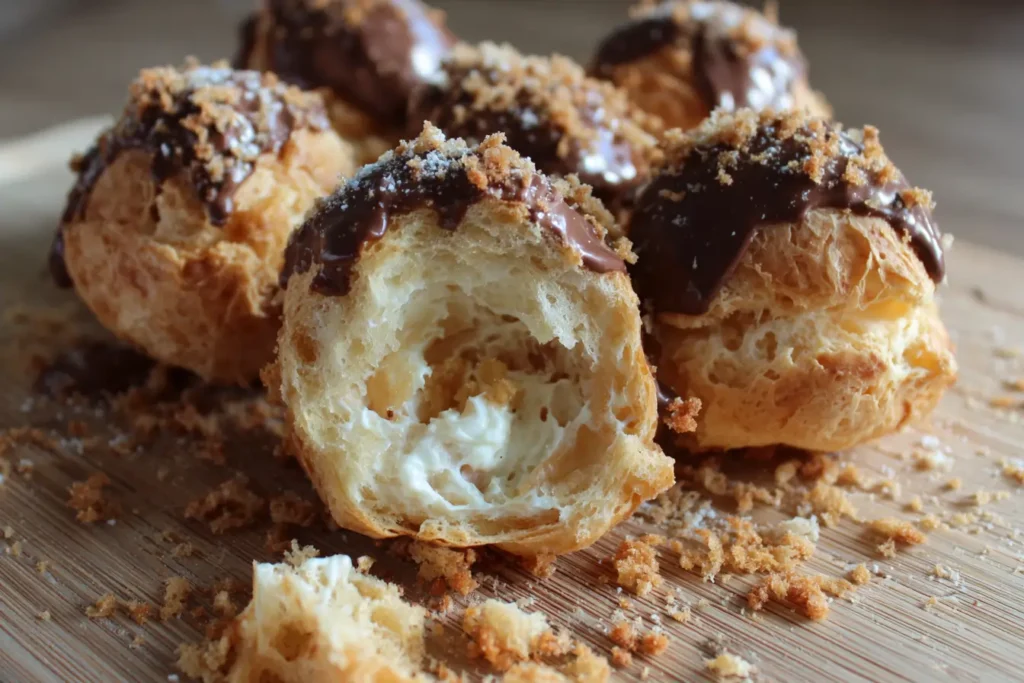
Profiteroles recipe failures are what I used to expect the first time I tried making them. The dough looked suspicious, the oven felt way too quiet, and I stood in my kitchen holding a wooden spoon like it might magically help. Then—out of nowhere—they puffed. Big, golden, dramatic little clouds. I actually laughed, alone in my kitchen, because somehow this “fancy French pastry” had worked. That moment completely changed how I see baking. Profiteroles look impressive, but once you understand what’s happening, they’re calm, logical, and honestly a joy to make. Let me show you exactly how to get there.
Table of Contents
Table of Contents
What Are Profiteroles (And Why They Often Fail)
Profiteroles Recipe are small, round pastries made from pâte à choux—a dough that puffs in the oven and creates a hollow center. They’re usually filled with cream and finished with warm chocolate sauce. Simple ingredients, dramatic results.
If you’ve ever made coffee éclairs, you already know the dough—profiteroles use the same base, just shaped differently.
Profiteroles vs Cream Puffs vs Éclairs
Same dough, different shapes. That’s the secret.
| Dessert | Shape | How It’s Served |
|---|---|---|
| Profiteroles | Small & round | Filled, topped with chocolate |
| Cream puffs | Small & round | Filled, usually plain |
| Éclairs | Long | Filled and glazed |
Once you master this profiteroles recipe, you’ve unlocked all three.
Why Profiteroles Rise (And Why They Collapse)
Profiteroles rise because of steam, not baking powder or yeast. The moisture in the dough turns to steam in the oven, pushing the pastry up and creating that hollow center.
The most common reason they fail is simple:
They’re taken out too early.
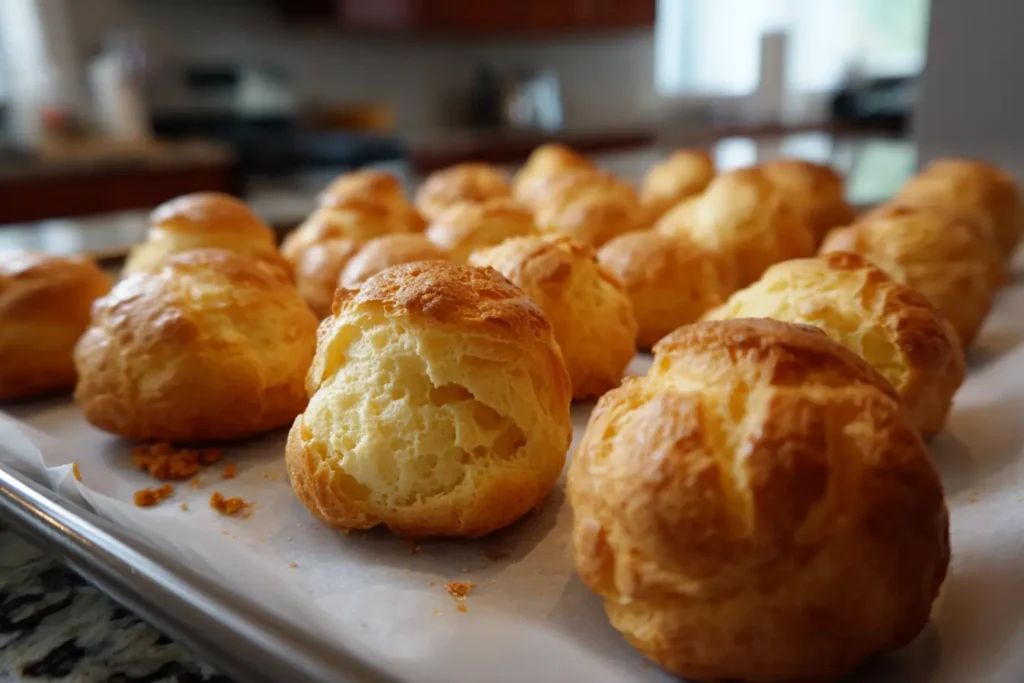
Golden shells can still be wet inside. If the interior isn’t dry enough, the shells collapse as they cool.
Here’s a quick visual guide:
| Shell Look | Result |
|---|---|
| Pale | No structure |
| Light golden & soft | Collapses |
| Deep golden & light | Hollow & stable |
That’s why this recipe focuses on doneness cues, not just bake time.
Print
Profiteroles Recipe
- Total Time: 1 hour
- Yield: 20–24 profiteroles 1x
- Diet: Vegetarian
Description
This Profiteroles Recipe walks you through making classic French choux pastry that bakes up light, crisp, and hollow, then filling it with cream and finishing with glossy chocolate. Elegant but approachable, this dessert looks bakery-level impressive while staying completely achievable in a home kitchen.
Ingredients
For the Choux Pastry
-
1 cup (240 ml) water
-
½ cup (113 g) unsalted butter
-
1 cup (125 g) all-purpose flour
-
4 large eggs (add gradually)
For the Filling
-
1 cup (240 ml) heavy whipping cream
-
2 tablespoons powdered sugar
-
1 teaspoon vanilla extract
For the Chocolate Sauce
-
4 oz (115 g) dark chocolate, chopped
-
½ cup (120 ml) heavy cream
Instructions
-
Preheat the oven to 425°F (220°C) and line a baking sheet with parchment paper.
-
In a saucepan, bring the water and butter to a full boil. Add the flour all at once and stir vigorously until a smooth dough forms and pulls away from the sides of the pan.
-
Continue cooking the dough for 30–60 seconds until a thin film forms on the bottom of the pan.
-
Transfer the dough to a bowl and let it cool slightly.
-
Add the eggs one at a time, mixing well after each addition, until the dough is smooth and falls from a spoon in a slow ribbon.
-
Pipe or spoon small mounds onto the prepared baking sheet, spacing them apart.
-
Bake for 20–25 minutes until puffed and deeply golden. Do not open the oven early.
-
Turn off the oven, poke a small hole in each shell, and return them to the warm oven for 5 minutes to dry. Cool completely.
-
Whip the cream with powdered sugar and vanilla until soft peaks form. Fill the cooled profiteroles.
-
Heat the cream for the chocolate sauce until just steaming, pour over chopped chocolate, and stir until smooth. Drizzle over filled profiteroles before serving.
Notes
-
Stop adding eggs as soon as the dough reaches the ribbon stage.
-
Profiteroles are best filled just before serving to keep the shells crisp.
-
A deep golden color is essential to prevent collapse.
- Prep Time: 30 minutes
- Cook Time: 30 minutes
- Category: Dessert
- Method: Baking
- Cuisine: French
Nutrition
- Serving Size: 1 profiterole
- Calories: 140 kcal
- Sugar: 7 g
- Sodium: 55 mg
- Fat: 8 g
- Saturated Fat: 5 g
- Unsaturated Fat: 3 g
- Trans Fat: 0 g
- Carbohydrates: 14 g
- Fiber: 1 g
- Protein: 3 g
- Cholesterol: 55 mg
Ingredients for the Best Profiteroles Recipe
A reliable profiteroles recipe doesn’t need many ingredients — it needs the right balance. Choux pastry is simple, but every ingredient plays a role in how your profiteroles rise and stay hollow.
Choux Pastry Ingredients
This homemade profiteroles recipe uses just four basics:
- Water – creates steam, which makes profiteroles puff
- Butter – adds flavor and structure
- All-purpose flour – gives strength
- Eggs – control texture and rise
That’s all. No baking powder, no yeast. All the lift in a classic profiteroles recipe comes from steam.
Why Egg Size Matters
Eggs are the only ingredient that can change from batch to batch in a profiteroles recipe. That’s why they’re added gradually and judged by texture, not number.
Use this quick guide:
| Dough Texture | Result |
|---|---|
| Too stiff | Needs more egg |
| Smooth, thick | Almost ready |
| Slow ribbon | Perfect |
| Runny | Too much egg |
Stop adding egg as soon as the dough falls in a slow ribbon — that’s exactly what you want when learning how to make profiteroles.
Filling & Chocolate Options
Once baked, profiteroles are hollow and ready to fill:
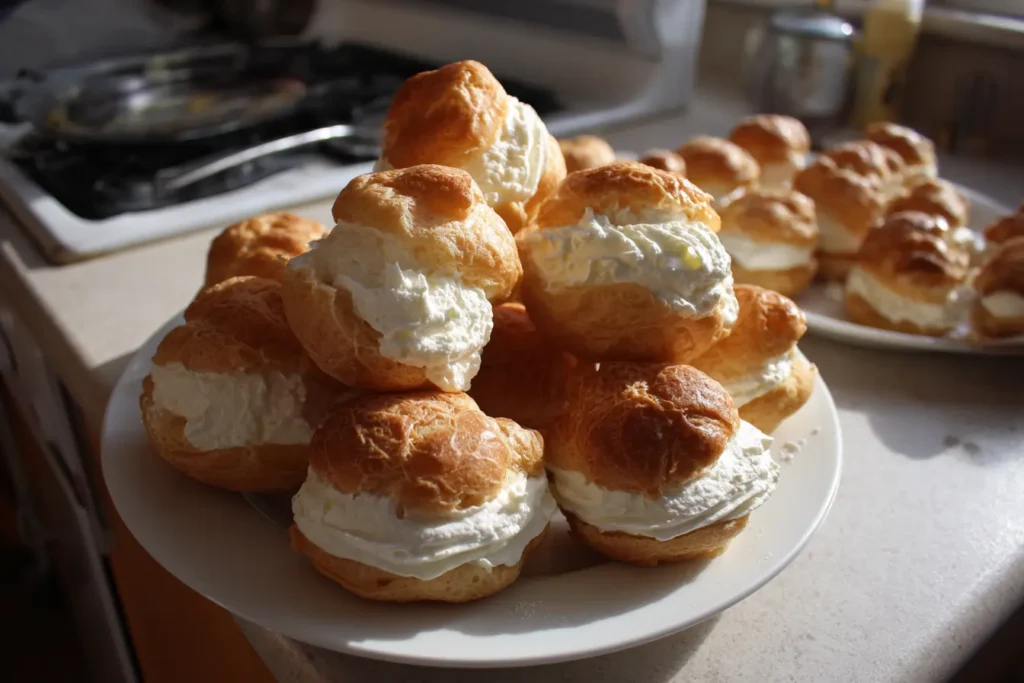
- Whipped cream profiteroles – light and classic
- Pastry cream filling – richer and more traditional
Finish with either chocolate sauce or chocolate ganache — both work beautifully in this profiteroles recipe.
Choux Pastry Step-by-Step (With Visual Cues)
This is the heart of any good profiteroles recipe. Choux pastry looks intimidating, but once you know what to look for, it becomes very straightforward. Focus on the texture at each stage and you’ll be in great shape.
Step 1: Cook the Panade (Dough Base)
In a saucepan, water and butter are heated together, then the flour is added all at once.
You’re looking for three clear signs the panade is ready:
- The dough pulls away from the sides of the pan
- A thin film forms on the bottom of the pan
- The dough looks smooth, not wet or greasy
If the dough is still glossy or loose, keep cooking for another 30–60 seconds. This drying step is essential in a successful profiteroles recipe.
Step 2: Cool the Dough Slightly
Before adding eggs, let the dough cool just enough so it’s warm — not hot.
Why this matters:
- Dough that’s too hot can scramble the eggs
- Slight cooling keeps the dough smooth and elastic
You don’t need to wait long. If you can touch the dough without burning your finger, it’s ready.
Step 3: Add Eggs Gradually (The Ribbon Test)
Eggs are added one at a time, mixing well after each addition.
What to watch for:
- At first, the dough will look broken — this is normal
- After mixing, it should become smooth and shiny
- The final dough should fall from the spoon in a slow, thick ribbon
That ribbon test is your green light. As soon as you see it, stop adding egg. This texture is what makes profiteroles recipe rise properly.
Step 4: Pipe the Profiteroles
Transfer the dough to a piping bag or use a spoon if needed.
Keep these tips in mind:
- Pipe small, even mounds for consistent baking
- Leave space between each one — they expand
- Slight peaks can be gently flattened with a damp finger
At this point, your dough is ready for the oven — and you’re exactly where you should be in this profiteroles recipe.
Baking Profiteroles So They Rise & Stay Hollow
This stage is simple once you know the rules. A good profiteroles recipe relies on heat, steam, and patience.
Oven Temperature & Timing
Start with a hot oven. High heat turns moisture into steam, which makes profiteroles puff.
Important rules:
- Hot oven = strong rise
- Don’t lower the heat too early
- Don’t open the oven at the start
That initial heat sets the structure.
When to Open the Oven
Resist the urge to peek.
Opening the oven too early releases steam and can cause the profiteroles to deflate. Wait until they look fully puffed and deeply golden before opening the door.
How to Tell When They’re Done
Forget the timer — use visual cues:
- Color: deep golden
- Feel: light, not heavy
- Sound: hollow when tapped
If they’re pale or soft, they need more time.
Quick Drying Step
Before cooling, poke a small hole in each shell and return them to the warm oven for a few minutes. This releases steam and keeps the shells crisp and hollow.
Filling & Assembly (No Soggy Shells)
Filling profiteroles is simple once you get the timing right. The goal is to keep the shells crisp while adding just enough cream to feel generous.
When to Fill Profiteroles
Fill profiteroles as close to serving as possible.
Why this matters:
- The shells absorb moisture quickly
- Early filling = soft, soggy shells
If you need to prep ahead, keep the shells and filling separate, then assemble right before serving.
How to Fill Without Cracking
You have two easy options:
- Bottom-fill method:
Make a small hole underneath and pipe the filling inside. Clean look, less cracking. - Side-fill method:
Insert the piping tip into the side seam and gently fill. Quick and effective.
Whichever you choose, use gentle pressure. Overfilling puts stress on the shell.
How Much Filling Is Just Right
You want the profiterole to feel:
- Light, not heavy
- Full, not stretched
A good rule: stop filling when you feel slight resistance. That’s your cue to move on.
Once filled, set the profiteroles on a plate and move straight to the chocolate topping for the best texture and presentation.
Chocolate Sauce for Profiteroles
A classic profiteroles recipe isn’t complete without chocolate. The contrast between crisp choux pastry, soft filling, and warm chocolate is what makes profiteroles feel special.
You have two excellent options, and both work beautifully with this profiteroles recipe.
Chocolate Sauce vs Chocolate Ganache
Here’s the difference, simply explained:
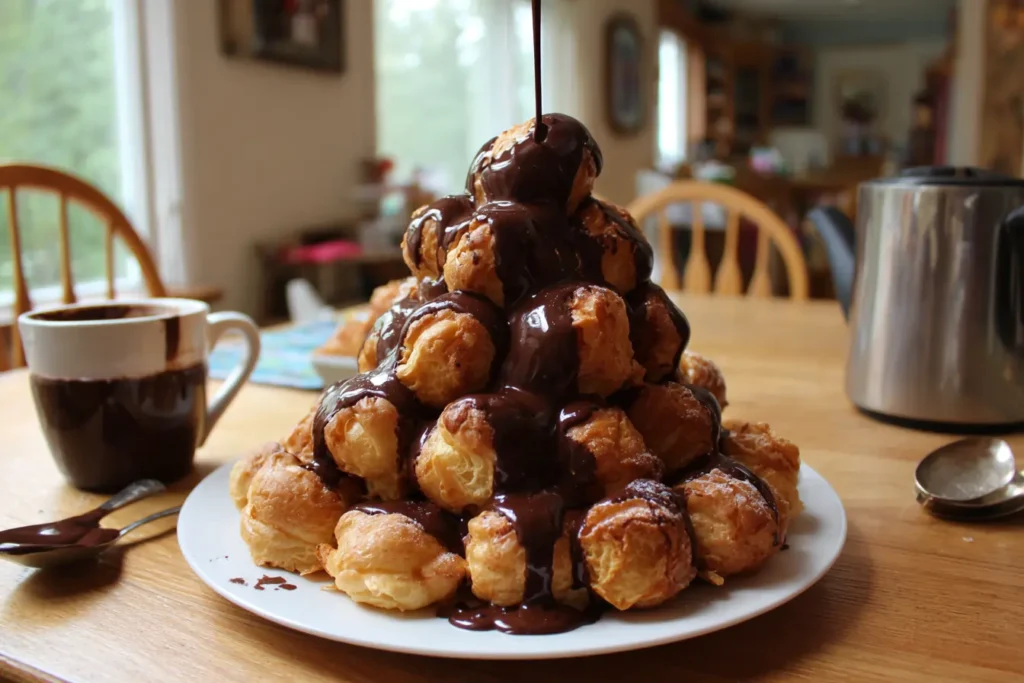
- Chocolate sauce – thinner, glossy, easy to drizzle, classic for profiteroles
- Chocolate ganache – thicker, richer, more indulgent, slightly heavier
If you want that traditional look where chocolate flows over the profiteroles, choose chocolate sauce. If you prefer a richer finish, ganache is the way to go.
Both pair perfectly with homemade profiteroles.
How to Prevent Seized Chocolate
Chocolate is sensitive to heat, so keep things gentle.
For smooth chocolate every time:
- Use low heat
- Stir slowly
- Remove from heat as soon as it melts
If the chocolate looks thick or grainy, it’s usually too hot. Let it cool slightly and stir — it often smooths out on its own.
When to Add Chocolate
For the best texture:
- Fill the profiteroles first
- Add chocolate just before serving
Warm chocolate over freshly filled profiteroles keeps the shells crisp and gives this profiteroles recipe its signature finish.
Nutrition Information
This profiteroles recipe is a classic dessert meant to be enjoyed mindfully. Nutrition values will vary based on shell size and whether you use whipped cream or pastry cream.
Estimated Nutrition (Per 1 Filled Profiterole)
| Nutrient | Approx. Amount |
|---|---|
| Calories | 120–160 kcal |
| Fat | 7–10 g |
| Carbohydrates | 12–15 g |
| Sugar | 6–9 g |
| Protein | 3–4 g |
| Fiber | < 1 g |
Portion Guidance
- Typical serving: 2–3 profiteroles
- Whipped cream keeps this profiteroles recipe lighter than pastry cream
- Chocolate ganache increases fat and calorie content compared to chocolate sauce
How These Numbers Are Estimated
Nutrition estimates are based on standard ingredient data and average portion sizes. For precise values, ingredient brands and quantities matter.
- USDA FoodData Central provides authoritative nutrition data for individual ingredients (eggs, butter, flour, chocolate).
- Harvard T.H. Chan School of Public Health offers guidance on enjoying desserts as part of a balanced diet.
These references support the estimates used in this profiteroles recipe and reinforce safe, balanced enjoyment.
FAQs About Profiteroles Recipe
Why are my profiteroles flat?
This usually means the oven wasn’t hot enough or the dough had too much egg. High heat and the correct dough texture are essential for lift.
What’s the difference between a cream puff and a profiterole?
They’re made from the same choux pastry and are often very similar. In practice, cream puffs are usually filled and served plain, while profiteroles are typically filled and finished with chocolate sauce.
What are profiteroles called in the USA?
In the United States, profiteroles are often called cream puffs, especially when they’re not served with chocolate sauce.
Why did my profiteroles collapse after baking?
The shells weren’t dry enough inside. Even if they’re golden, trapped steam can cause collapse as they cool.
How do you keep profiteroles crispy?
Bake until deep golden, then release steam by poking a small hole and letting them dry briefly in the warm oven.
Final Cozy Thoughts
Profiteroles might look fancy, but at heart they’re simple, comforting, and incredibly rewarding to make. There’s something special about watching them puff in the oven and knowing you created that magic with just a few humble ingredients.
If this is your first time making a profiteroles recipe, be proud of yourself — choux pastry is one of those skills that feels intimidating until it suddenly doesn’t. And once it clicks, it stays with you.
So take your time, enjoy the process, and don’t stress about perfection. A slightly uneven profiterole still tastes just as wonderful, especially when it’s filled with cream and finished with chocolate. Baking should feel warm, joyful, and a little bit magical — just like these profiteroles.
for more recipes follow me in Facebook, Pinterest and medium.