The first time I tried making coffee éclairs, I was absolutely convinced I had outgrown my kitchen. I had my apron on, espresso brewing in the background, and that dangerous level of confidence that only comes from watching too many baking videos. Five minutes later, my éclairs were either flat, cracked, or staring back at me like “nice try.”
But here’s the thing—I didn’t give up. I kept tweaking, tasting, and learning what coffee actually does to pastry cream, how choux dough behaves when it’s happy, and why éclairs need patience more than perfection. Now, making coffee éclairs feels less like a pastry exam and more like a cozy afternoon in my kitchen, coffee in hand, flour on the counter, and zero stress.
If you love baking, love coffee, and want éclairs that feel bakery-worthy without the drama—I’m right here with you.
Table of Contents
Table of Contents
What Are Coffee Éclairs? (Flavor, Texture & Expectations)
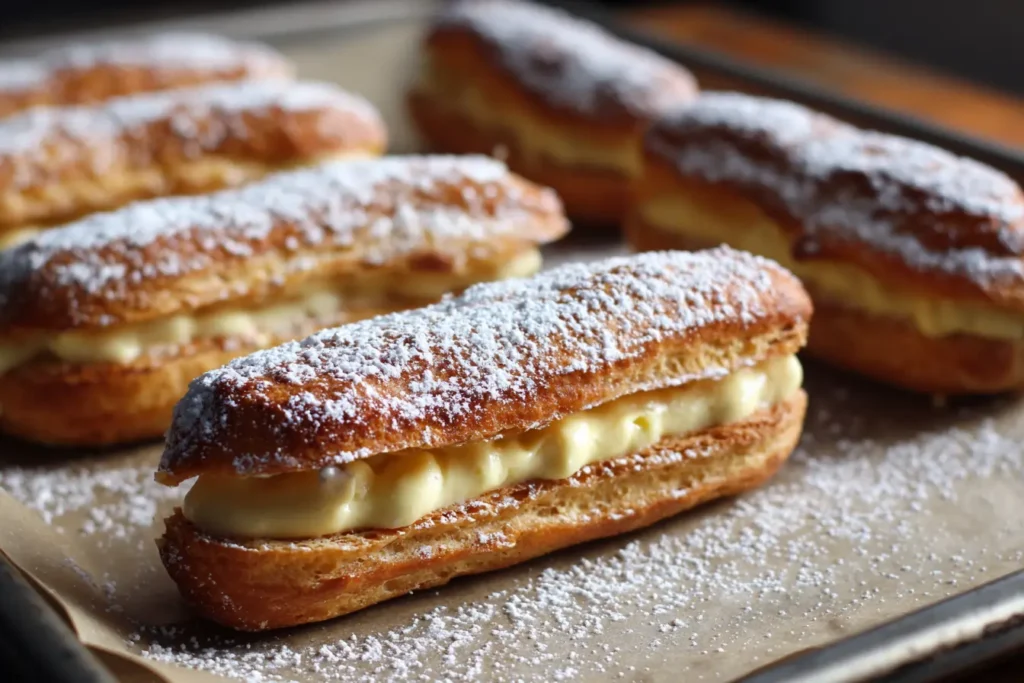
Coffee éclairs are classic French pastries made with light choux pastry shells, filled with smooth coffee pastry cream, and finished with a glossy topping. They look elegant, but at home the goal is simple: crisp shells, creamy filling, and coffee flavor that’s rich—not bitter.
If you’ve ever made custard-style desserts or cream-based fillings, the idea will feel familiar. The difference here is structure—and once you understand it, éclairs stop feeling scary.
What flavor are coffee éclairs supposed to taste like?
Coffee éclairs should taste like a creamy latte, not a sharp espresso shot. The coffee flavor should be warm and aromatic, balanced by sweetness and a soft, airy shell.
- Too bitter → coffee was too strong or overheated
- Too weak → coffee was diluted
We’ll fix that later in the coffee flavor section.
Coffee éclairs vs chocolate or vanilla éclairs
| Éclair Type | Flavor Style | Difficulty |
|---|---|---|
| Vanilla | Sweet & clean | Easiest |
| Chocolate | Bold & rich | Forgiving |
| Coffee | Smooth & balanced | Needs control |
Coffee éclairs sit right in the middle—they reward balance.
If you enjoy coffee-forward desserts, you’ll recognize this flavor approach from recipes like this chocolate espresso cake, where coffee adds depth instead of bitterness.
Why coffee éclairs feel “advanced” (and why they don’t have to be)
Éclairs feel advanced because choux pastry doesn’t behave like cake batter. It changes texture as it cooks, and timing matters. The good news? Once you know the visual cues, it becomes predictable.
Heat and moisture working together is not new—recipes like crispy focaccia also rely on that same principle to build structure.
Quick reassurance:
You don’t need pastry skills. You just need to know what the dough should look like—and I’ll show you.
Choux Pastry Explained: How Éclairs Actually Puff
Choux pastry is the foundation of coffee éclairs. It doesn’t rise from baking powder or yeast—it rises from steam. Once you understand that, choux pastry stops feeling mysterious and starts feeling manageable.
How choux pastry works (steam = lift, eggs = structure)
Here’s what’s happening in simple terms:
- Water and butter heat up and create steam
- Steam pushes the dough upward, forming a hollow center
- Eggs set as the pastry bakes, holding everything in place
That’s why choux dough is cooked on the stovetop before baking—it needs enough strength to trap steam instead of collapsing.
The most common choux pastry mistakes (and why they matter)
Most éclairs fail because of one of these issues:
- Too much egg → the dough becomes loose and spreads
- Undercooked panade → weak structure that can’t hold steam
- Opening the oven too early → steam escapes and shells collapse
Choux pastry rewards patience. Rushing usually shows up in the final result.
Visual doneness cues (how to know your dough is ready)
Instead of relying only on measurements, use these visual signs:
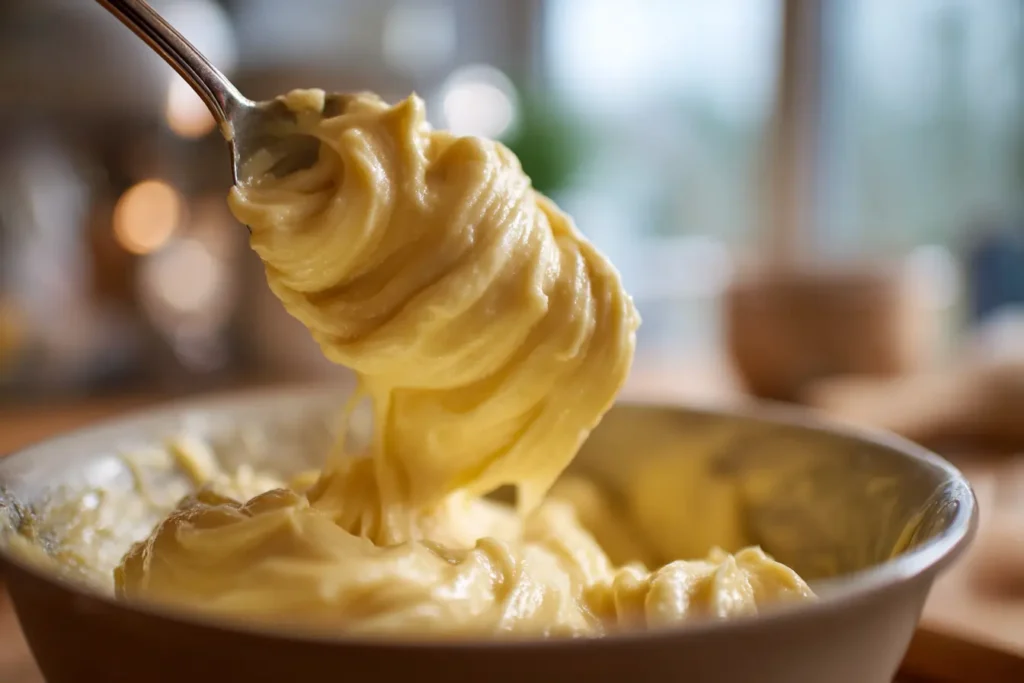
- The dough looks smooth and glossy, not oily
- It forms a thick V-shape when lifted with a spoon
- Piped dough holds its shape instead of flattening
If your dough passes these checks, you’re in great shape.
Quick takeaway
- Steam makes éclairs puff
- Eggs lock in structure
- Texture matters more than exact quantities
Once your shells are right, everything that follows—especially the coffee pastry cream—gets much easier.
Print
Coffee Éclairs
- Total Time: 1 hour 15 minutes
- Yield: 10 éclairs 1x
- Diet: Vegetarian
Description
These Coffee Éclairs feature light, crisp choux pastry shells filled with smooth, creamy coffee pastry cream and finished with a glossy glaze. Elegant yet approachable, they deliver a balanced coffee flavor that’s rich, cozy, and never bitter—perfect for home bakers who want bakery-style results without the stress.
Ingredients
Choux Pastry
-
½ cup water
-
½ cup unsalted butter
-
1 cup all-purpose flour
-
4 large eggs
-
¼ tsp salt
Coffee Pastry Cream
-
2 cups whole milk
-
4 large egg yolks
-
½ cup granulated sugar
-
¼ cup cornstarch
-
1½ tbsp instant coffee granules (adjust to taste)
-
2 tbsp unsalted butter
-
1 tsp vanilla extract
Coffee Glaze (Optional)
-
¾ cup powdered sugar
-
1–2 tbsp brewed coffee or milk
-
½ tsp vanilla extract
Instructions
Make the Choux Pastry
-
In a saucepan, combine water, butter, and salt. Bring to a boil.
-
Add flour all at once and stir vigorously until a smooth dough forms and pulls away from the pan.
-
Remove from heat and cool for 5 minutes.
-
Add eggs one at a time, mixing well after each, until dough is smooth and glossy.
-
Pipe dough into 4–5 inch lines on a parchment-lined baking sheet.
-
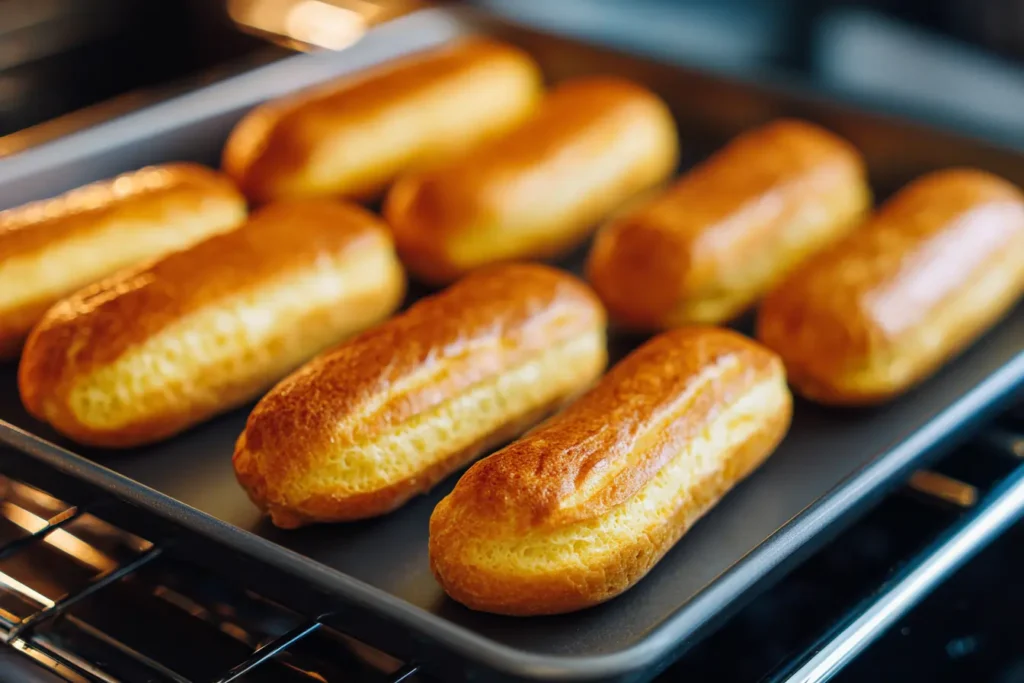
Bake at 400°F (200°C) for 30–35 minutes until puffed, golden, and crisp. Cool completely.
Make the Coffee Pastry Cream
-
Whisk egg yolks, sugar, cornstarch, and instant coffee until smooth.
-
Heat milk until hot but not boiling, then slowly whisk into egg mixture.
-
Return to saucepan and cook over medium-low heat, whisking constantly, until thick.
-
Remove from heat and stir in butter and vanilla. Chill until fully cooled.
Assemble the Éclairs
-
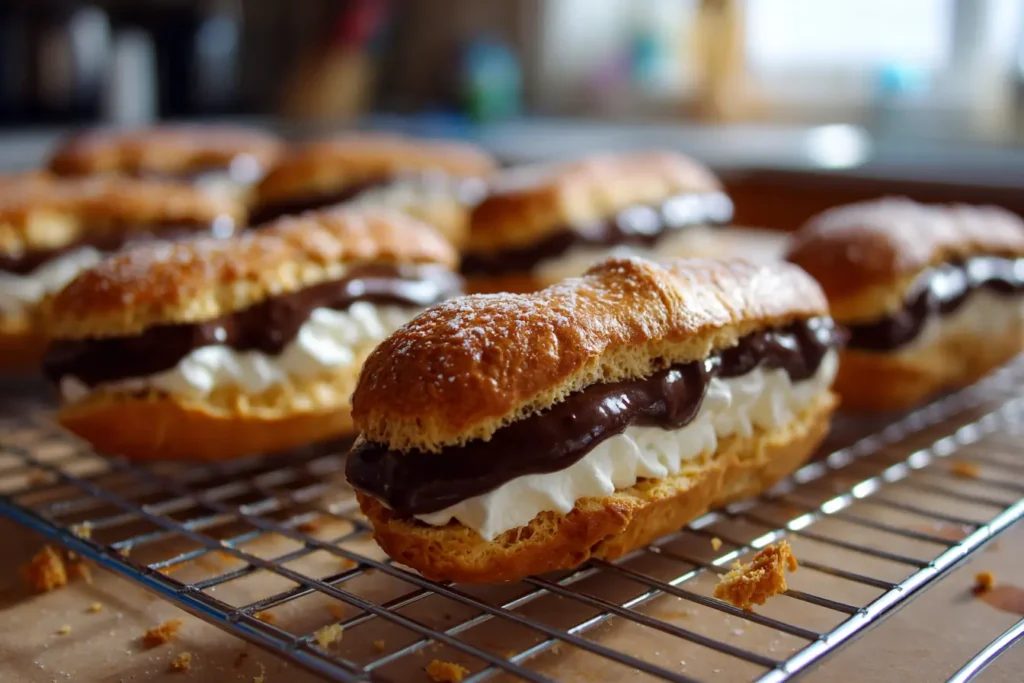
Fill cooled éclairs from the bottom or side with coffee pastry cream.
-
Mix glaze ingredients and spoon or dip éclairs into glaze.
-
Let set before serving.
Notes
-
Instant coffee dissolves more smoothly than brewed coffee and gives better flavor control.
-
Do not open the oven while baking éclairs or they may collapse.
-
Éclairs are best enjoyed the same day for maximum crispness.
- Prep Time: 40 minutes
- Cook Time: 35 minutes
- Category: Dessert
- Method: Baking
- Cuisine: French
Nutrition
- Serving Size: 1 éclair
- Calories: 300 kcal
- Sugar: 20 g
- Sodium: 140 mg
- Fat: 17 g
- Saturated Fat: 9 g
- Unsaturated Fat: 7 g
- Trans Fat: 0 g
- Carbohydrates: 34 g
- Fiber: 1 g
- Protein: 6 g
- Cholesterol: 125 mg
Coffee Flavor Control: How to Avoid Bitter Éclairs
Coffee éclairs should taste smooth and cozy—not sharp or burnt. The biggest mistake home bakers make is assuming more coffee = better flavor. With pastry cream, that’s rarely true. Balance is everything.
The best coffee to use for coffee éclairs
Not all coffee behaves the same once heated and mixed into custard.
Your best options:
- Instant coffee granules → smooth, mild, easy to control
- Espresso powder → deeper flavor, stronger, more intense
What to avoid:
- Brewed coffee (adds too much liquid and weakens the cream)
- Very dark roasts (tend to turn bitter when heated)
For most home bakers, instant coffee gives the most forgiving and consistent results.
Coffee intensity guide (mild → café-strong)
Use this table to choose your flavor level without guessing:
| Coffee Strength | Flavor Result | Best For |
|---|---|---|
| Mild | Latte-like, soft | First-time éclairs |
| Medium | Balanced coffee | Classic coffee éclairs |
| Café-Strong | Bold but smooth | Coffee lovers |
You can always add a little more coffee—but you can’t remove bitterness once it’s there.
Why coffee turns bitter in pastry cream
Coffee becomes bitter when:
- It’s overheated
- Too much is added at once
- It’s cooked for too long
How to prevent that:
- Dissolve coffee fully before adding it
- Add it gradually
- Keep the heat gentle once it’s in the cream
Coffee should enhance the custard, not dominate it.
Quick takeaway
- Stronger isn’t better—balanced is
- Instant coffee is easier to control
- Gentle heat keeps coffee smooth
Once the flavor is right, the pastry cream becomes one of the best parts of the whole dessert.
Coffee Pastry Cream: Step-by-Step With Texture Cues
Coffee pastry cream is where coffee éclairs really shine. It should be smooth, silky, and rich, not stiff like pudding and not loose like sauce. Texture matters just as much as flavor here.
Ingredients explained (and why each one matters)
Each ingredient has a job—this isn’t a place for guessing.
- Egg yolks → richness and structure
- Sugar → sweetness and stability
- Milk or cream → smooth, creamy body
- Cornstarch → thickens without heaviness
- Coffee → flavor (added carefully, not aggressively)
- Butter (optional) → extra silkiness at the end
Skipping or swapping too freely is usually what causes problems.
How to cook coffee pastry cream without curdling
Follow this order and you’ll avoid lumps:
- Whisk egg yolks, sugar, and cornstarch until smooth
- Warm the milk slowly until it’s steaming, not bubbling.
- Slowly whisk hot milk into the egg mixture (this tempers it)
- Pour the mixture back into the saucepan and cook it gently over medium-low heat.
- Stir constantly until thick and glossy
Texture cue:
You’ll know it’s ready when it clings to the spoon and keeps a visible line when you swipe a finger through it.
How to fix runny or grainy coffee pastry cream
Even careful bakers run into this sometimes—don’t panic.
If it’s too runny:
- Cook it a little longer over low heat
- Whisk constantly until it thickens
If it looks grainy:
- Remove from heat immediately
- Whisk vigorously or blend briefly
- Add a small piece of butter to smooth it out
Pastry cream is surprisingly forgiving if you catch issues early.
Quick takeaway
- Gentle heat is key
- Stir constantly, don’t rush
- Texture tells you when it’s done
Once your pastry cream is cooled and silky, you’re officially past the hardest part.
How to Fill Éclairs Without Cracks or Leaks
Filling éclairs is easier than it looks. The key is to go slow and stop early. Overfilling is the main reason éclairs crack or leak.
Best tools for filling éclairs
- Piping bag with a small round opening
- Or use a zip-top bag with a small corner snipped off.
Both work perfectly if you pipe gently.
Where and how to fill éclairs
Two simple options:
- From the bottom: make 2–3 small holes underneath
- From the side: one small hole near the end
Pipe slowly until the éclair feels full but still light.
How much filling is enough?
Your éclair is ready when:
- It feels heavier, not tight
- Cream flows smoothly, then slows
Stop if you see cracking or cream pushing back out.
Quick takeaway
- Slow piping = clean éclairs
- Don’t overfill
- Gentle pressure matters
Glaze vs Fondant: What Works Best at Home
When it comes to finishing coffee éclairs, this is where many home bakers pause and think, “Am I doing this the traditional way?”
Here’s the honest answer: you don’t need fondant to make great éclairs at home.
Traditional fondant glaze (pros and cons)
Fondant is the classic bakery topping, but it comes with a learning curve.
Pros:
- Smooth, iconic bakery look
- Sets firmly once done right
Cons:
- Temperature-sensitive
- Can turn dull or grainy
- Less forgiving for home kitchens
Fondant looks beautiful, but it’s not very flexible.
Coffee glaze and chocolate glaze alternatives
For home bakers, simple glazes are often the better choice.
Why glazes work well:
- Easier to control
- Softer texture
- More forgiving if slightly warm or cool
A coffee glaze keeps the flavor consistent, while a light chocolate glaze adds contrast without overpowering the filling.
Which topping is best for home bakers?
| Topping Type | Ease | Finish | Best Use |
|---|---|---|---|
| Fondant | Tricky | Firm & classic | Bakery-style display |
| Coffee glaze | Easy | Smooth & soft | Everyday home baking |
| Chocolate glaze | Easy | Rich & glossy | Coffee + chocolate lovers |
Quick takeaway
- Fondant is traditional, not required
- Simple glazes are more forgiving
- Flavor and texture matter more than tradition
Once glazed, your coffee éclairs are ready to enjoy—and admire.
Nutrition Information for Coffee Éclairs
Coffee éclairs are meant to be enjoyed—not micromanaged. Still, a general nutrition overview can be helpful, especially if you like to plan desserts alongside meals or simply want transparency.
The values below are estimates for one standard coffee éclair filled with pastry cream and finished with a simple glaze.
Estimated nutrition per coffee éclair
| Nutrient | Approximate Amount |
|---|---|
| Calories | 280–320 kcal |
| Carbohydrates | 30–35 g |
| Sugar | 18–22 g |
| Fat | 16–18 g |
| Saturated Fat | 9–10 g |
| Protein | 5–6 g |
| Sodium | 120–150 mg |
Values vary depending on portion size, filling amount, and glaze choice.
Sugar, dairy, and coffee considerations
- Most of the sugar comes from the pastry cream and glaze, not the coffee itself
- Coffee adds flavor with minimal nutritional impact
- The caffeine level is moderate, roughly comparable to a small cup of coffee.
For general guidance on sugar intake and balanced eating patterns, you can refer to the USDA dietary guidelines, which provide clear, evidence-based recommendations for everyday meals and treats.
If you’re curious about how caffeine affects the body—especially in desserts—the FDA offers reliable information on caffeine levels and sensitivity.
Enjoying coffee éclairs in balance
Coffee éclairs are a pleasure dessert—rich, satisfying, and best enjoyed slowly. One éclair paired with a coffee or shared at the table is often more than enough to feel indulgent without overdoing it.
Quick takeaway
- Nutrition varies by size and glaze
- Coffee adds flavor, not excess calories
- Moderation keeps desserts enjoyable
Coffee Éclairs FAQ’s (Quick Answers)
What flavor are coffee éclairs?
Coffee éclairs taste smooth and aromatic, like a creamy latte. The coffee flavor should be present but balanced—never sharp or bitter.
What is coffee pastry cream made of?
Coffee pastry cream is made with milk (or cream), egg yolks, sugar, cornstarch, butter, and coffee (instant coffee or espresso powder).
Can I use instant coffee in coffee éclairs?
Yes. Instant coffee is actually one of the best options because it dissolves easily and gives consistent flavor without adding extra liquid.
Why did my éclairs collapse after baking?
Éclairs usually collapse if they’re undercooked or if the oven is opened too early, letting steam escape before the shells set.
How do bakeries get éclairs so crisp?
They bake éclairs fully until dry and golden, then let steam escape as they cool. Crisp shells come from proper baking, not extra ingredients.
Final Thoughts: Baking Coffee Éclairs With Confidence
Coffee éclairs may look like a bakery-only dessert, but once you understand how each part works, they become surprisingly approachable—and honestly, pretty fun to make. From the moment the choux pastry puffs in the oven to that first bite of smooth coffee cream, this is one of those recipes that feels deeply satisfying.
Don’t worry if your first batch isn’t picture-perfect. Baking is a conversation with your kitchen, your oven, and your ingredients—and every time you make éclairs, you get better at listening. Take your time, trust the visual cues, and enjoy the process as much as the result.
And if you ask me? Coffee éclairs taste even better when they’re homemade, slightly imperfect, and shared with someone who appreciates good baking as much as you do. ☕🥐
for more recipes follow me in Facebook, Pinterest and medium.