The very first time I made crispy focaccia, I thought I had absolutely nailed it.
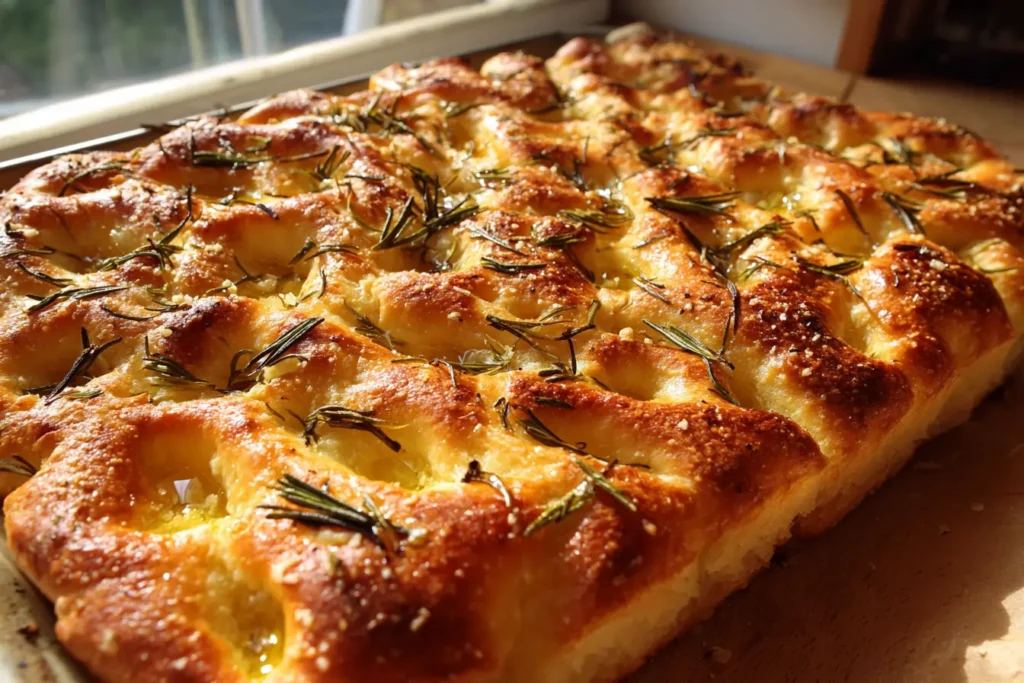
Golden top, beautiful dimples, rosemary everywhere. I pulled it out of the oven feeling very confident — like this was going to be my new favorite bread.
Then I flipped it over.
Soft. Pale. A completely soggy focaccia bottom.
I stood there in my kitchen, olive oil on my hands, staring at it like, How can something look so perfect and still fail at the most important part? That was the moment I realized that making crispy focaccia isn’t about luck — it’s about understanding what actually creates a crispy bottom and crunchy edges.
After many pans, a few smoky ovens, and lots of very happy taste-testing, I finally cracked it. This crispy focaccia recipe is the result of that little obsession — simple, reliable, and designed to give you a truly crispy focaccia every single time.
Table of Contents
Table of Contents
Crispy Focaccia Quick Start (Read This First)
The Crispy Guarantee Checklist (60 seconds)
If you only read one part of this article, read this:
- Fully preheat your oven — at least 30 minutes, not “until it beeps”
- Bake on the lower-middle rack for real bottom heat
- Use enough olive oil to protect and crisp the base
- Bake until deeply golden, not lightly colored
- Remove focaccia from the pan and rest on a rack for a few minutes to prevent steam
This checklist alone fixes most soggy focaccia bottoms.
Best Oven Temperature & Rack Position for Crispy Focaccia
| Oven Setup | Temperature | Rack Position | Result |
|---|---|---|---|
| Standard home oven | 450°F / 232°C | Lower-middle | Best crispy bottom |
| Oven browns too fast | 425°F / 218°C | Middle | Even color, slightly less crunch |
| Weak bottom heat | 450°F / 232°C | Lower-middle + hot pan | Extra crisp base |
If you’re used to baking pizza or flatbreads, this logic will feel familiar — the same bottom-heat principle applies.
How Much Olive Oil You Actually Need (And Why)
Use olive oil like a tool, not a suggestion.
Pan oil (before dough):
- Sheet pan / 9×13 pan: 1½–2 tablespoons
- Cast iron skillet: 1–1½ tablespoons
Top oil (before dimpling):
- About 1 tablespoon, drizzled evenly
Your pan should look shiny and generously coated, not dry.
Too little oil = sticking + soft bottom.
Too much oil = greasy focaccia.
What Perfectly Baked Crispy Focaccia Looks Like
Use visual cues instead of guessing:
Top
- Deep golden color
- Dimple edges slightly browned
- Crisp-looking surface
Bottom
- Evenly browned (not pale)
- Firm when lifted
- No soft or steamy feel
Inside
- Airy crumb
- Light, not dense
- No gummy line near the bottom
This balance is what makes crispy focaccia irresistible — crunchy outside, tender inside.
Choose Your Focaccia Style (So You Get the Result You Want)
One quick thing before we continue — because this is where most crispy focaccia frustration starts.
“Crispy focaccia” doesn’t mean the same thing to everyone. Some people want thin and crackly, others want fluffy inside with a crunchy bottom. Choosing the right style first saves you from disappointment later.
Thin & Crackly Crispy Focaccia (Fast Option)
Best if you want:
- Maximum crunch
- Minimal fermentation
- A flatbread-style result
What you’ll get:
Very crispy top and bottom, little interior fluff. Perfect for dips and snack boards.
Airy & Crispy Focaccia (Classic Style)
This is what most people mean when they search for crispy focaccia.
What you’ll get:
- Crispy bottom and edges
- Light, airy interior
- Bakery-style dimples and bubbles
This is the main focus of this article.
Big & Bubbly Focaccia (Thicker Crumb)
Best if you want:
- Thick, pillowy bread
- Large bubbles
- A softer interior with a crisp base
If you’re familiar with pizza dough techniques, you’ll notice similar principles to those I explain in my familial pizza guide — just adapted for focaccia.
Quick Style Picker
| Your goal | Best choice |
|---|---|
| Fast & super crunchy | Thin & crackly |
| Crunchy bottom + airy inside | Airy & crispy |
| Thick, fluffy bread | Big & bubbly |
Important:
No matter the style, the crispy bottom technique stays the same — only dough thickness and timing change.
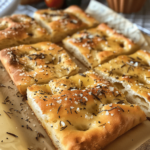
Crispy Focaccia
- Total Time: 2 hours 40 minutes
- Yield: 12 slices 1x
- Diet: Vegetarian
Description
This crispy focaccia is foolproof and bakery-worthy, with a deeply golden, crunchy bottom and a light, airy interior. Made with a simple no-knead dough and baked at high heat, it delivers maximum flavor and crispness without complicated techniques. Perfect for sandwiches, soups, or serving alongside meals.
Ingredients
-
3 ½ cups all-purpose flour
-
1 ½ cups warm water (about 110°F / 43°C)
-
2 ¼ teaspoons instant yeast (or active dry yeast)
-
2 teaspoons salt
-
3 tablespoons olive oil, divided (plus more for greasing)
-
Optional topping: flaky salt, rosemary
Instructions
-
Mix the dough
In a large bowl, combine flour, yeast, and salt. Add warm water and mix until a sticky, shaggy dough forms. No kneading required. -
First rise
Cover the bowl and let the dough rise at room temperature for 2–3 hours, until puffy and doubled. -
Prepare the pan
Generously coat a metal sheet pan or 9×13 pan with 1½–2 tablespoons olive oil. -
Shape the dough
Transfer the dough to the pan. Gently stretch it toward the edges. If it resists, let it rest 10 minutes, then continue. -
Dimple and oil
Drizzle remaining olive oil over the dough. Using oiled fingertips, press dimples straight down to the pan. Sprinkle with flaky salt or rosemary if using. -
Bake
Bake in a fully preheated 450°F (232°C) oven on the lower-middle rack for 20–25 minutes, until deeply golden. -
De-pan for crispness
Immediately lift the focaccia out of the pan and place it on a cooling rack for 3–5 minutes before slicing.
Notes
-
Use a metal pan for best crispness; glass pans need slightly longer baking.
-
Don’t underbake — color equals crunch.
-
Letting the dough ferment overnight in the fridge improves flavor and bubbles.
-
Always remove focaccia from the pan after baking to prevent steam softening the bottom.
- Prep Time: 15 minutes
- Cook Time: 25 minutes
- Category: breakfast
- Method: Baking
- Cuisine: Italian
Nutrition
- Serving Size: 1 slice
- Calories: 200 kcal
- Sugar: 1 g
- Sodium: 390 mg
- Fat: 7 g
- Saturated Fat: 1 g
- Unsaturated Fat: 5 g
- Trans Fat: 0 g
- Carbohydrates: 32 g
- Fiber: 1 g
- Protein: 5 g
- Cholesterol: 0 mg
The 3 Crispness Levers (Why Some Focaccia Is Crispy and Some Isn’t)
Crispy focaccia isn’t luck — it’s the result of three simple levers. Miss one, and you’ll likely end up with a soft or soggy bottom.
Heat — Oven Temperature & Rack Position
What works best
- 450°F / 232°C
- Lower-middle rack
- 30-minute full preheat
Strong bottom heat sets the crust early. Weak heat = pale, soft focaccia.
Contact — Pan Material Matters
The pan touching the dough controls crispness.
| Pan type | Crisp result |
|---|---|
| Metal sheet pan | Very good |
| Cast iron | Excellent (crispy edges) |
| Glass / ceramic | Fair (needs more time & oil) |
This is the same bottom-heat principle used in pizza-style baking.
Fat — Olive Oil Is a Tool, Not Just Flavor
Olive oil helps the crust brown and crisp.
- Before dough: coats the pan and prevents sticking
- Before dimpling: helps color and texture
If the pan looks dry, you don’t have enough oil. If it’s swimming, you’ve gone too far.
Steam Is the Enemy
Leaving focaccia in the pan traps steam and softens the bottom.
Simple fix:
Lift it out of the pan and rest it on a rack for 3–5 minutes after baking.
Crispness in One Glance
- Hot oven
- Right rack
- Good pan contact
- Enough olive oil
- De-pan immediately
Get these right and crispy focaccia becomes repeatable, not random.
Base Dough for Crispy Focaccia (No-Knead & Foolproof)
You don’t need kneading or complicated techniques to make crispy focaccia. This dough is high-hydration, no-knead, and forgiving — perfect for a crispy bottom and airy inside.
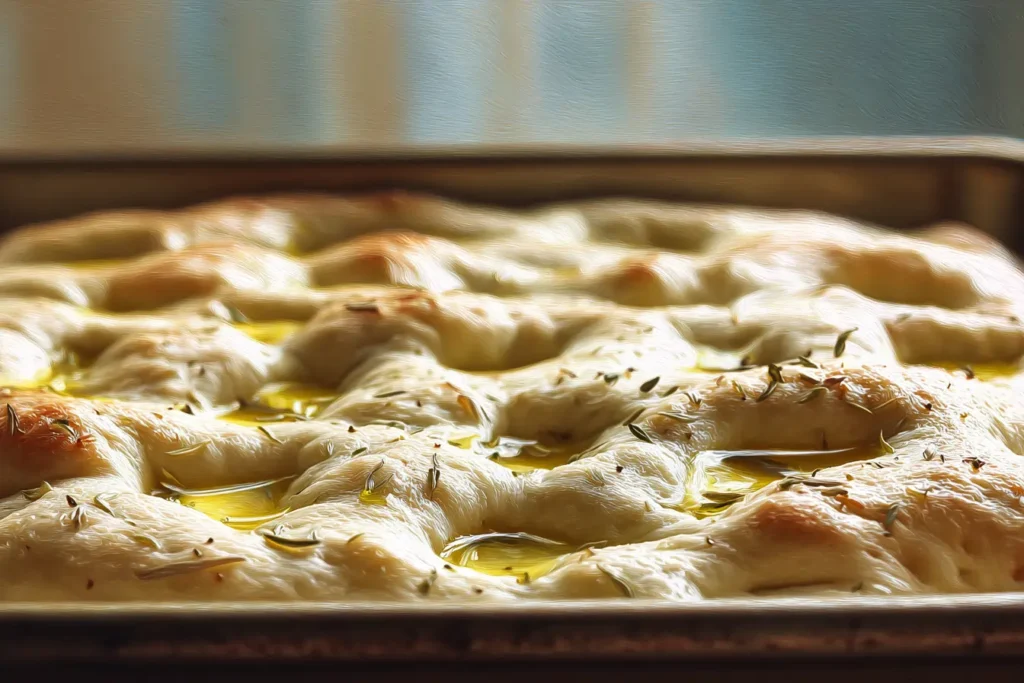
Ingredients That Matter
- All-purpose flour (bread flour works too)
- Warm water (creates steam and bubbles)
- Yeast (instant or active dry)
- Salt (flavor + structure)
- Olive oil (essential for crispness)
Simple ingredients, no stress.
Why Sticky Dough Is Good
This dough will feel sticky on purpose.
- High hydration = more steam
- More steam = better bubbles
- Better bubbles + hot pan = crispy focaccia
Don’t add extra flour.
Same-Day vs Overnight (Quick Choice)
| Option | Time | Result |
|---|---|---|
| Same-day | 3–4 hrs | Mild flavor |
| Overnight | 12–24 hrs | Better flavor & bubbles |
Both give a crispy bottom.
Thickness Targets (Important)
| Pan | Thickness |
|---|---|
| 9×13 pan | ~½ inch |
| Quarter sheet | Slightly thinner |
| Skillet | Max ¾ inch |
Too thick = soft bottom.
Dough Success Rules
- No kneading
- No extra flour
- Don’t rush fermentation
Get the dough right, and crispiness becomes easy.
Method 1: Sheet Pan Crispy Focaccia (Most Reliable)
A simple metal sheet pan is the easiest way to get a crispy focaccia bottom with consistent results.
Sheet Pan Setup
- Use a metal pan
- Add 1½–2 tbsp olive oil
- Make sure the bottom looks fully coated and shiny
Oil + hot metal = crisp base.
Shape & Dimple
- Gently stretch the dough to fit the pan
- If it resists, rest 10 minutes, then continue
- Oil your fingers and dimple straight down
Don’t force the dough or flatten the bubbles.
Bake for Crispness
- 450°F / 232°C
- Lower-middle rack
- Bake until deep golden
As soon as it’s done:
- Lift focaccia out of the pan
- Rest on a rack for 3–5 minutes to avoid steam
Sheet Pan Rules
- Enough oil
- Deep color
- De-pan immediately
That’s it — simple, reliable, and crispy every time.
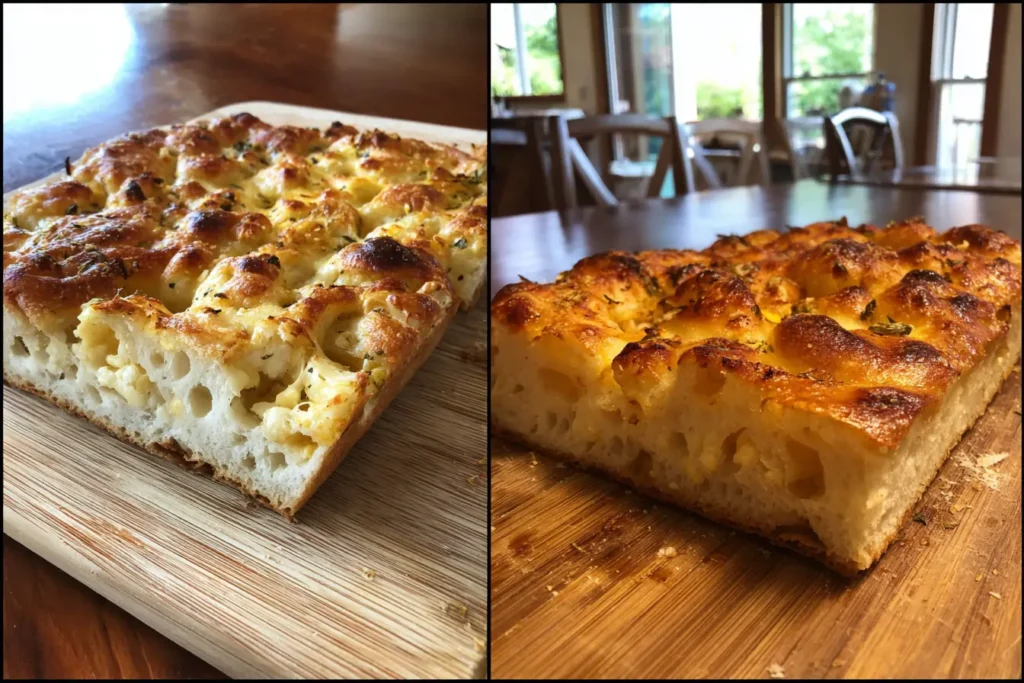
Method 2: Cast Iron Crispy Focaccia (Crispiest Edges)
If you love extra-crispy edges, cast iron is unbeatable. It holds heat longer and gently “fries” the sides of the focaccia in olive oil.
Why Cast Iron Works So Well
- Retains heat better than metal
- Creates deeply browned, crunchy edges
- Great for pan-pizza-style focaccia
This method is slightly more intense — but the payoff is huge.
Dough Amount & Thickness
- Use slightly less dough than a sheet pan
- Keep thickness under ¾ inch
Too thick = crispy edges but a soft center.
Cast Iron Baking Tips
- 450°F / 232°C
- Lower-middle rack
- If edges brown too fast, loosely tent with foil for the last few minutes
Cast iron runs hot — watch the edges.
When to Remove from the Pan
Just like the sheet pan method:
- Lift focaccia out immediately after baking
- Rest on a rack for 3–5 minutes
This keeps the bottom crisp and prevents steaming.
Cast Iron Summary
- Crispiest edges
- Strong heat retention
- Best for smaller batches or sandwiches
Method 3: Steel, Stone, or Hot-Sheet Hack (Crispiest Bottom)
This method is for maximum bottom crunch — especially if your oven struggles with bottom heat.
Option 1: Baking Steel or Stone
If you have one, use it.
- Place the steel or stone on the lower rack
- Preheat oven at least 30 minutes
- Bake focaccia on the rack above it
The stored heat blasts the bottom of the pan, creating a deeply crispy focaccia base.
Option 2: Upside-Down Hot Sheet Pan (No Special Tools)
No steel? No problem.
- Place an empty sheet pan upside down on the lower rack
- Preheat it with the oven
- Bake focaccia on the rack above
This mimics a baking steel surprisingly well and fixes pale bottoms fast.
Timing & Visual Cues
- Same temp: 450°F / 232°C
- Look for deep golden color
- Bottom should feel firm, not soft
De-Pan for the Win
As soon as it’s baked:
- Lift focaccia out of the pan
- Rest on a rack for 3–5 minutes
This final step locks in crispness.
When to Use This Method
- Your focaccia is pale underneath
- Your oven has weak bottom heat
- You want the crispiest focaccia bottom possible
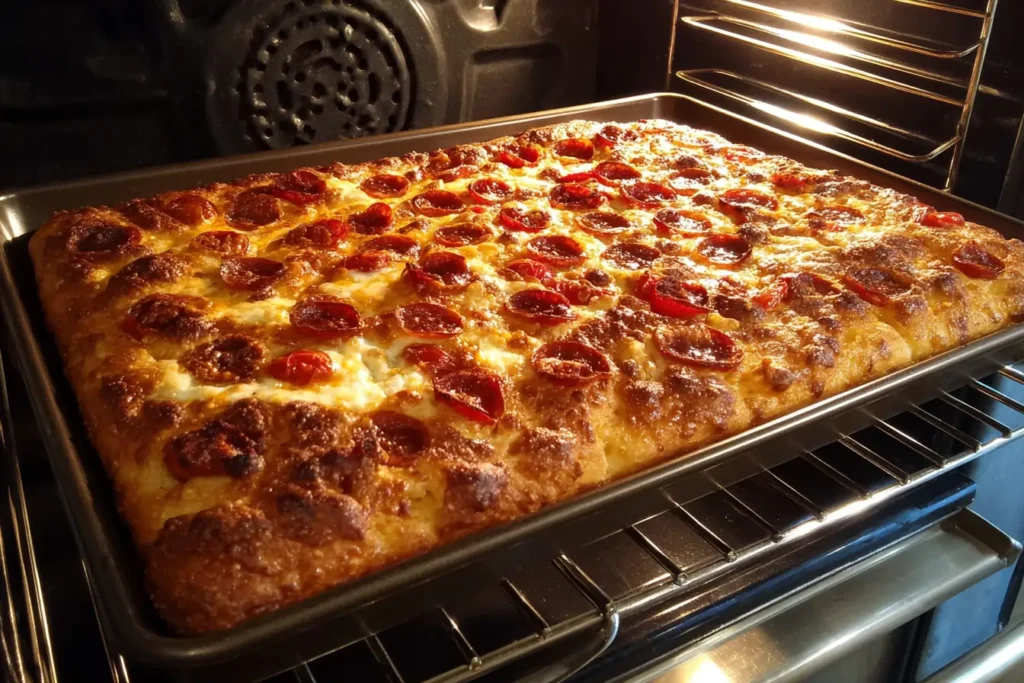
Why Your Focaccia Isn’t Crispy (Fix It Fast)
If your crispy focaccia didn’t turn out crispy, it’s almost always one of these.
Soft or Soggy Bottom
Cause: low heat or trapped steam
Fix: bake on the lower-middle rack, then de-pan immediately and rest on a rack for 3–5 minutes
Pale Top or Gummy Center
Cause: underbaked or dough too thick
Fix: bake until deep golden and keep dough under ¾ inch
Too Greasy
Cause: too much oil
Fix: use just enough oil to coat the pan — no pooling
Dense, No Bubbles
Cause: underproofed dough
Fix: give it more rise time and handle gently
Quick Fix Table
| Problem | One Fix |
|---|---|
| Soft bottom | Lower rack + de-pan |
| Pale crust | Bake longer |
| Greasy | Reduce oil |
| Dense crumb | More proofing |
More heat + immediate de-pan solves most problems.
Nutrition Information for Crispy Focaccia
This crispy focaccia is made with simple ingredients, but like most breads, it’s best enjoyed mindfully.
Estimated Nutrition (Per Slice)
(Based on a standard sheet-pan focaccia, cut into 12 slices)
- Calories: ~180–220 kcal
- Carbohydrates: ~30–35 g
- Protein: ~5–6 g
- Fat: ~6–8 g
- Fiber: ~1–2 g
Values will vary based on olive oil amount and toppings.
How Olive Oil Affects Nutrition
Olive oil adds:
- Healthy fats
- Flavor and crispness
- Higher calorie density
That’s also what gives focaccia its satisfying texture and golden crust.
Simple Ways to Adjust Nutrition
- Cut smaller slices
- Go lighter on toppings
- Pair with protein or vegetables for balance
This focaccia is meant to be enjoyed, not feared — especially when it’s homemade.
Frequently Asked Questions About Crispy Focaccia
Why isn’t my focaccia crispy on the bottom?
The most common reasons are not enough heat, the wrong rack position, or leaving the focaccia in the pan after baking. Bake on the lower-middle rack and de-pan immediately to prevent steam.
What pan makes the crispiest focaccia?
A metal sheet pan or cast iron skillet produces the crispiest bottom. Glass and ceramic pans work, but usually need more time and oil.
Should focaccia be baked on the top or bottom rack?
For crispy focaccia, bake on the lower-middle rack. This gives stronger bottom heat without burning the top.
Do you need a baking steel or stone?
No — but they help. A baking steel, stone, or even an upside-down hot sheet pan improves bottom crispness in ovens with weak bottom heat.
How long should focaccia ferment?
For same-day focaccia, allow 3–4 hours total rise time. For deeper flavor and better bubbles, refrigerate the dough 12–24 hours.
Final Tips for Perfect Crispy Focaccia
Crispy focaccia doesn’t come from complicated steps — it comes from a hot oven, the right rack position, enough olive oil, and baking until deeply golden. Trust the color, not the timer, and always lift the focaccia out of the pan right after baking so steam doesn’t soften the bottom. Once you’ve made it once, it becomes second nature — and that satisfying crunch gets better every time.
for more recipes follow me in Facebook, Pinterest and medium.